

Hey everyone,
The Growth Program is 50% off through Tuesday.
We launched Growth Program 2.0 this time last year, and nearly 1,000 startups have come through it since. For the anniversary, we’re discounting it for the first time since launch.
$495 instead of $995, through October 20. No code needed.
Lock in your 50% discount here →
And if it turns out not to be for you, there’s a 7-day refund, no questions asked.
This week, we’re covering how to get people to complete your onboarding form, properly funding a paid test to be conclusive, and how to back the incumbent in your category into a corner.
—Nick
Brought to you by beehiiv
You read Demand Curve every week for growth channels that work, and your newsletter should be one of them, but small startup teams rarely have time to babysit it. The beehiiv MCP plugs your publication straight into AI tools like Claude, so you can ask "which posts drove the most signups last month?" or "draft next week's issue" and get it done in seconds. Build segments, launch automations, and pull analytics from one chat, turning your newsletter into a real growth engine without adding headcount.
Start building on beehiiv
Onboarding forms, funding paid tests, and backing your incumbent into a corner.
Insight from Joey Noble, Creative Strategist at Demand Curve.
01.Onboarding
Why people skip your onboarding form
Insight from Joey Noble, Creative Strategist at Demand Curve.
Most onboarding forms are built around what the company wants to know.
So people skip them. Here's how to write questions people actually answer.
Completing onboarding should feel like a win for the reader. And, ideally, skipping it should feel like they’re giving something up.
“What are you interested in?” is easy to skip. From the reader’s side, there’s no obvious reason to answer. It’s just data collection.
Compare that to: “Tell us what you want to get better at so we can show you the most relevant resources, articles, and guides.” Then reinforce it: “We’ll also use your answers to decide what we write about next.”
Similar question, but framed around the outcome they get from answering: a more useful product.
The second half of this is less obvious. On the fields people resist, you also have to allow them to skip.
Here’s an example for an ad creative library:
Say you want someone’s website. Make it required and some people will enter something fake, drop off, or start wondering why you need it. So give them a choice, and put the value next to it.
- “Add your website and we’ll scan our database for ads relevant to your business.”
- “I don’t have a project right now. You can skip this, but we won’t be able to personalize your ad recommendations.”
That second option does two things.
It states the loss. A stated loss lands harder than the same thing framed as a gain.
And it’s not forceful. If you force someone to hand over their website, they might push back, because people resist having a choice taken away. Give them a way out and the form stops feeling coercive. That’s what makes them willing to answer.
The catch is that the loss has to be true. If a website really lets you personalize ad recommendations, say so. Invent a consequence to push someone through a form and you lose trust.
So stop only asking what you want to know about this person. And tell them what you can do for them if they give their info to you:
You tell us X → we can do Y for you.
You can skip X → but here’s what we can’t do without it.
That turns onboarding from a questionnaire into the first act of personalization.
02.Paid
Fund your paid test or skip it
Insight from Devon Reynolds, Growth Strategist at Demand Curve.
Before you test a paid channel, work out what it costs to test it properly.
We hear a version of this a lot. A founder runs a paid channel test, the numbers come back weak, and they write off paid. But usually the budget was too small to tell them anything conclusive.
Here’s how to set it up so you can trust the result:
- Aim for 15-20+ conversions a week on the channel you’re testing. Below that, you’re reading noise. A handful of conversions can swing wildly based on who happened to see the ad that week.
- Fund it for 4-6 weeks minimum, not 2. Meta and Google’s algorithms need a batch of conversion data before they stop guessing. Meta’s rough benchmark is about 50 per ad set per week. Judge results in week one or two and you’re judging the algorithm’s warm-up.
- Back into the number from your target CAC. Multiply your target cost-per-acquisition by roughly 60-80 to get the minimum monthly spend that would produce enough conversions to trust. If that number is bigger than what you can actually spend, you're not ready to test paid yet. That doesn’t mean paid won’t work for you.
- Leave room in the budget for creative, not just media. If it all goes to buying impressions and none goes to new creative, you’re testing how long one ad holds up. Budget for a few really different concepts instead of five versions of the same one.
- Write down what “it worked” means before you launch. Decide ahead of time which CAC or conversion rate counts as a pass, so you don’t reinterpret the number later based on how you wanted it to go.
So fund the test enough to get a real read, or skip it for now and put that money toward a growth lever that can get you results or learnings.
03.Positioning
Back the incumbent into a corner
Insight from Nick Costelloe, Content Lead at Demand Curve.
Oatly's marketing is no doubt controversial.
But here's a messaging tactic you can steal out of their playbook. Look at this ad:
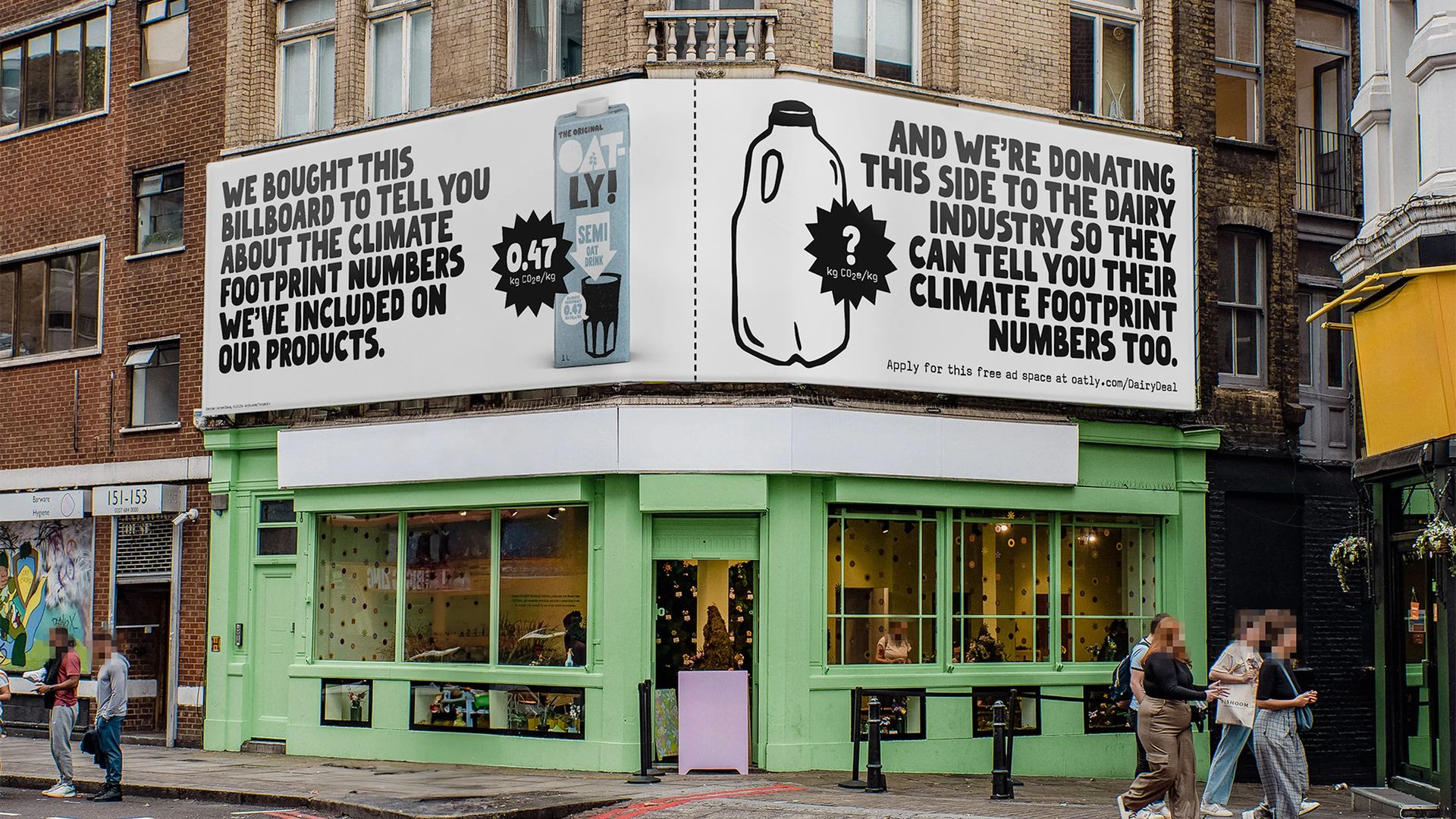
Oatly rented two billboards. Their carbon number on one side, and free ad space for Big Dairy on the other.
It’s a real offer, with an actual link to apply. Up to £121,000 of free media. All Big Dairy has to do is answer 68 questions about their milk’s climate footprint, the same ones Oatly answered.
At first glance, it looks like Oatly's trying to flex their carbon numbers. Oat milk vs dairy milk. But that's not what this is.
The real win here? They backed the dairy industry into a corner. Because look at the ways industry players could respond to this:
Take the deal, and you publish a number that loses.
Turn it down, and the silence is the admission. And the billboard stays up.
Attack Oatly publicly and you look unhinged. They're offering you free billboards, after all.
Not one dairy company applied, of course.
The result? By their agency's numbers, 450 million earned impressions. Oatly ranked the most sustainable F&B brand by UK consumers that year. Might be a bit of greenwashing, but they won this battle.
How do you replicate this? Don't buy a billboard 😅 Just look for a way to back the incumbent you're up against into a corner. What's something you structurally win on that your competitor couldn't possibly challenge?
Something fun
Came across this thread from a couple of years back, lessons still hold. From @yasminekho