
I remember the first time I saw The Blair Witch Project. A bunch of us crowded into a friend’s basement, completely convinced we were watching a real documentary gone wrong. It felt like we’d been let in on a secret.
Decades later, I still think about how they pulled that off. So this week, I broke it down. We also cover what you can learn from ghosted sales calls and why a scary-high CAC might not be an issue.
Happy Halloween 🎃
—Nick

Beehiiv
You put a lot of thought into what listeners hear when listening to podcasts. Shouldn’t that include the ads, too?
With Dynamic Ad Insertion on beehiiv, you choose where ad breaks go, how many ads play in a break, and even which advertising categories can run (or not run) when using programmatic ads.
Whether you run your own sponsorships or turn on programmatic ads to fill unsold slots, you now have an easy way to earn more money while ensuring your podcast stays true to you and your audience.
Visit beehiiv and use code DC30 for 30% off three months to learn more.
Scary high CACs, The Blair Witch Project’s brilliant launch, and ghostly lost sales calls.
01.Messaging
Your lost sales calls might have your best marketing copy
Insight from Devon Reynolds, Growth Strategist at Demand Curve.
Most companies study their won sales calls to understand why customers buy. The calls that don’t close are just as useful.
Even the ones that… ghost you 👻
When a qualified prospect decides not to buy, the reason is often fixable. They didn’t see enough value. The product looked too complicated. They couldn’t tell how it was different from something they already use. Those objections tell you what’s missing from your marketing.
Say you sell a project management tool, and prospects regularly tell your sales team: “We already use Asana. Why would we switch?”
Your website might talk about how easy your product is to use, how powerful its features are, how much time it saves. None of that answers the question they’re actually asking. They want to know what they’ll get from switching that they can’t get from Asana, and they should get that answer from your marketing, long before they ever speak to sales.
Here’s how to put this into practice:
- Review 10 lost sales calls. Focus on prospects who were a reasonable fit, not people who were never likely to buy.
- Write down their actual objections, in their own words, not your marketing language.
- Look for repeated questions or misunderstandings. If three prospects asked whether you integrate with Salesforce, that’s worth addressing.
- Compare those objections with your website. Are you answering the questions prospects care about, or mostly talking about what you think makes your product interesting?
- Turn the gaps into content. A rewritten homepage, a comparison page, a better FAQ, a clearer explanation of one feature.
One caution: not every objection means your messaging is wrong. Sometimes a prospect isn’t a good fit, or doesn’t have the budget, or a competitor genuinely has the better solution for them. You’re looking for patterns among customers you should reasonably be able to win.
Won calls tell you what convinced someone to buy. Lost calls tell you what stopped someone else. Both belong in your messaging research.
02.Positioning
How The Blair Witch Project turned a $60K budget into $250 million
Insight from Nick Costelloe, Content Lead at Demand Curve.
The Blair Witch Project cost about $60,000 to film. It made nearly $250 MILLION at the box office. You kidding me? And their best ad was a missing persons flyer. Look:
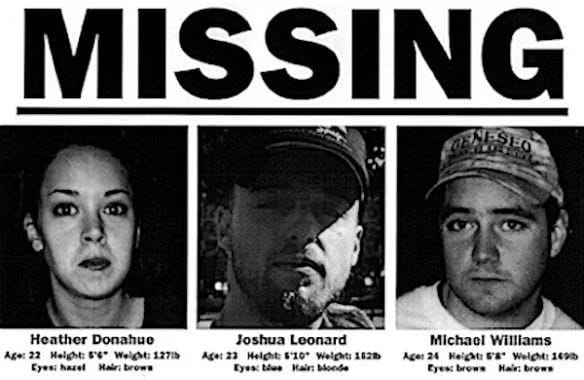
The money’s fun. But the real trick (😉) is how flawlessly they used their flaws.
In 1997, a couple of film school grads made a horror movie on almost nothing.
A movie with a budget like that? You gotta get creative and do something no one else has considered. So they made a fake documentary and staged it as a real disappearance. Three film students hiked into the Maryland woods in 1994 and never came back. All anyone found was their footage.
That’s the part of the story most people know. What they forget is the marketing.
They didn’t market this film as a movie. They sold it as a missing persons mystery and invited people in to help solve it.
And every little detail made the story more real. A website went up a full year early, stocked with police reports and a diary. Missing flyers went up on college campuses. IMDb listed the actors as “missing, presumed dead.” The Sci-Fi Channel aired a fake documentary about the legend days before release.
Even the flaws of their tight budget helped sell it. The shaky camera felt like a home video because it was. The unknown actors felt like real people because they were. The bad audio sounded like raw tape because it was.
Every flaw was proof that the “film” was a “documentary.”
The result? The internet exploded. People couldn’t tell if it was real found footage or a hoax, so the uncertainty itself became the thing they talked about. The website logged 160 million hits.
Then it spread like wildfire. The movie opened on 27 screens and sold out days in advance. Within a month, it was on more than 2,000.
All in, it made more than 4,000 times its budget. In the US it finished as the 10th biggest movie of 1999, the same year as The Matrix and The Sixth Sense.
When you’re an underfunded startup going up against incumbents with huge budgets, here’s what you do:
You zig where they zag.
Sounds like a silly truism. But these days, it feels like marketing is losing its sparkle. The most common advice is “follow the playbook.”
The playbook worked for the few who ran it early, before it got common. Then everyone copied it. And AI makes that cycle faster. Now many founders are using the same prompts and expecting to land somewhere remarkable.
So if you want to stand out in 2026 without boatloads of resources, try something nobody in your space is trying. That could be as simple as strong, differentiated positioning. Or it could be something more radical. (Please don’t fake a missing persons case. That part probably didn’t age well.)
Lean into what you can win at. Flaws included.
03.Paid acquisition
Your CAC ceiling decides which auctions you can win
Insight from Michael Snook, Growth Strategist at Demand Curve.
You know what’s scarier than Sinister and that Elizabeth Holmes close-up?
A high customer acquisition cost (CAC). At least, that’s what most of us were taught.
But truth is, a high CAC might not actually be a bad thing:
“Ultimately, the business that can spend the most to acquire a customer wins.” —Dan Kennedy, direct-response legend.
See, ad inventory is an auction. Whoever can pay the most for a click, a placement or a keyword gets the best traffic, the most volume and the most reach. If your CAC ceiling is $50 and a competitor’s is $200, they can outbid you on every channel that matters, and you’re left with scraps.
Chasing a low CAC usually means:
- Bidding only on cheap, low-intent traffic
- Capping spend early because costs rise as you scale
- Optimizing to look efficient on paper while growth stalls
So sometimes it’s better to be able to afford a higher CAC. And how do you do that? You make each customer worth more, so you can pay more to get one:
- Higher LTV: retention, repeat purchases, subscriptions
- Higher AOV: bundles, upsells, order bumps, tiered pricing
- Better margins: pricing power and lower COGS
- Faster payback: front-end offers that recoup ad spend quickly, so cash flow doesn’t cap you
- Back-end monetization: follow-up offers, email/SMS flows, referrals
Think about two brands that sell the same $40 product. Brand A has no back end, so it can only afford about a $20 CAC. Brand B has a subscription and post-purchase upsells worth $250 in contribution margin, so it can profitably pay $80. Brand B wins the auctions, gets more volume, learns faster and compounds.
For a real world example, take Native. They sold $12 deodorant that cost $10 to $11 to make and ship. That left about a dollar on the first order to pay for a customer. A dollar doesn’t win auctions. So the team made each customer worth more. They roughly doubled repeat purchases and added subscriptions. Now Native could pay more for a customer than the first order was worth, make it back on later orders, and outbid brands with far bigger budgets. P&G bought it in 2017, two years after launch, for $100 million. Eight employees. Almost no outside money.
The takeaway: CAC is only good or bad relative to what a customer is worth. Most of the leverage in paid acquisition comes from the offer and the economics after the click, not from tweaking the ads. A strong LTV:CAC ratio with fast payback beats a cheap CAC.