

Insense
Tool we recommend*: Insense
Are you using creator marketing software but still struggling to scale?
Discover Insense—the influencer marketing software with a human touch.
Clients using Insense save an average of 40+ hours per month.
You can either use their intuitive self-serve platform, or have a dedicated platform manager handle your influencer and UGC operations for you:
- They'll write the creative briefs with your guidance
- They'll hand-pick the best creators for your campaign.
- They'll manage all communications with creators, from hiring to product shipment.
Join 1,500+ major ecomm brands like Opopop, GoPure, Woxer, and Victoria Beckham Beauty using Insense to scale their UGC and influencer marketing operations.
Book a free strategy call and get $200 for your first campaign until March 22.
Brought to you by Vidico—the video dream team for tech startups.
They're not just a video production company; they're storytellers who turn your product's features into a compelling narrative.
Just ask Bambee. Their cost per lead plummeted by 50%, saving $10k in just one month.
Ready for your success story? Join Vidico's free video strategy session—your ticket to a free, custom video script that could redefine your brand.
Racecar Growth Framework
Insight from Lenny’s Newsletter.
The different stages of startup growth and the common tactics within them (click for a high-res image):
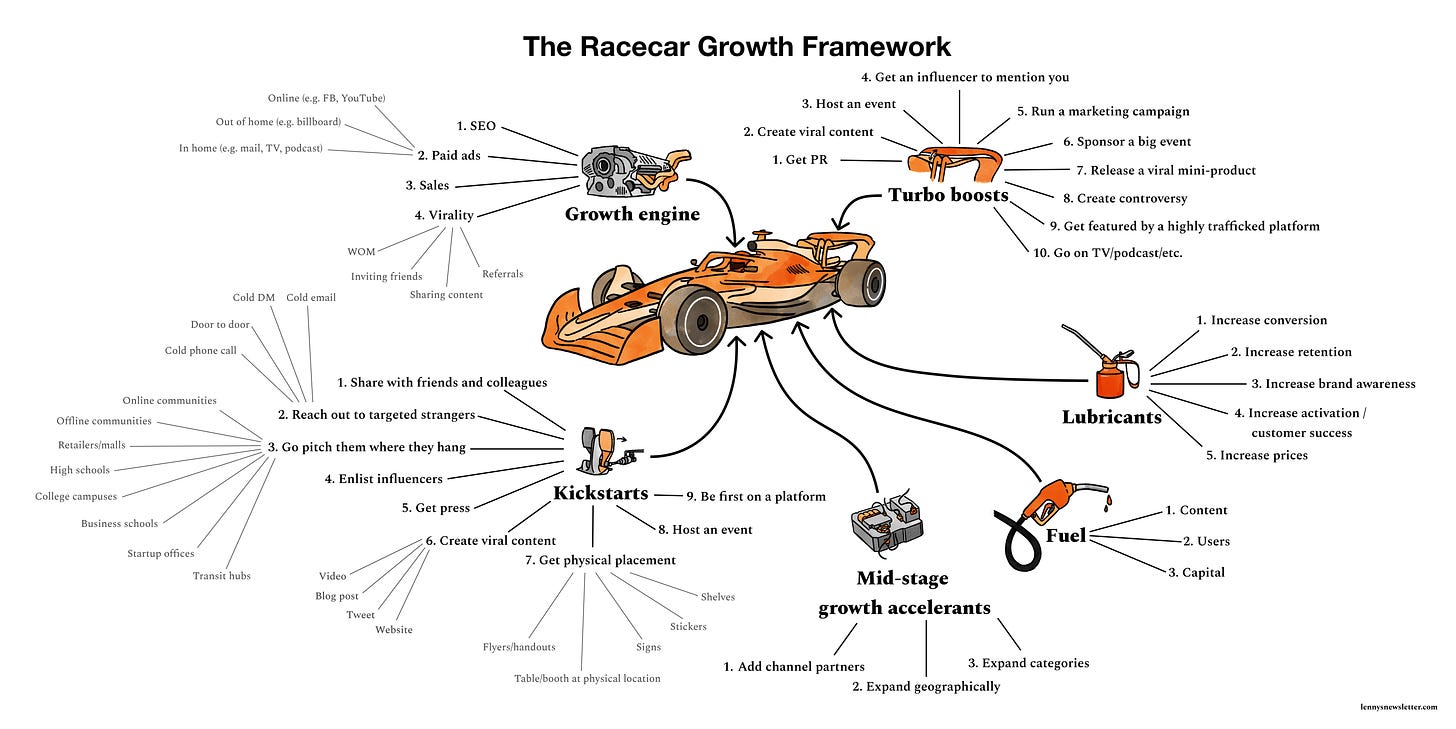
You use the different components of the race car at different stages:
- Get the race car moving with Kickstarts and maybe a few Turbo boosts. These are the “things that don’t scale.” Good for bursts of growth, but aren’t scalable.
- Then, invest in getting the Growth engine running. These are the self-perpetuating engines where growth begets growth (ex: profitable ads → more budget to run ads). Another name for these is Growth Loops.
- Once your Growth engine is running, invest in Lubricants to help it run more efficiently and the occasional Turbo boost to boost growth. And consider adding Fuel to do it faster.
- Next, invest in Mid-stage accelerants to expand the reach of that Growth engine.
- Before you max out your first Growth Engine, experiment with and kickstart another Growth engine while continuing to Lubricate your existing growth engine(s).
- Once the various Growth engines are running, create additional products, expand to new segments (e.g., enterprise), and grow revenue with current customers.
Lenny has a monster article about all these concepts. Dive into it here to learn more.
The dynamic long-tail SEO of Nomad List
Insight derived from Marketing Examples and Nomad List.
Nomad List had 1,200,000 visitors from Google last year. The top 100 pages account for only 500,000 page views, with the 100th most visited page receiving 1,000 organic views.
That means they get 700,000 page views from Google across thousands of other pages with only tens to hundreds of annual views each.
First, some context: Nomad List is a crowdsourced database of cities for digital nomads. You can filter the cities by hundreds of categories: temperature now, region, cost, “least racist,” cost of living, and dozens of more categories.
As you apply filters the URL of the page changes. For example, cheap-places-near-a-beach-in-europe-with-fast-internet when I apply the filters of “<US$2K/mo”, “Europe,” “Near beach,” and “Fast internet.”
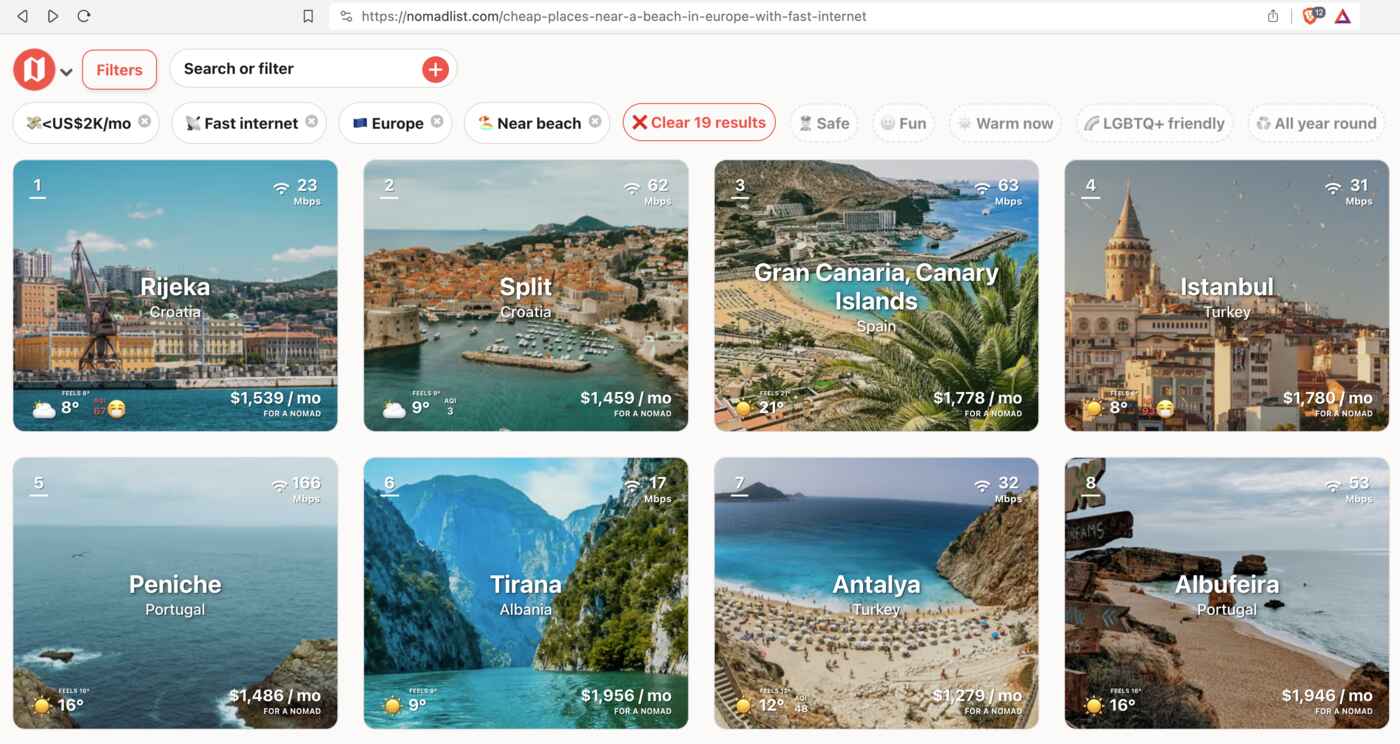
This is useful for two reasons:
- It’s easy for someone to share the results with someone else.
- Each one of these pages can rank in Google for long-tail keyword searches.
Take the keyword, “least racist places in United States” for example—whose page on Nomad List had 17,000 views last year, you can see Nomad List in the 3rd and 5th position:
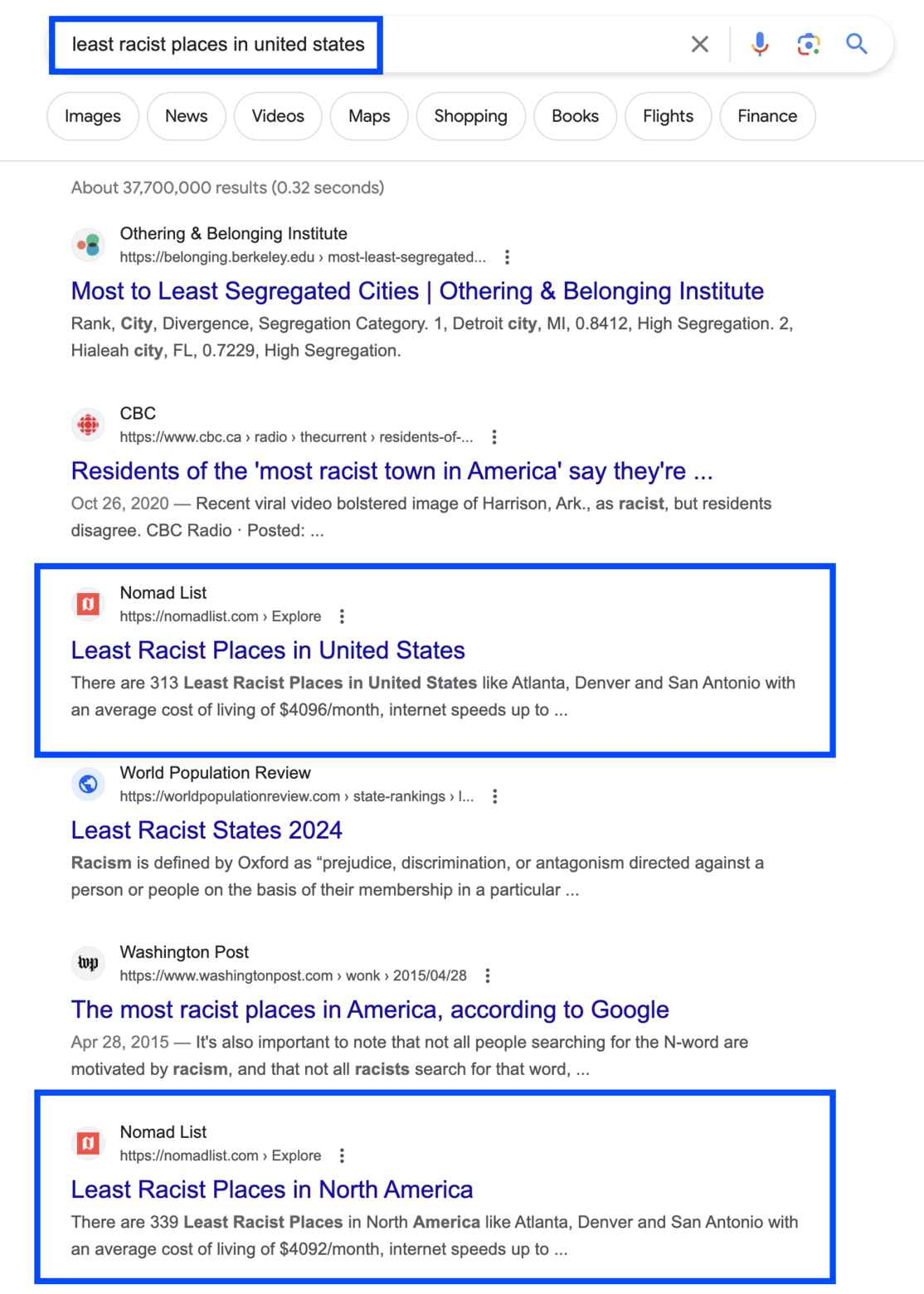
Again, these are simply autogenerated pages created by combining two Nomad List filters: “Low in Racism” with either “United States” or “North America.”
The “Low in Racism” + country/continent pages generated ~27,000 views from Google last year, over 2% of their search traffic. 10,000 for the filter “<$2kUSD/mo.”
As Harry from Marketing Examples said: “Aggregating all combinations of filters together, you're looking at several thousand indexed pages, hoovering up organic traffic from long tail keyword phrases:”
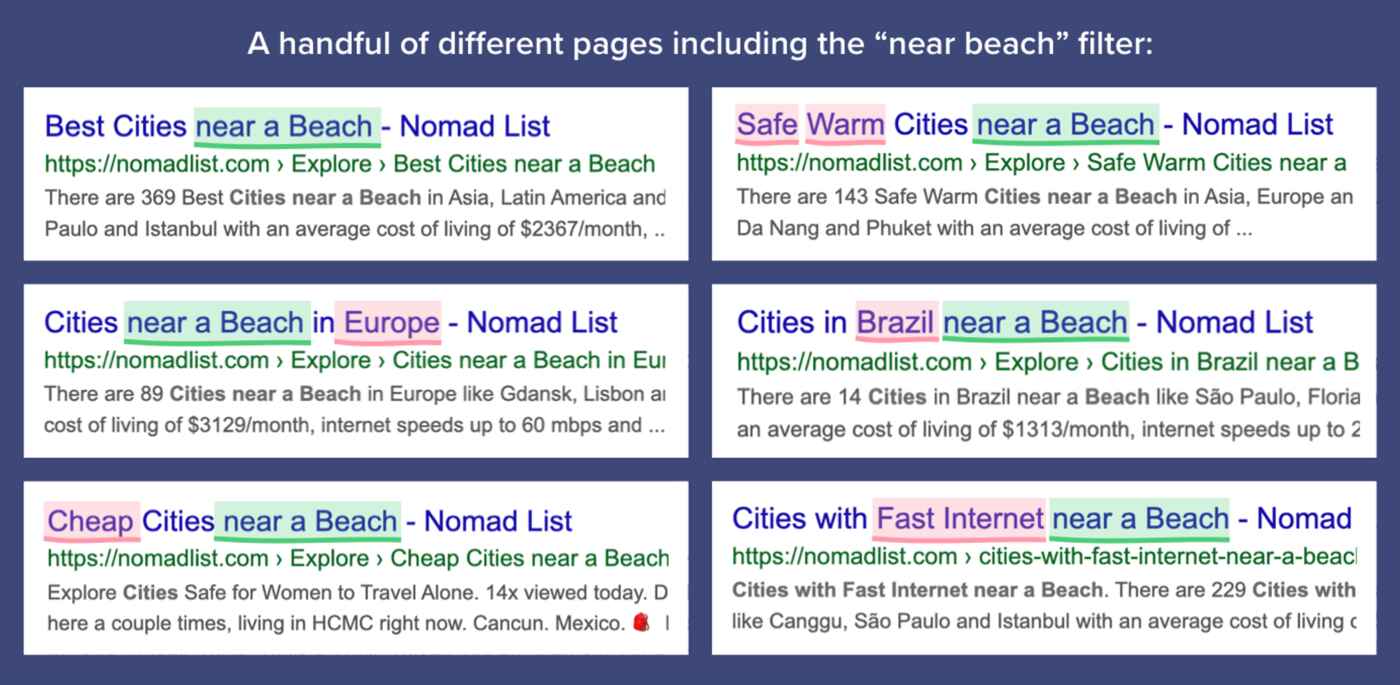
Takeaway: If you have a lot of filterable data that people search for, create auto-generated pages for every combination of filters and target the URL to the most desirable keywords.
Time savings is NOT your value prop
Insight from Kyle Poyar.
“Our tool saves you 5 hours per week!”
– Nearly every SaaS tool
Software inherently saves people time. That’s why people make it. So focusing on it as a primary value prop isn’t interesting, nor does it help you stand out.
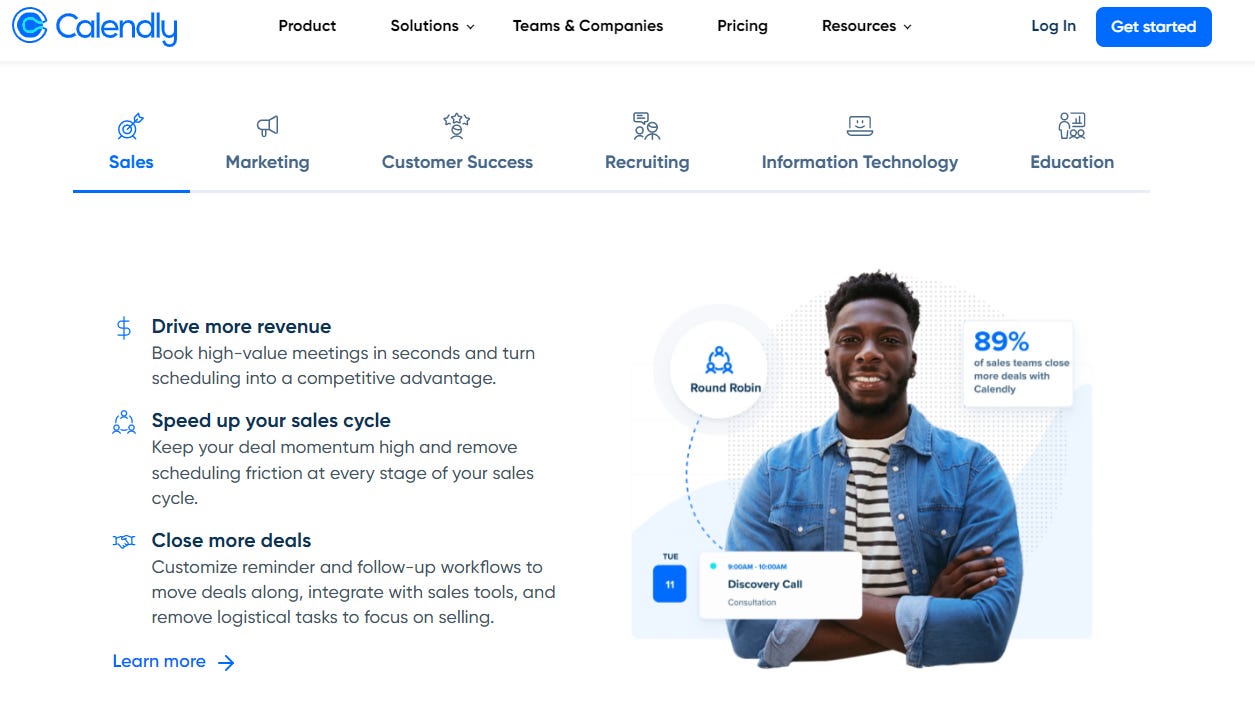
Instead, translate “saved time” into the valuable output the user now has time for thanks to your product. Let’s use Calendly and Zapier as examples:
Calendly helps people save time by reducing the back-and-forth of scheduling meetings. They could say “save 3 hours per week by removing calendar tetris.”
Instead, they focus on the value different personas get by the scheduling process being quick and painless. For salespeople that’s more revenue, faster sales cycles, and more deals closed.
Zapier lets folks easily connect apps without code.
Saving time from manually coding integrations is the point of the product. Zapier does talk about time savings, but they emphasize what users can do with that extra time:
- Higher-value work: “Do what you do best, let Zapier do the rest.”
Rule of thumb
If saving time is the main benefit of your product, how do you build upon this benefit in a way that will land with users, buyers, and the CFO?
Does the time savings result in lower costs?
- Smaller full-time team needed to do same job
- Reduced need for freelancers, contractors, or consultants
Does that time savings result in higher revenue?
- Shorter sales cycles
- Increase conversion rates
- Increase lead flow
- Get to market faster
Does the saved time impact their life meaningfully?
- More time to spend with your family
News and links
YeehawSomething fun