

Conversation


🥳 Feedback Received!
Thanks for taking a moment to share your thoughts — it genuinely helps us make each chapter sharper.
What happens next:
- Your feedback goes straight to our product team.
- We’ll use it to refine lessons, clarify examples, and make the program even more useful.
Appreciate you helping make this program better for everyone.
Ready for your next challenge? 👇
How to launch on Product Hunt
The Rules of Pre-Launch
1. Don’t focus on upvotes. Set a real conversion goal.
Upvotes are mostly a vanity metric. Keep your eye on the ball: email addresses and leads.
While upvotes can propel your product to the top of the front page, what really matters is what you do with the traffic.
In short, most SaaS, service, and ecommerce startups should optimize their Product Hunt launch for capturing emails.
Here’s why:
Product Hunt is a discovery channel. It's where people hear about you for the first time. As with most top of funnel channels, you're far more likely to capture email addresses than immediately get purchases or signups.
To achieve the greatest ROI, let email capture guide every part of your Product Hunt strategy—instead of treating it like a second-tier goal:
- Set your KPI. We suggest a target of 1,000+ emails. That’s reasonable based on our experience—and it’s a large enough audience to begin validating your product.
- Update your website to optimize for email capture. That means making sure that you have a clear CTA to capture emails. What super-enticing asset or future promise will you offer in exchange for an email?
- Set up an email campaign for these leads. Your email campaign is where the real, at-scale conversion happens. You must have this in place before launching on PH.
The exceptions to this email-first PH strategy are free products like mobile apps and social networks: Product Hunt users love free consumer products that they can immediately get their hands on. (Makers of these products should optimize for, say, free app downloads instead. You can later collect emails inside your onboarding flow.)
2. Don’t launch before you have a small following
The biggest Product Hunt mistake is launching before your pre-launch audience is primed. The top hunters told us this over and over. Not enough people are listening when they warn about this.
To have a successful launch, you need at least a small group of supporters who are willing to advocate for your product. This is because Product Hunt amplifies momentum.
It doesn't create momentum.
PH is not the first channel you use to get your first set of users. It's the second channel you use once you have that small starting set.
We suggest an audience of at least 400 people before launching.
3. The quality of engagement matters most
On Product Hunt, the quality of upvotes is more important than the quantity of upvotes.
Quality upvotes come from active PH-ers. These users have been on the platform for months and engage regularly.
Product Hunt's algorithm appears to favor products whose posts receive engagement from established Product Hunt Members.
This makes sense: account longevity serves as a proxy for authenticity. Product Hunt doesn't want companies to compel their audiences to make accounts just to upvote their product.
This is why you’ll see many products with a higher number of upvotes finish the day with a lower ranking than products with fewer upvotes.
So, here's the quality > quantity framework we've identified:
- Leverage your existing community members who are also PH users. Ask which of them use PH and sincerely ask for their help.
- Make new connections with established PH users.
Let's talk about that last point.
There are startup communities adjacent to PH where you can engage, build your reputation, and carry that social capital over to your PH launch. People in these communities are almost always also on Product Hunt—because innovators gravitate towards PH.
If you launch in adjacent communities earlier and ask for feedback, people will become attached to your journey and will voluntarily follow you over to PH when you launch there.
In short, this is a game of social psychology, not upvote hacking.
In practice, this entails joining some of these communities in the weeks before launching. Build up social capital by contributing and helping. Provide feedback on other people's projects.
Some examples:
- If you’re an engineer, join engineering groups and help solve their problems. Share a blog post that helped you remove a blocker in your own work.
- If you’re a marketer, join marketing groups. Contribute findings from different growth experiments you’ve been running.
Here are some communities to consider:
- IndieHackers
- Startup School
There are also Slack and Facebook groups where makers of products announce their Product Hunt launches and exchange feedback.
Slack groups:
FB groups:
The best communities to join are the ones where you can add the most value. The more value you add, the more likely people will be willing to reciprocate on PH and elsewhere.
Here's the critical takeaway that should permeate your larger growth strategy: Community engagement should be an ongoing activity within your marketing team. The benefits of building on-the-ground relationships outlast PH. Always invest some percentage of your marketing time to adding value to thriving communities.
4. Get a PH insider to hunt your product
“Hunting” is Product Hunt speak for posting your product.
Let’s bust a myth:
In the past, it was important to have a reputable Product Hunt member hunt your product. That’s because Product Hunt used to send an email to that hunter's followers when they hunted. So the larger the follower base of your hunter, the more awareness your product got.
Product Hunt no longer sends these email notifications.
Instead, Product Hunt is on record suggesting that you hunt your own product. They say it’s easier and you’ll save time you’d spend convincing a popular hunter to post on your behalf.
However, this isn't the whole truth. It turns out that your product can, in fact, receive a huge boost when it's hunted by highly popular hunters on the platform.
It's not critical that you make this happen, but it is worth the attempt.
Specifically:
- Every day, hundreds of products are submitted, but only a select few are featured on the homepage. We've confirmed that when a super popular hunter hunts your product, your product will automatically jump to the front page. That’s a massive advantage. These "Superusers," as PH calls them, can choose to feature one product per day.
- Attention from a well-known hunter confers social proof. Other members might recognize the Superuser, and when he or she hunts your product, your launch gains more credibility. You’re therefore more likely to receive upvotes, comments, and even emails from community members.
A well-known hunter who is connected with other power-users will also get you more quality upvotes, which can compound your rise through the rankings.
If you’re not already connected to a Superuser, browse Upvote Bell's leaderboard, which ranks top hunters. We've personally had a great experience with Chris Messina and Hiten Shah.
If you can't get one of them to post, don’t sweat it. You can absolutely hunt your own post. At the end of the day, if you have a great product and enough pre-launch momentum, you'll get enough engagement. Just lean harder into your pre-launch audience building and engagement.
5. Time your emails
Product Hunt is a game of timing.
Blast all your channels at once, and do so first thing in the morning. You want to climb to the top of the daily rankings quickly and then spread out the remainder of your votes evenly throughout the day to maintain your "vote velocity," which keeps your product ranked highly.
Here’s what we suggest for email in particular:
- 3-4 weeks in advance, send an email to your list educating them on the value Product Hunt will have to your launch. Help them understand how important it is to you. Ask them to create an account and engage with PH. Only a small percentage of the people on your list will create an account or upvote. That's normal. But those who do become invested in your launch and your success.
- Schedule a follow-up email that triggers 3 days after your first email. Ask them to spend 2 minutes upvoting and commenting on a few products on PH. While this is a big ask, it can have a big impact on launch day. That’s because the Product Hunt algorithm favors votes from “warmed up” PH accounts.
- Prepare an email for launch day. Ask your list for feedback—not upvotes. If discovered by Product Hunt, requests for upvotes can result in a demotion of your product. Schedule the email to go out in batches throughout the day so that not many people come through the same link at the same time. In order to fight post decay, you want to spread out your engagement throughout the day to sustain velocity.
6. Choose your launch time
The Product Hunt homepage is based on a 24-hour cycle. New posts hit the homepage at 12am PST each night, and more are added throughout the day.
When scheduling your post, set the time zone to PST (and not your own). Product Hunt does not adjust for different time zones.
There are two considerations for timing: day of the week and time of day.
Day of the week:
- We’ve found it’s best to post between Tuesday and Thursday. Why not Mondays and Fridays? Mondays are often for catching up on work, and many people tune out by Friday as the weekend approaches.
Time of day:
- In order to maximize the time your product appears on Product Hunt on the day you submit, post as early as possible in the day. You want your post to be seen by PHers across many time zones. When you schedule a post for just after midnight PST, you'll gain exposure to the entire 24 hour PH cycle.
7. Make sure your post's content is optimized
Your post consists of a product description, images, and a few other assets.
The steps you need to complete before posting:
- Sign up for a personal account—no branded or business accounts.
- Don’t use emojis or descriptions in the title. Just use the name of your product. Product Hunt users will want to easily identify the name of your product. Help them remember it by keeping your title clean with just your product name.

- For the thumbnail, Product Hunt recommends 240x240 size. We suggest using an image that grabs attention, such as an animated GIF, but your standard logo will also work. Don't make GIFs too distracting, otherwise your logo will perform better.





We suggest adding an engaging video or animated GIF to your media gallery. The recommended size for images in the gallery is 635x380. Make sure the first asset in your gallery is your best because Product Hunt will use it in your post as the meta image for social sharing.
Two types of assets work best:
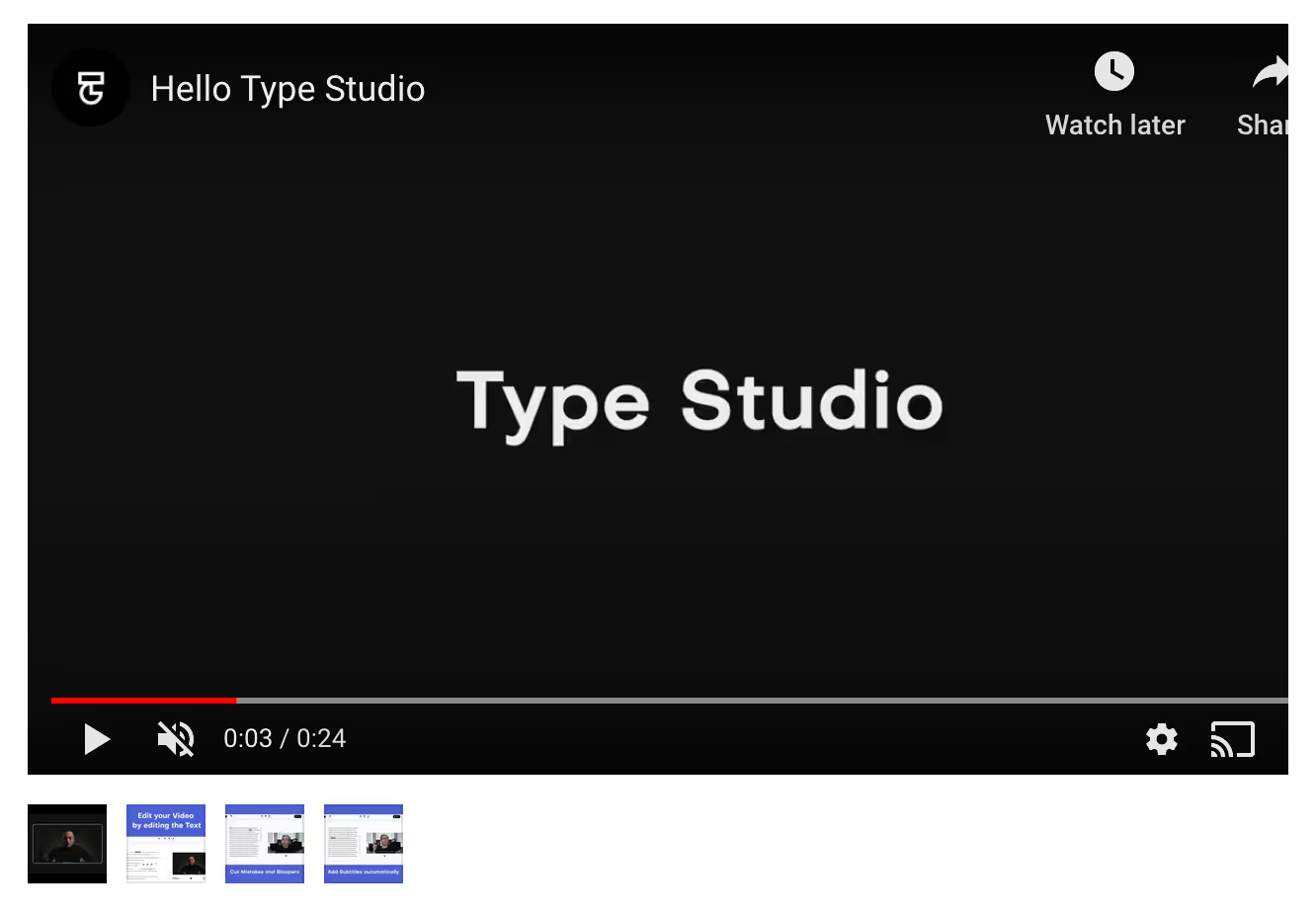
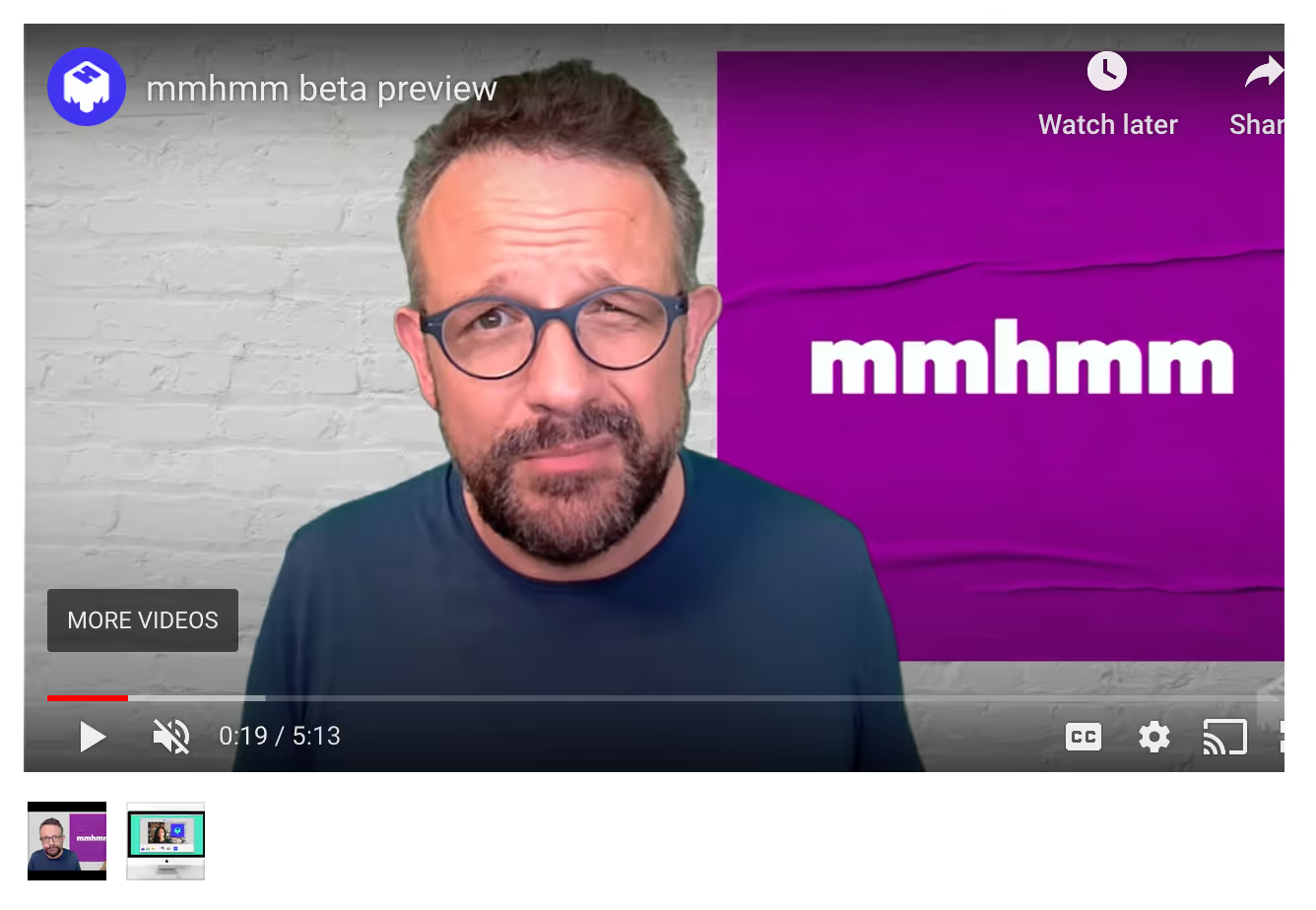
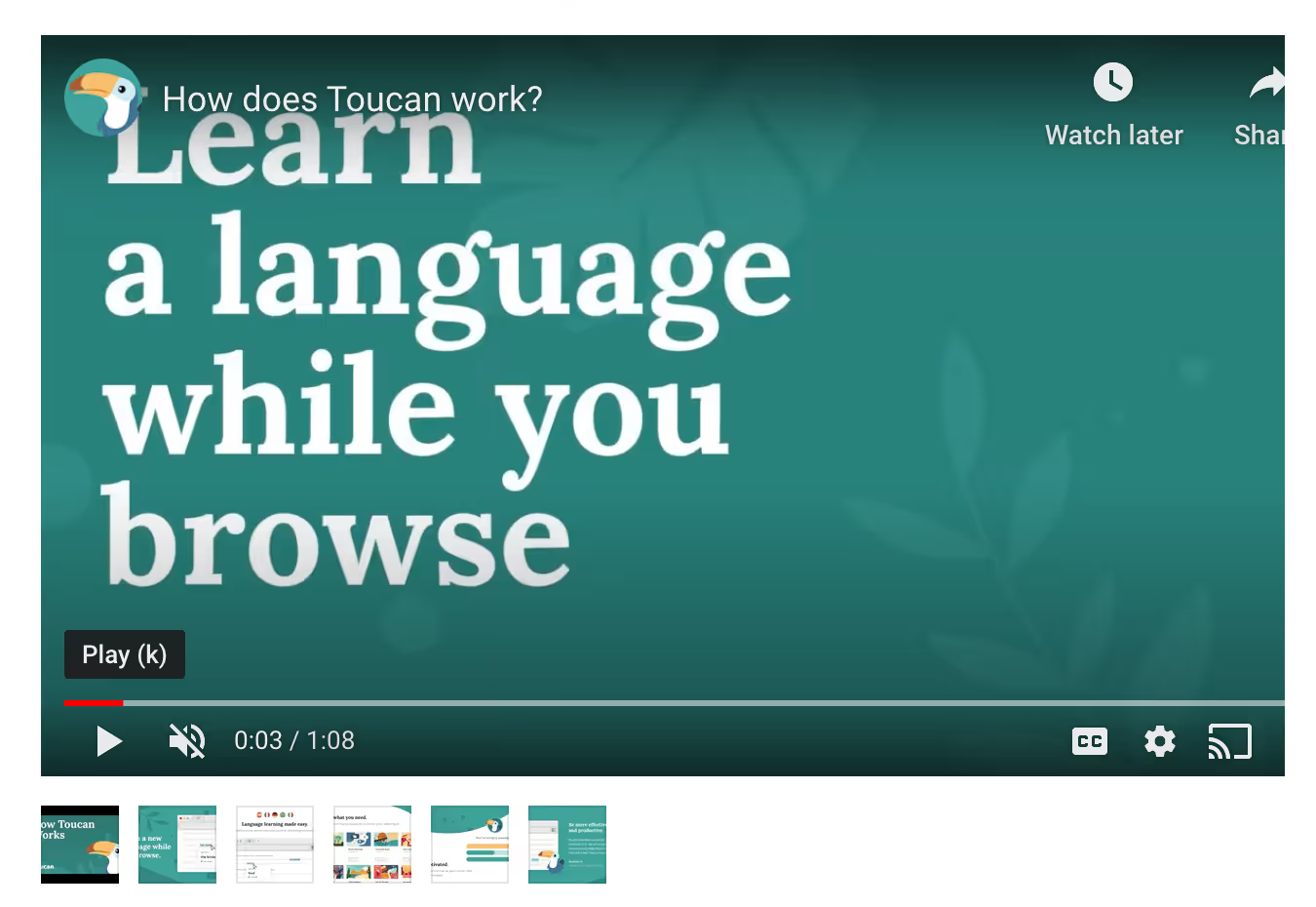
- Video demonstrations showing the product's capabilities
- A product walkthrough by the maker
8. Write your Maker comment
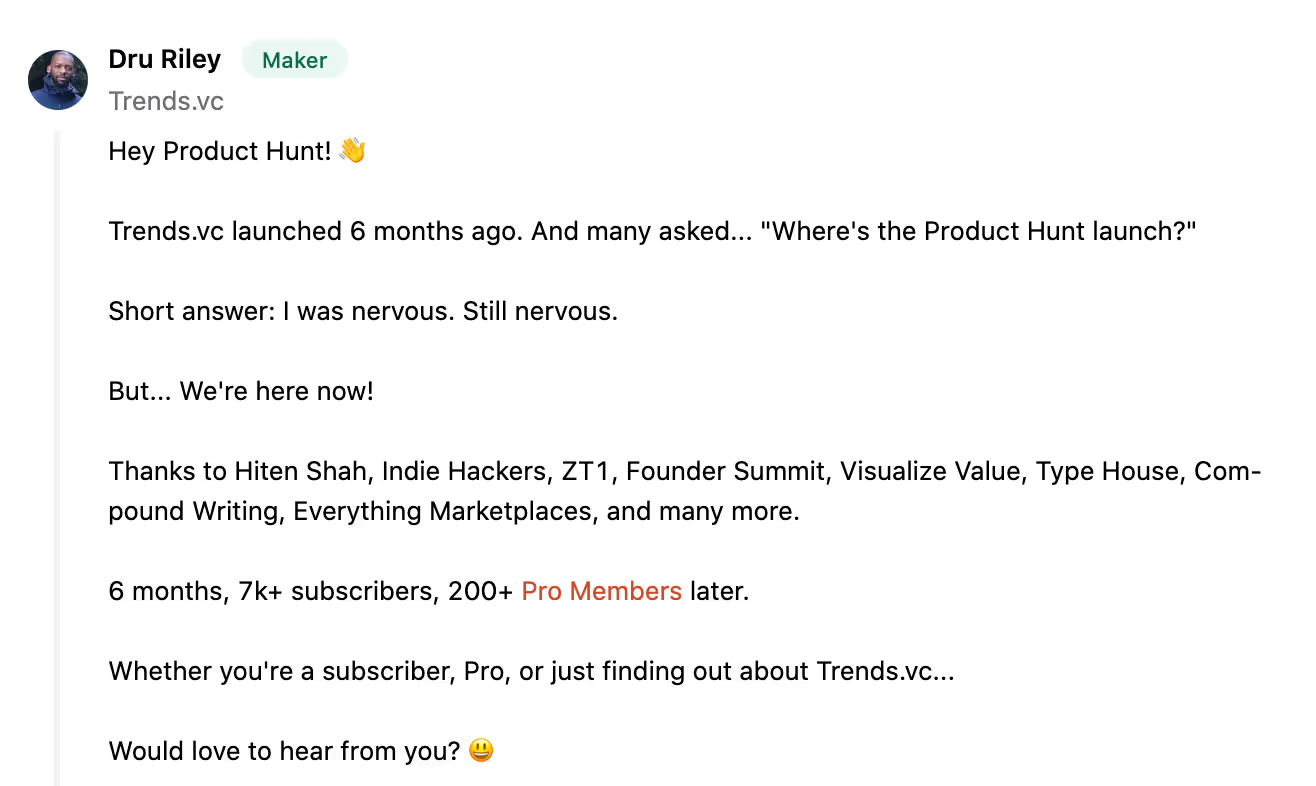
Prepare your "Maker comment." It's your opportunity to introduce the PH community to yourself, your team, and the product you created. Your maker comment will appear right below your product gallery. It's highly visible.
This is your chance to add a human touch to your post and connect with the audience so they build affinity with you as the maker—and not just your product.
Highlight your key value proposition and the problem you solve. We’ve found that the more helpful and humble—and less promotional and fluffy—the maker's comment, the more comments the post is likely to receive.
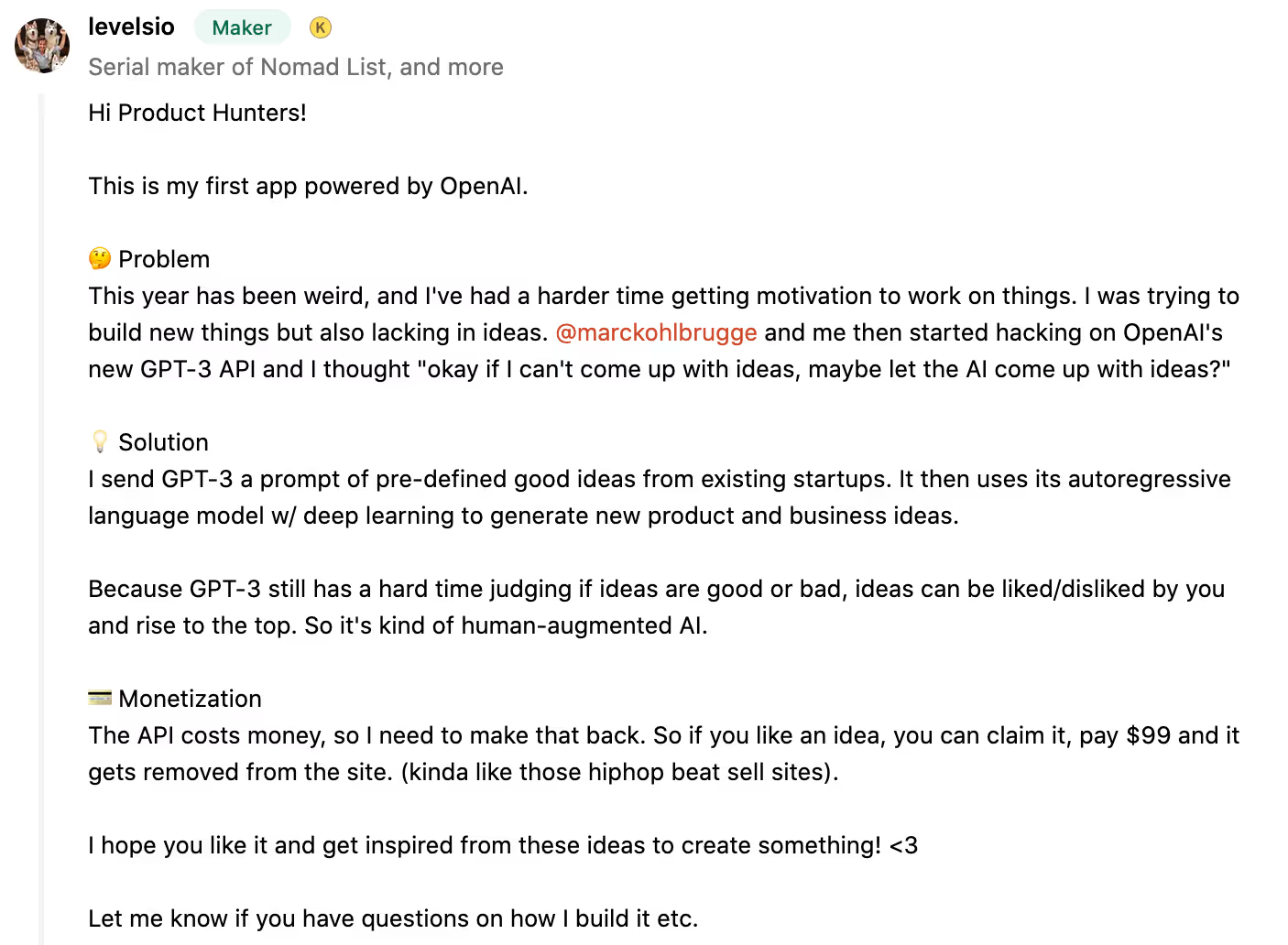
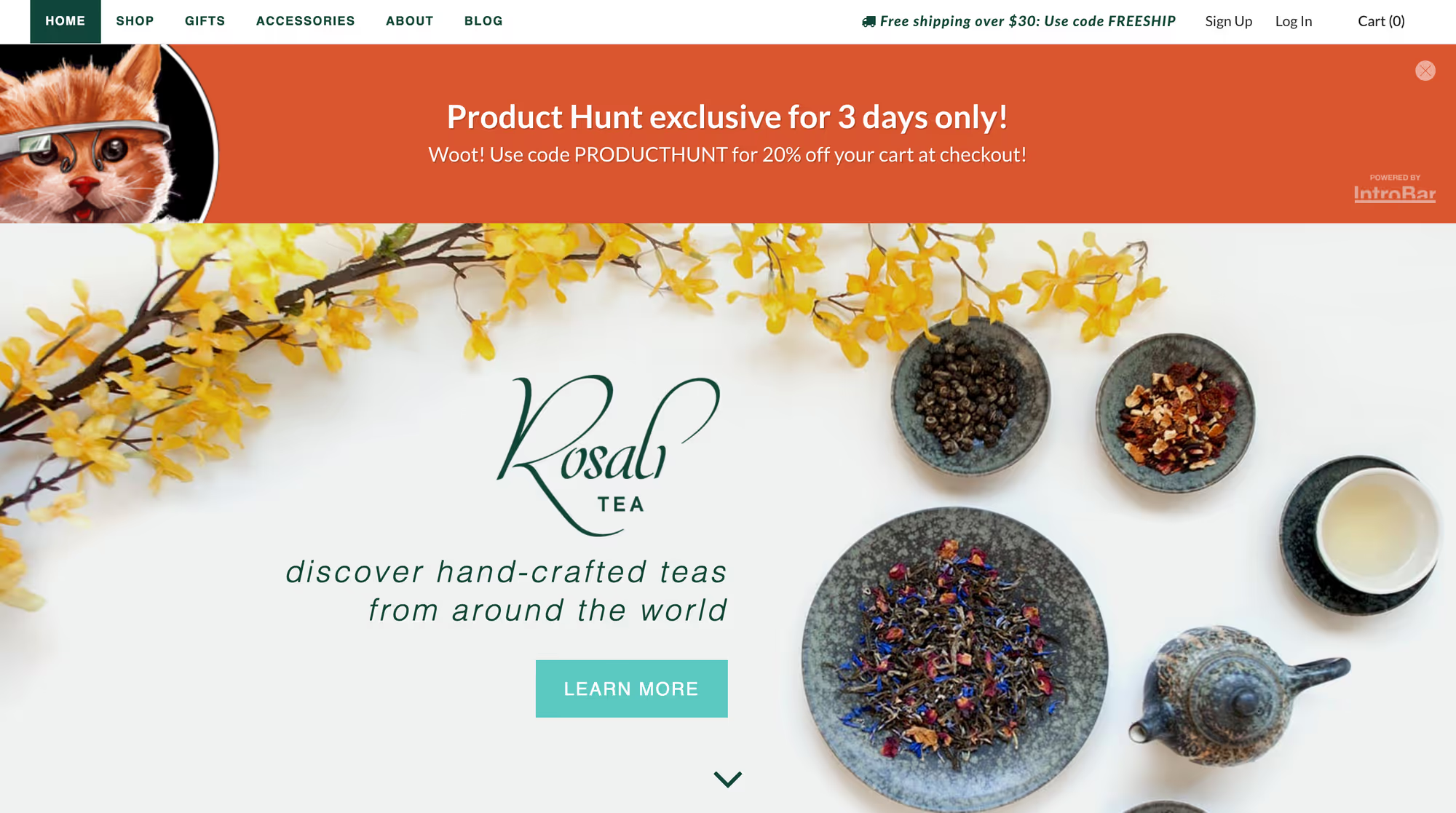
If you're looking to go above and beyond to capture PH engagement, consider creating a landing page specifically for them. You can include your page as the primary link and add a special offer for the community. Here are two of our favorite examples below:
Rosali Tea
One last thing on posting: Sanity-check the appearance of your post before you go live. Make sure the content is inspiring enough that it would motivate you to click it yourself.
We recommend doing this via Preview Hunt—a tool to preview your PH post.
Let’s recap our launch checklist
- Set an email conversion goal. Don’t get distracted by upvotes.
- Hold off on your launch until you build up an audience of at least 400 people. Preferably more.
- Add value to startup communities to build social capital before your launch. This can be converted into quality upvotes and engagement on launch day.
- Prepare your emails and social media posts in advance.
- Try to find a reputable hunter within PH and ask them to hunt your product. Make sure you pass off all your assets to them well in advance of your launch day.
- Schedule your launch for an early Tuesday, Wednesday, or Thursday morning—at 12am PST.
- Preview your post in advance. If you wouldn't click it, neither will anyone else.