

Welcome to the 1204 new marketers and founders who joined last week!
This week we're covering DTC retention, pricing, and referral programs.
Boost conversions with interactive emails
Email isn't built for conversions. Each time you send, your subscriber has to open it, click a CTA, load the page, and then take action—there's dropoff every step of the way.
The solution?
Allow users to take action within each email by adding forms, carts, calendars, and widgets in the email body.
Mailmodo helps you create and send interactive emails within minutes using AMP emails.
With Mailmodo, you can do all the following directly inside of emails:
- Book meetings/demos
- Fill out forms
- Send live polls
- Collect referrals
- Recover abandoned carts
- Add interactive widgets
- And much more
Several brands are using interactive emails to boost conversion:
- Razorpay increased survey responses by 257% with Mailmodo.
- Mudrex got a 280% increase in webinar sign-ups.
- BluSmart saw a 35% increase in quiz submissions.
Try Mailmodo out for yourself. We recommend starting with a spin-the-wheel widget product recommendation campaign or running a product survey to engage your users with interactive forms.
Should your referral program delay gratification?
Insight from Ben Tengelsen.
Try marshmallow testing your referral program.
The marshmallow test: Give a kid a small reward now or two small rewards later. See which they choose.
The team at IntelyCare—a two-sided marketplace that matches nursing professionals with open shifts at nursing homes—tried their own version of the marshmallow test.
They tested two referral program offerings:
- An extra $1/hour next shift when a referral starts an application (small reward now)
- $100 when a referral completes their first shift (larger reward later)
So what happened?
The $100 offer increased referrals by 65% compared to the control group.
Not bad. But not even close to the winner.
The $1/hour offer increased referrals by 81%. And the CAC was less than half that of the $100 group: $110 compared to $257.
The rate at which referred people started working with IntelyCare was about the same for both groups.
Takeaway: It’s not the size of the reward but the speed it arrives that really motivates people.
Of course, that might not be the case at your business. Maybe your customers prefer waiting for a bigger reward. But if your referral program has a longer reward cycle, try testing a variation with a quicker, smaller payout. You might be surprised by the results—both referral rates and CAC.
Let customers reorder from your package
Insight from Repeat.io.
Here’s a clever retention strategy from the DTC olive oil brand, Graza.
Include a QR code on your product label for restocking:
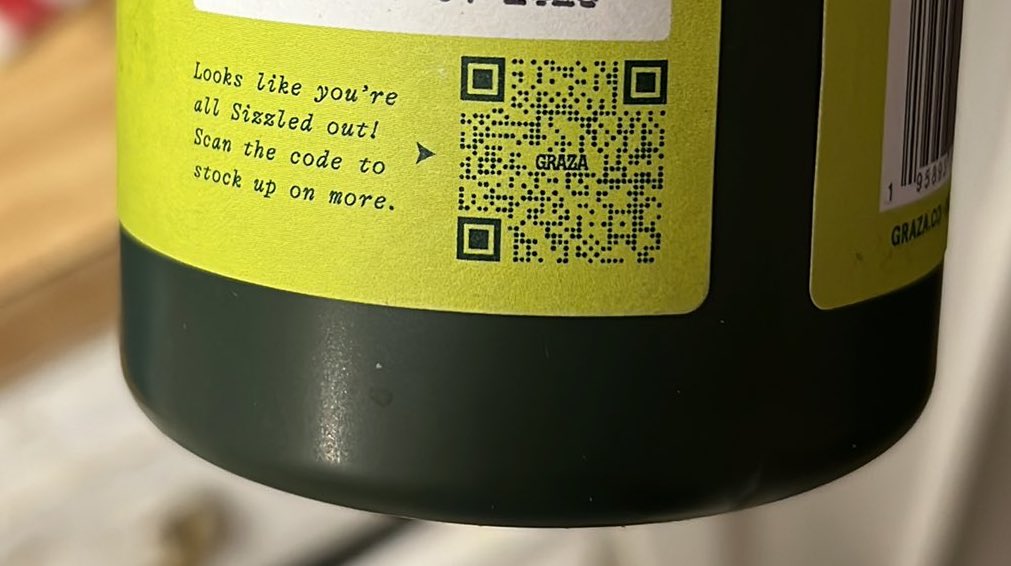
The QR code takes users to Graza’s product pages where they can checkout in a few clicks.
What makes this strategy so effective?
When we’re running low on olive oil (or any everyday item we rely on), we usually add it to our shopping list. In that moment, we have high purchase intent. We may even be extra motivated to buy because we want to avoid the pain of running out or trekking to the store.
The QR code capitalizes on this intent by making it ridiculously easy to restock.
This tactic works for consumables—sunscreen, detergent, toothpaste, makeup, shaving cream, beverages, and so on.
Adding a QR code on your package can help improve retention so long as your customer has their phone within reach.
Use "fence" attributes in your pricing tiers
Insight from The Product Person and Harvard Business Review.
Good-Better-Best (GBB) pricing can help you gain more customers, more revenue—or both.
It's the concept of utilizing product features in your offers to target different customers.
For example:
- Gas stations sell regular (Good), plus (Better), and super (Best)
- American Express offers green, gold, platinum, and black cards
- Cable TV providers market basic, extended, and premium packages
Most companies start with the Best option (obvious potential revenue growth) when they should really begin by figuring out their fence attributes.
A "fence" attribute acts as a barrier to prevent customers from crossing over to a cheaper option.
HBO Max, for example, uses a 2-tiered variation of GBB. Their fence is ads:
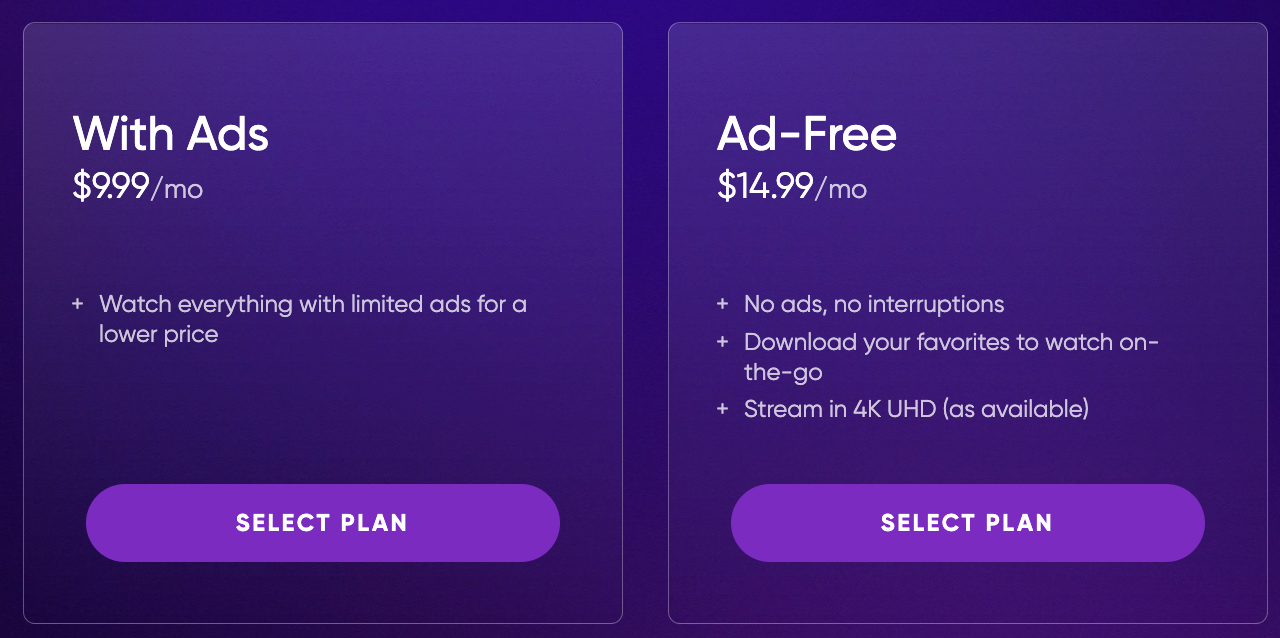
Even though the ad-supported plan (Good offering) is five dollars cheaper, ads are such as strong barrier that 90% of subscribers choose the Ad-Free plan (Best offering).
To implement good offers, you need effective fences. Here are a few ways to identify yours and brainstorm pricing:
- Identify features with wide and deep appeal
- Use no more than four attributes to differ between Good-Better and Better-Best
- Maintain a consistent progression of benefits from Good to Better to Best
- Good pricing shouldn’t be more than 25% below Better
- Best pricing shouldn't exceed Better by more than 50%
For context, many companies expect:
- 10 - 20% of revenue from Good
- 25 - 50% from Better
- 30 - 60% from Best
Note: The actual numbers will depend on the number of attributes, degree of differentiation, and the price spread.
News and links
News you can use:
- Meta published their Widely Viewed Content report for Q2. TL;DR: Content with links gets the least views, while content from Pages, Groups, and friends gets the most (88% of views). The most engaging posts are short videos with catchy thumbnails and visible captions. Organic reach is still terrible (no surprise), but these insights should benefit your ad strategy.
- Instagram's upcoming feature—Candid Challenges—appears to be an imitation of BeReal (currently the No. 1 free app in the App Store). Like BeReal, every day at a different time, you're prompted to take and share a candid photo in two minutes. Remains to be seen how businesses will take advantage.
- Two useful charts to inform your marketing: 1) How different types of content perform on Instagram 2) How users shop on TikTok
Tool we recommend*: Clearbit's Weekly Visitor Report. Ever wonder what companies are checking out your site? Clearbit will send you a report of the high-intent companies that visit your site so you can prospect them immediately. DC readers get free, enriched reports and unlimited CSV downloads—claim yours here.
Growth Summit: our annual summit is coming up quick. Join us for 3 days of focused, tactical sessions. Walk away a better growth practitioner. Sneak peek into some of the sessions:
- Jack Butcher will run a live interactive design workshop.
- Nik Sharma will walk through how he scales DTC brands.
- Hiten Shah will teach you how to create and grow sticky SaaS products.
Plus, many, many more sessions. Get in for free by inviting three of your colleagues. Simply add your colleagues' emails when you register and we'll handle the rest. Claim your free ticket here.
* Sponsored
Something fun
From @artmemescentral