Welcome to the 1128 new marketers and founders who joined last week!
This week we're covering a clever pricing tactic, backlink opportunities, and friction.
How to get more from your marketing tools
Looking to have all your tools work together seamlessly? Try n8n's workflow automation tool. n8n lets you connect all your tools, so you can manage leads with ease.
n8n is a source-available tool. You can host it yourself entirely for free or use our affordable hosted version, n8n cloud.
As a Demand Curve reader, you get a 20% discount on all n8n cloud plans, which saves you up to $250 in annual subscription fees. Use the coupon code demandcurve to claim 20% off your n8n cloud plan forever.
PS: n8n put together pre-built workflow templates to make getting started even easier.
A framework for determining good friction
Insight from ProductLed and Demand Curve.
Marketers usually use the term "friction" to refer to obstacles that prevent people from converting. Most marketing advice says to reduce friction as much as possible.
But not all friction is bad.
Sometimes friction does the opposite of what you're told. It can actually drive purchases and keep users engaged.
Here's our friction framework:
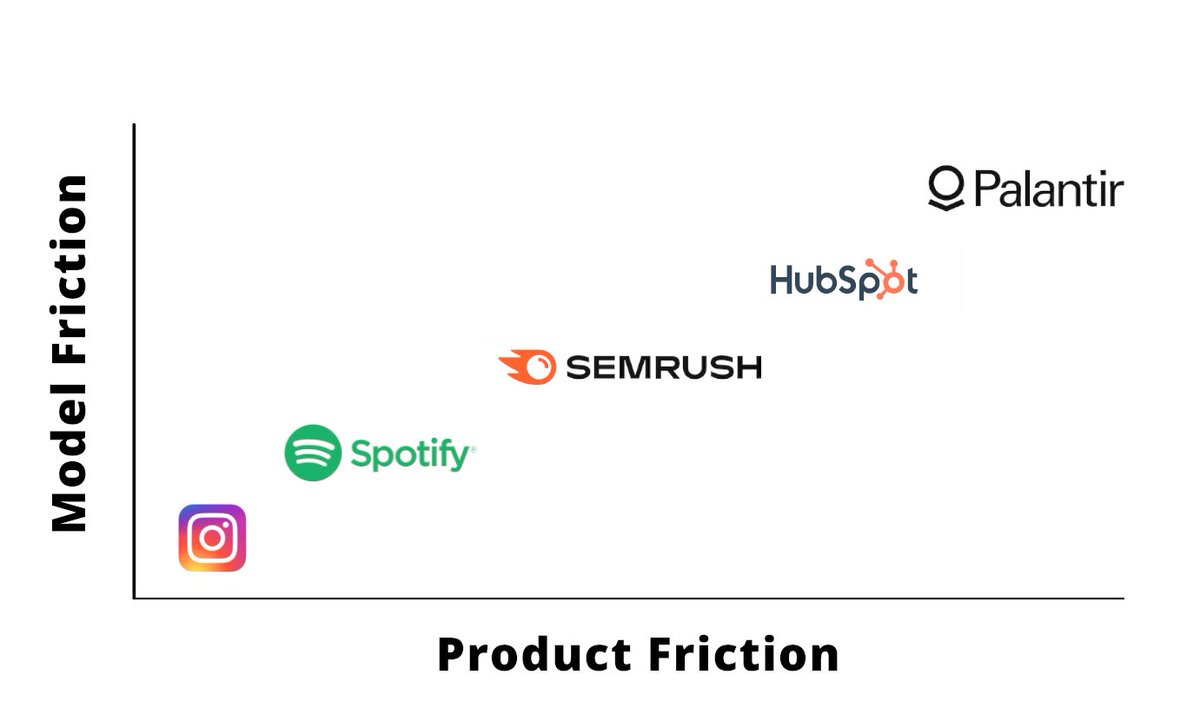
Align your product friction with your business model friction.
- Low product friction = easy to sign up for and get started in
- Low business model friction = low price, simple pricing structure
The higher one is, the higher the other should be. Some examples:
- Instagram: easy to sign up for and free to use
- Spotify: easy to start, low subscription fee
- Semrush and HubSpot: more complicated pricing matches more complicated products
- Palantir: highly complex (and pricy) solutions built for enterprise
Quick list of "good" types of friction:
- Personalization (e.g., Canva asking what you'll be using Canva for during onboarding)
- Cross-selling / upselling near checkout
- Helpful tooltips or a short product tour
- Major announcements, like Headspace's recent popup introducing a UI upgrade (but keep them short)
And bad friction:
- Requiring a credit card for signup
- Prompting users to get push notifications early on
- Requiring account creation to check out
We wrote a thread on friction—check it out on Twitter here.
Use traffic authority to find better guest post opportunities
Insight from SEO Notebook and Israel Gaudette.
There are many ways to tell if a backlink opportunity is "good" or not: domain authority, domain rating, Moz Spam Score, and more.
The trouble is, none of those individual metrics tells the full story.
Take domain rating (DR). Link builders will typically check a site's DR to gauge whether a guest post link is worth building. A high DR (60+) tells you a website is checking many of the right boxes—you just don't know which ones.
To find out, you'd have to drill into additional data points. And that takes time.
Israel Gaudette created a simple formula to quickly evaluate link placements. And you don't need to check 20 metrics—you just need one: traffic authority (TA).
TA uses a domain's traffic as the main data to gauge its authority.
To measure it:
- Take the domain's organic traffic and divide it by the number of organic keywords.
- Then use these benchmarks to evaluate link placements:
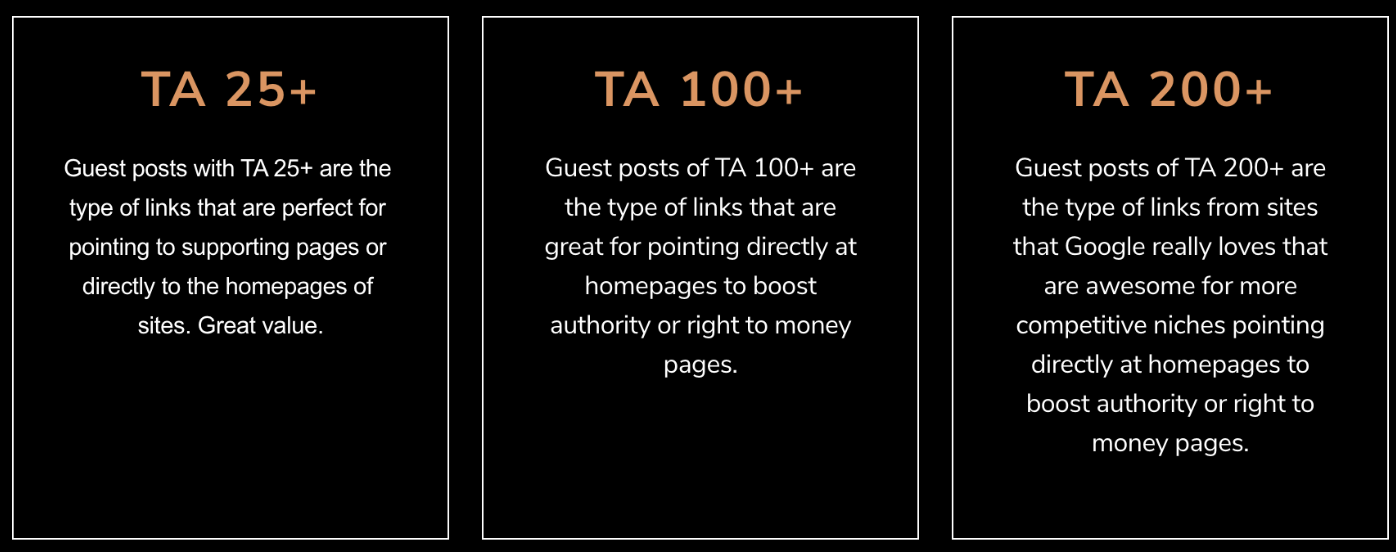
Although no SEO metric is perfect, TA provides a quick, reliable read on link targets.
You can calculate TA yourself (organic traffic / organic keywords). Or better yet, use this handy traffic authority checker. It factors in extra metrics like DR, backlink data, organic keywords, and traffic to give you a snapshot of real “authority.”
Creative pricing tactic for new product launches
Insight from Steph Smith.
Content creator Steph Smith used a clever tiered pricing tactic for her ebook launch:
She raised prices as more copies sold.
Starting with a price of $10, she raised the price $5 for every 30 books sold.
- $15 after the first 30 purchases
- $20 after 60, and so on
- She eventually allowed more purchases at each tier between price raises
To date, she’s sold 3,400 copies for more than $130k.
This tactic works because it leverages two principles of buyer psychology:
- Urgency: People are motivated to buy quickly to avoid paying after a price increase.
- Social proof: The book’s rising price signals the number of customers who have bought it, proving its value.
Of course, not all companies can test this strategy. But this could work well for companies selling courses, agencies selling expertise in the form of coaching sessions, or other companies that sell digital products.
If you use this strategy, your price shouldn’t increase indefinitely—it’ll eventually reach a peak where the cost outweighs customers’ interest. Find the point just before sales taper off, then use it as the standard price.
News and links
News you can use:
- Reddit acquired audience-contextualization company Spiketrap, with plans to improve ad relevance and predictive modeling for auto-bids.
- YouTube creators: YouTube is testing a promotions tab to make content promotion and ad buying easier for you. Instagram creators: IG shared their best practices for getting discovered through recommendations.
- Google clarified what makes a meta description “bad” or “better.” Included among the “bad”: keyword lists, extreme shortness, and news articles that share the same description. Better: specificity and whole-page summaries.
- In development at Twitter: “discover timelines” centered on specific events/themes. Also: an edit button (at last).
Resource you’ll love: Marketing Brew.
Marketing Brew is the Monday through Friday marketing newsletter designed to keep you in the know. This resource is your one-stop-shop delivering answers to the questions you’ve been searching for and the ones you haven’t even thought to ask yet. Marketing Brew is changing the way industry professionals stay ahead of the latest trends with fun, quick, and free updates sent straight to your mailbox. Join a community of over 265k marketing pros and never miss a headline again. Start reading here.
Something fun