

Don't put lipstick on a pig.
Let's dive into what that looks like for your business strategy.
– Neal
The Toilet Paper Rule
Insight from Alex M H Smith.
We want to be the Patagonia of dishwasher tablets.
We want to be the Apple of accounting software.
We want to be the Lululemon of toilet paper.
We want to be the Tesla of bathroom grout.
Being the something of something is attractive because it’s shorthand for a lot of hard to describe elements that make up a brand.
But obviously these above statements are all a bit ridiculous.
What makes them ridiculous is the total mismatch between the brand's sexiness and the product category's utter lack of sexiness.
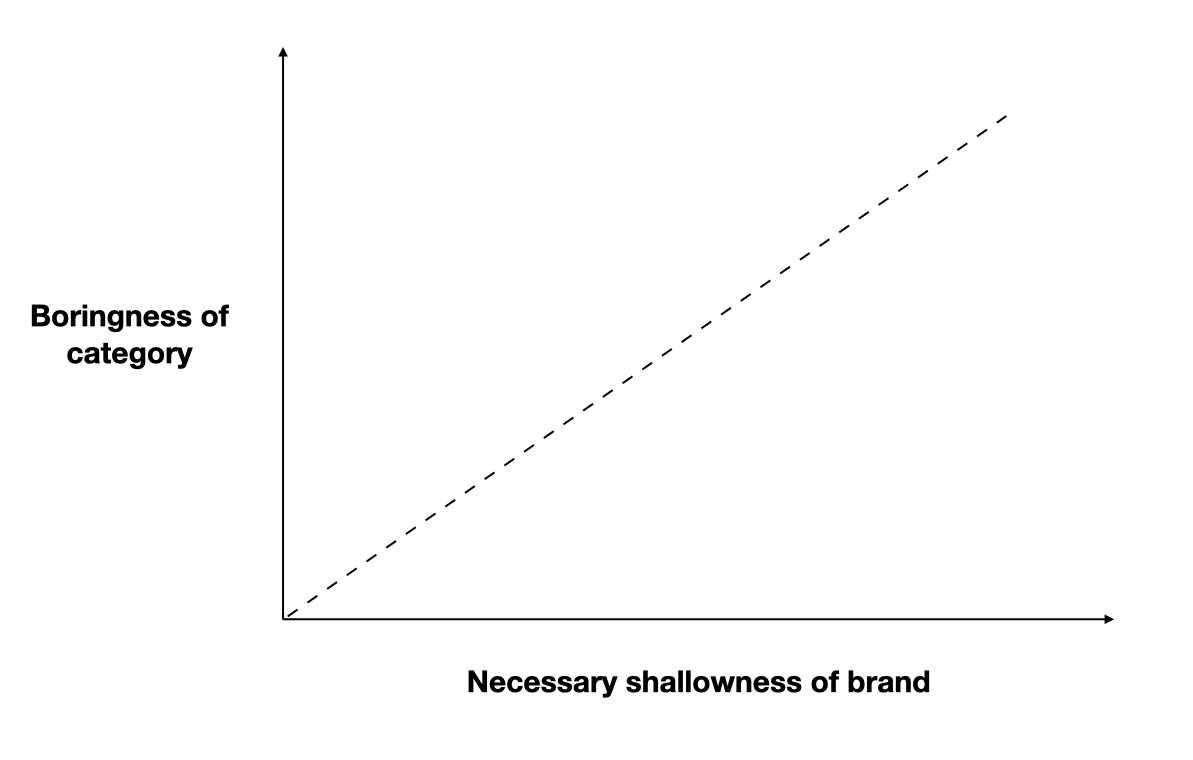
In short, as Alex puts it, “the inherent interest level of a category determines how nuanced and complicated the strategy can be.”
- Interesting = nuanced, sophisticated and rich brand strategy
- Boring = simple and to the point strategy
Here’s Alex’s complex graph to illustrate the concept:
Let’s dive into examples to illustrate this.
Examples of inherently interesting categories:
- Cars
- Health
- Beauty
- Fashion
- Investing
- Furniture
- Travelling
- Technology
With all of the above you can think of various examples of interesting brands that spend countless dollars building a rich brand identity. Tesla, Nike, Athletic Greens, Apple, Airbnb, Lululemon, Patagonia, IKEA, LVMH, L’Oréal.
People spend countless hours researching these categories. They’re hobbies. They’re down-right obsessions for some people.
Examples of inherently boring categories:
- Cleaning supplies
- Office supplies
- Toilet paper
- Accounting
- Appliances
- Insurance
- Oat milk
- Taxes
- Paint
- Law
Most people want to spend as little time thinking about these categories as possible—get in, buy something, and get out. Please never mention it again.
If you sell toilet paper, a legitimate strategy is to slap some puppies or kittens on the package to indicate it’s soft. People already know why soft is good. Try to sell people on your brand values and people will roll their eyes.
Here are some examples of brands who have managed to make their boring product more interesting by keeping their strategy simple:
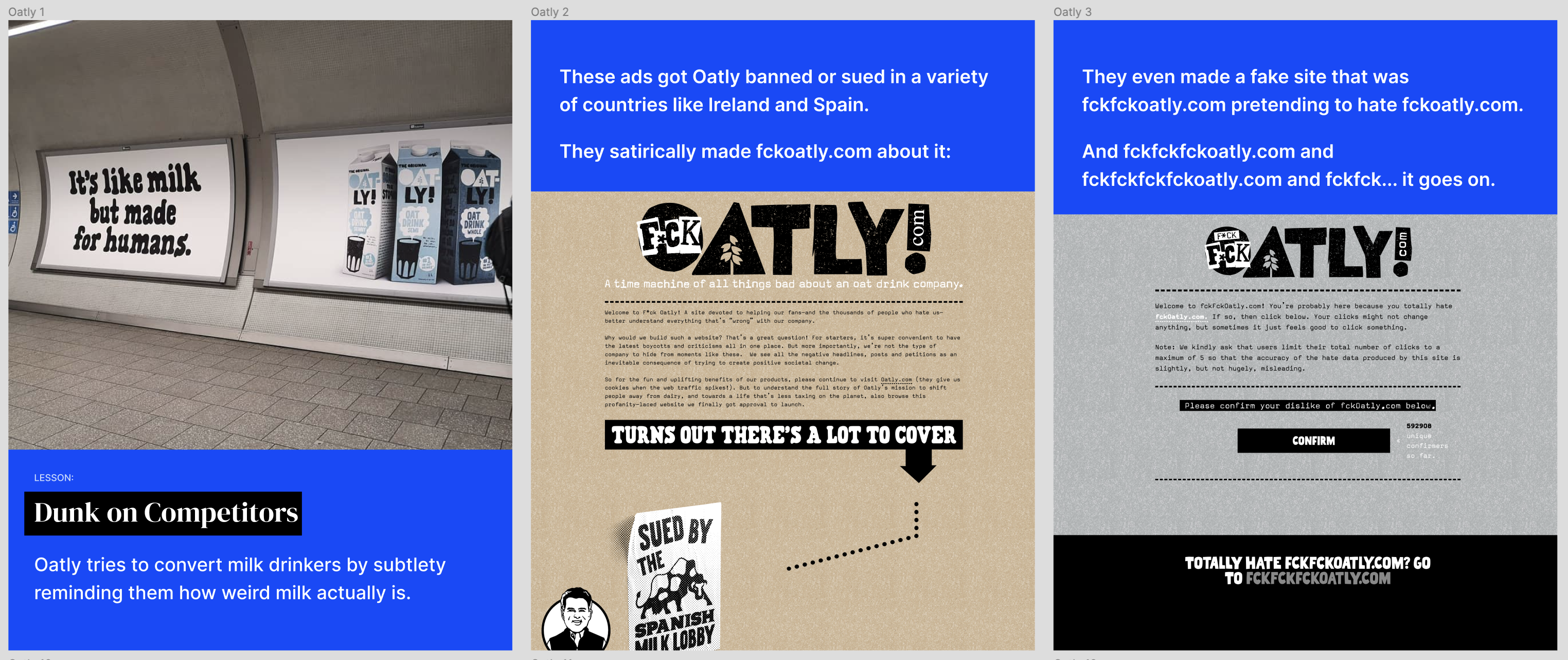
Oatly
Non-dairy milk alternatives is a boring category. So Oatly differentiated with absurd branding, advertisements, and marketing schemes:
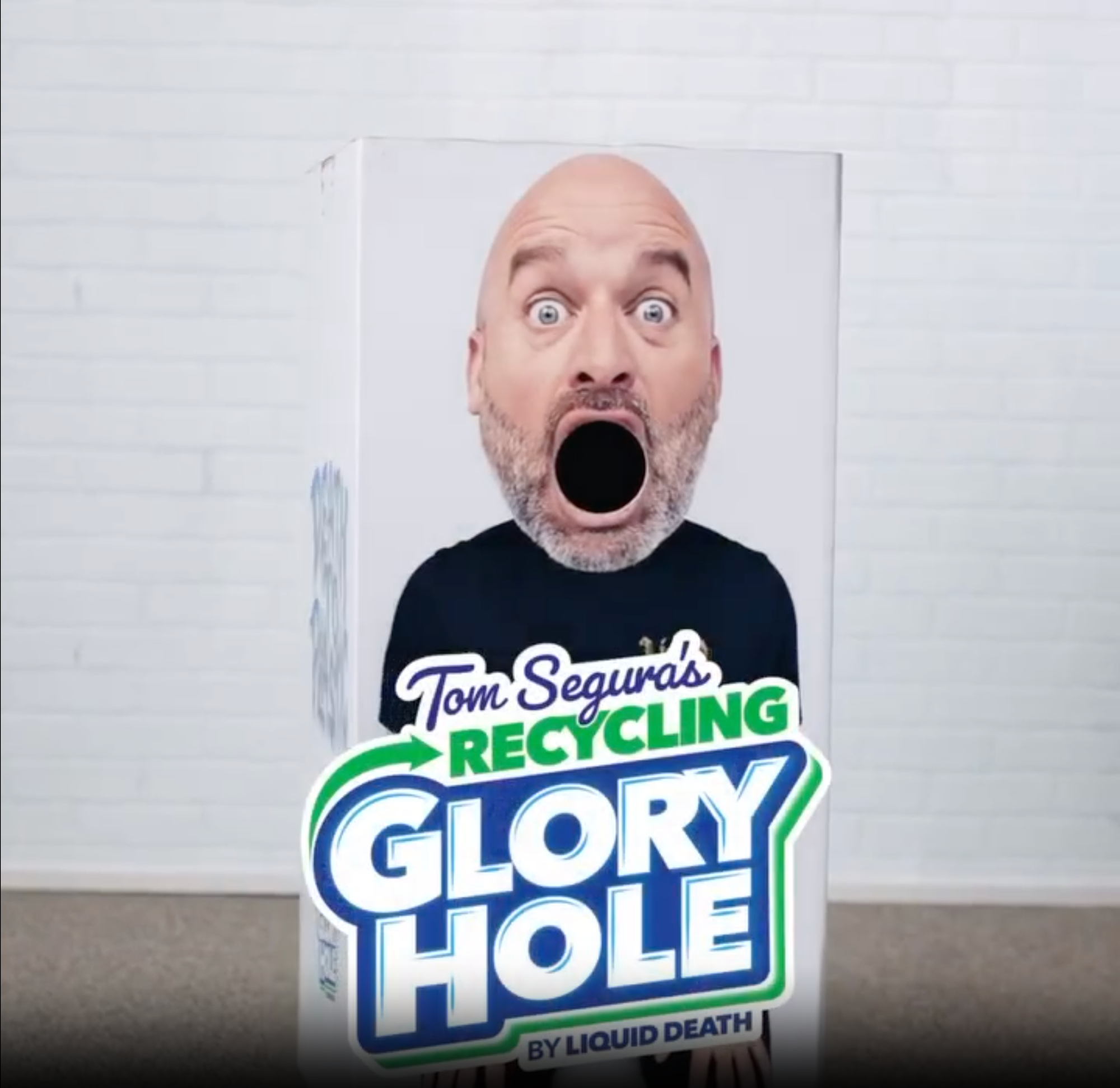
Liquid Death
Is there anything more boring than water?
Liquid Death opted to be the opposite of all other boring water brands by leaning into absurd death metal vibes and wacky advertisements like this:
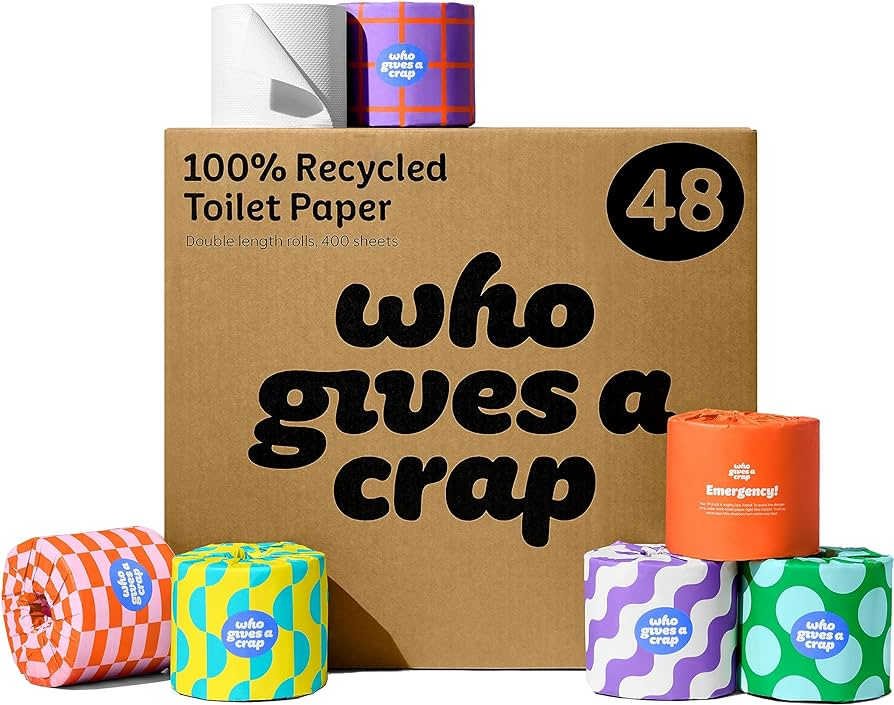
Who Gives A Crap and Dude Wipes
Toilet paper is one of the most boring and uninteresting categories.
Both Who Gives A Crap and Dude Wipes didn’t try to win you over with complicated brand values, instead they went for “let’s be a fun toilet paper brand”
Who Gives A Crap relies on its funny name and fun packaging:
Dude Wipes leans in harder with puns (and a more specific audience):

How to determine if your category is interesting
A great test to measure a category's inherent interest level is to look up how many big YouTubers exist in the category and its subcategories.
There are countless YouTubers who just talk about cars. There are even a ton who just talk about Teslas. Therefore, cars are clearly interesting, so you must have an interesting and nuanced strategy to compete.
None exclusively talk about toilet paper.
Therefore, it’s clearly not interesting, so you must keep it simple.
Check out Alex’s full article for more, or read his book. And otherwise, check out our Growth Vault for more lessons on strategy.
Something fun
From @nikillinit.