

Conversation


🥳 Feedback Received!
Thanks for taking a moment to share your thoughts — it genuinely helps us make each chapter sharper.
What happens next:
- Your feedback goes straight to our product team.
- We’ll use it to refine lessons, clarify examples, and make the program even more useful.
Appreciate you helping make this program better for everyone.
Ready for your next challenge? 👇
How to design a monetization strategy
Your monetization strategy shapes how value flows from your product into revenue. It’s bigger than just picking a price — it’s about deciding:
- What you’ll charge for (or put another way, what customers get when they pay)
- How and when you’ll charge (your pricing structure and timing)
- How much you’ll charge (your price)
- Note: this third layer is your pricing strategy. Just one input to your overall monetization strategy.
As a startup, you do not need the perfect monetization strategy. Optimizing your price point down to the penny is not what moves the needle. But we do need to take monetization strategy seriously.
As you know, your growth foundation is interconnected. If our monetization strategy is weak, our Model foundation is weak, which can break the entire foundation.
Here are four common mistakes we see startups make:
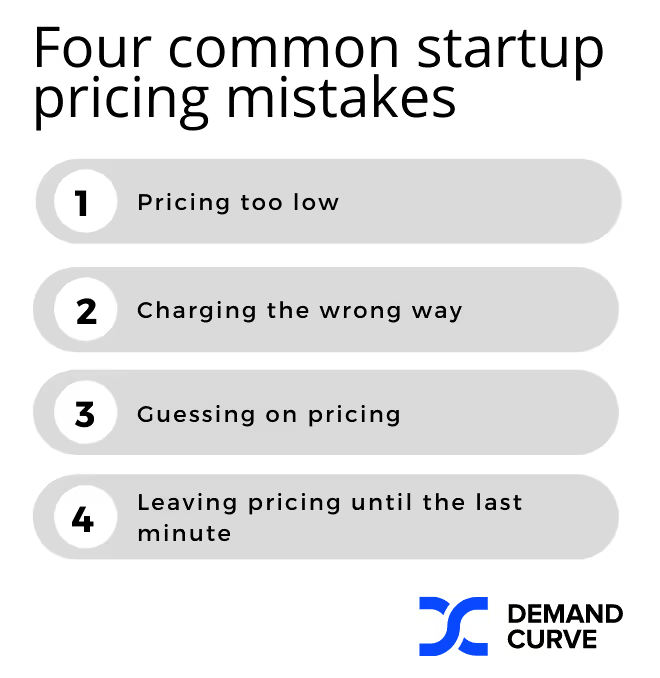
- Pricing too low. Leaving money on the table and capping growth potential.
- Charging the wrong way. E.g. charging per seat when customers would rather pay per usage.
- Guessing on monetization. Picking numbers or structures without customer input or testing.
- Leaving monetization until the last minute. Rushing to pick a price right before launch, instead of designing it strategically.
The good news: you don’t need a perfect system right away.
That said, four principles to keep in mind as you begin:
- Monetization isn’t set in stone. You’ll refine it as you grow and collect more data.
- Your customers influence pricing. They don’t just choose to buy. Their expectations, preferences, and feedback should shape how you design and iterate. This is model–market fit in action: you don’t control your market, you adapt to it.
- Precision isn’t the goal. Early on, it’s about landing in the right ballpark, not about fancy Excel spreadsheets and exotic pricing studies. What matters is that your price and model align with the rest of your Foundational Five.
- Action beats theorizing. You’ll make more progress by testing and talking to your market than by over-engineering from behind a desk.

Here’s how Tyler Gaffney, the CEO of ZenHub, put it:
“People get caught up behind the computer screen trying to figure pricing out or doing a ton of benchmarking and research. Instead, they should be having conversations. All the answers are in your customers’ heads.”
Now, let’s get into your monetization strategy!