

Conversation


🥳 Feedback Received!
Thanks for taking a moment to share your thoughts — it genuinely helps us make each chapter sharper.
What happens next:
- Your feedback goes straight to our product team.
- We’ll use it to refine lessons, clarify examples, and make the program even more useful.
Appreciate you helping make this program better for everyone.
Ready for your next challenge? 👇
Motions
Let's now move into the second layer of your growth system: your growth engine.
Again, this is the key outcome we are trying to help you reach in the Growth Program: scalable, predictable, repeatable growth.
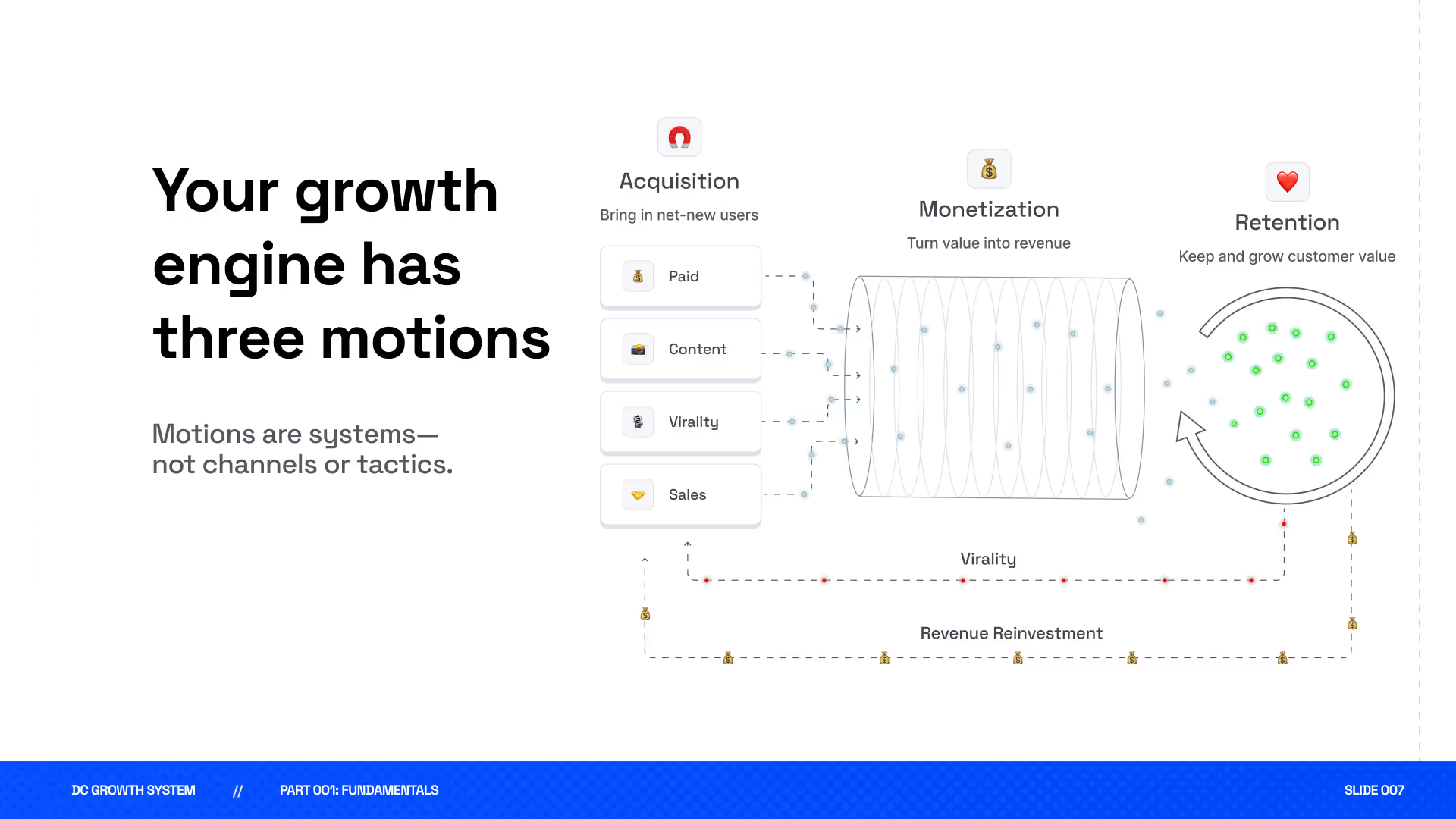
The Three Motions of the Growth Engine
At the core, your growth engine has three motions. To be clear, motions are systems, not channels or tactics.
Our three motions are our acquisition motion (how we bring in net new users and create our first relationship with them), our monetization motion (how we turn that initial interest and relationship into revenue), and our retention motion (how we keep and grow our existing customer base).
What this visual is showing us is that our motions work together in a compounding nature. Acquisition fuels our engine. Monetization captures value. That value can then be returned and fed back into our acquisition motion to drive additional customer acquisition. And it can also be pumped into our retention motion.
Retention as the Critical Driver
Retention, the most critical component of your growth engine, both expands and increases the potential value that we can generate from a customer, kicking even more revenue back into the top of our acquisition motion.
It can also serve as its own acquisition driver through referrals or, more broadly, virality, which we'll explore more throughout this program.
Ultimately, our growth engine does not operate in a vacuum.
Every startup has constraints that determine the type of engine that is feasible to build, given the current stage and reality. There are assumptions that must be validated to move us to the next stage. And we all have unique goals that inform not only where we want to go, but also how we want to achieve it.
We call these our Growth Guardrails, and you’ll define yours in Part 3 of the program.