Hope everyone enjoyed the long weekend and had a chance to overdose on chocolate eggs.
This week we cover transformations, backlinks worth building, and how to lose $100,000.
Thank you to our sponsors who keep this newsletter free for all of you!
Brought to you by MarketMuse. Use AI to find content gaps and opportunities and publish high-quality content every time. Save 20% off Standard with code dc20.
And by Deel. Learn about global hiring benefits, costs, solutions, and more with Deel’s Global Hiring Guide. Download the free guide now.
–Neal
Brought to you by MarketMuse. Use AI to find content gaps and opportunities and publish high-quality content every time. Save 20% off Standard with code dc20.
Whoops, there goes $100,000
Insight from Louis Grenier.

A tiny mistake cost $100,000 in lost ticket sales.
Two-time Tony Award-winning Ken Davenport was releasing a new play.
As he entered the prices for the seat tickets on Telecharge, he forgot a zero. instead of $169.50 per ticket, he typed in $16.95. (Less than a movie ticket these days.)
The mispriced tickets went on sale, and it took over four hours to find and fix the mistake. Hundreds of tickets sold for over $150 less per ticket.
“We will, of course, honor any tickets purchased at the lower price,” he announced.
However, this was no mistake. It was a clever tactic.
It’s common practice for Broadway producers to give out loads of free tickets to promote a new show. The idea is people go for free and rave about it to friends.
Ken wanted to avoid this.
He remembered reading a story about American Airlines accidentally selling £6,118.92 tickets for less than £100— and it got a ton of publicity. Obviously.
“What if I do this ‘mistake’ on purpose?” he thought.
So he did. And instead of giving those tickets away for free, he sold them for $17 each, AND got a ton of free publicity.
This same tactic will likely never work again. But, this is a lesson to question your restraints. Work from first principles. Let the world inspire you. And be creative.
(And yes I fed a photo of Ken Davenport into Midjourney and told it make him 3D and cry.)
Focus on the transformation
Insight from Neal & True Classic.
We process images upwards of 60,000x faster than text. (That range varies hugely depending on the paper. So let's say... much faster.)
Yet the most common marketing mistake we see is:
Focusing on features and tech specs, rather than the outcome.
Show don't tell. Show your customer what life looks like when your product has solved their problem. They're not dumb—they can figure out what's better about it.
For example:
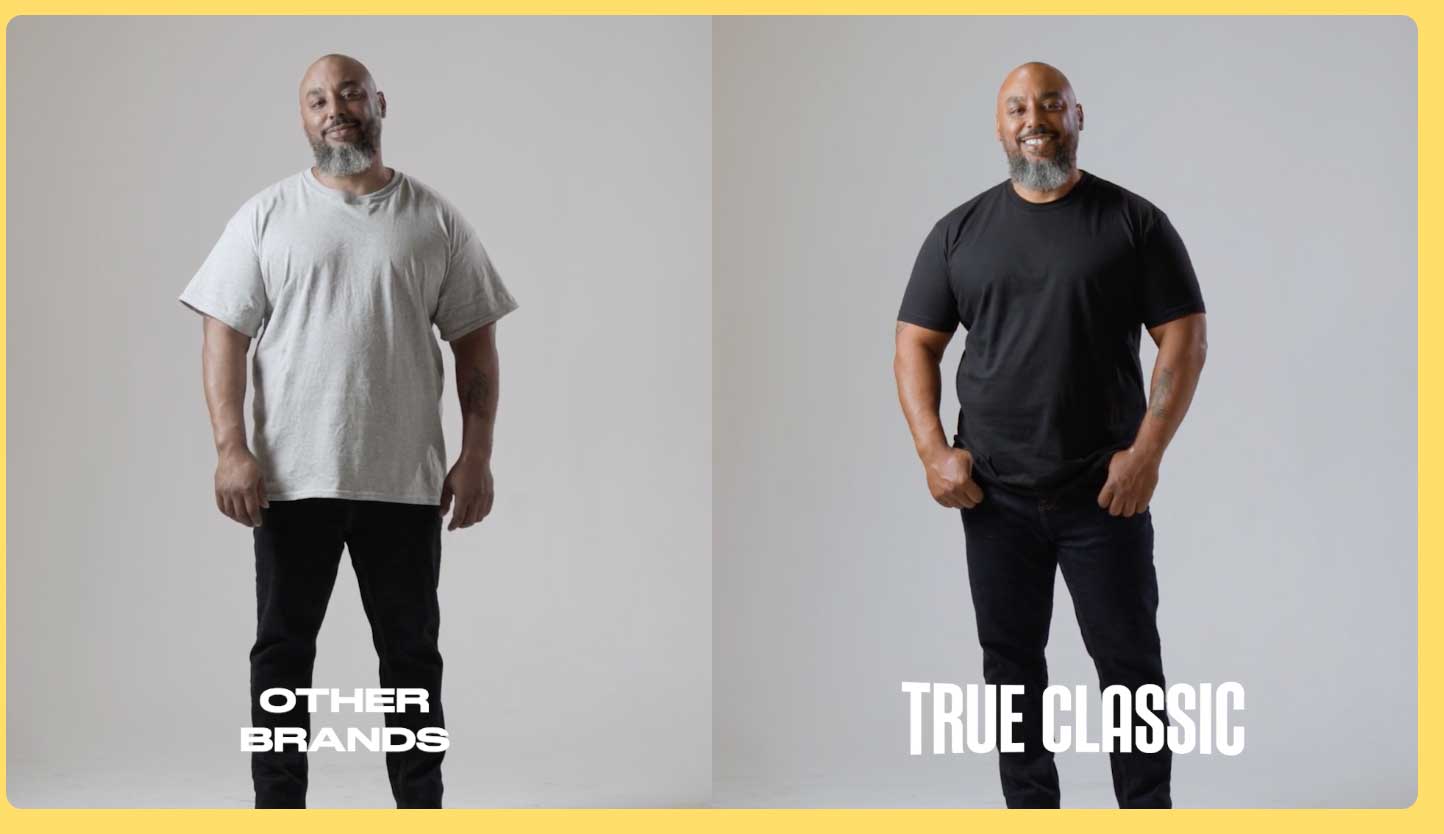
This video from True Classic's website does it perfectly. It shows you immediately how much better you'll look with a better-cut shirt.
They could have said:
- Flattering fit
- Hugs arms & shoulders
- No-stretch collar
Oh, wait they do. But they do that on the product page—after you've already seen the transformation and you know how much better the shirts look.
You want people to go "ohhhh, I get it."
Yes, I know, this is harder for service-based businesses and intangible products. You can't show them saving money with cheaper accounting software. This is one of the reasons testimonials are powerful. People share their transformation story.
So focus on the transformation and the outcome—use imagery if you can.
7 types of backlinks worth building
Insight from Ahrefs and Backlinko.
Not all backlinks are created equal.
Here are seven types you should prioritize building for better off-page SEO.
- Editorial links—the most valuable: When other sites cite you as a source. Apart from earning them organically, you can get these via HARO or connecting with journalists directly (discussed last week).
- Guest posts: These are best to do on authoritative sites that your target audience would read. And make sure you make them really good.
- Relationship-based links: Say you’ve received a link from a reputable site. If you reach out to the site owner with an offer to contribute more info it could lead to more links in the future. The point isn’t to negotiate for links, but to become a reliable source for journalists and writers.
- Business profiles: Links from business directories and social media profiles (think Crunchbase and Yelp). You can create these links yourself, but don’t go so far as to get them from irrelevant, unheard of directories.
- Public speaking: Taking part as a guest on podcasts, webinars, online courses, and conferences not only creates natural linking opportunities—it also builds your expertise (important since Google’s algorithm looks for EEAT).
- Embedded asset links: Think tools, widgets, awards, and badges that other site owners embed onto their sites.
- Reverse backlinks: This is a concept Brian Dean from Backlinko talked about. Instead of reaching out about backlinks, create content that people can't help but link to. Original research is the big lever here—other articles will cite your findings.
And avoid:
- Link farms or other low-quality sites.
- Posting on forums without meaningfully adding to the discussion.
- Paying for links (against Google's ToS).
- Sites that add "nofollow" tags to their external links. No real point since it won't count!
Like most advice we'll give, focus on quality.
News and links
News you can use:
- Twitter continues to steal headlines. Last week the app caused a ruckus by blocking Substack links. For shame! Thankfully, they've since reversed the decision. Reminder: never rely on a single platform, because you never know.
- Speaking of Substack, they released their new Notes feature, which is basically a Twitter clone. The idea is so you can use it to get more subscribers, and engage with your existing audience outside of email and with shorter. I'll be testing it out.
- More Twitter: Blue users see ~50% fewer ads in their feeds. Advertising on Twitter has always been finicky. Even more so now, since the ability to reach power users was just cut in half. In spite of handicapping advertisers' reach, Twitter added some new visual Branded Features to help recoup the loss.
- Google is removing four attribution models for Google Ads and Analytics: first click, linear, time decay, and position-based. Data-driven attribution and first-click models will remain available. This thread explains the rationale.
- LinkedIn has released lots of new features lately to support creators and advertisers. This short guide will bring you up to speed on all the latest ones + how to use them in your LI marketing (via Buffer).
Something fun
From Tim Soulo