
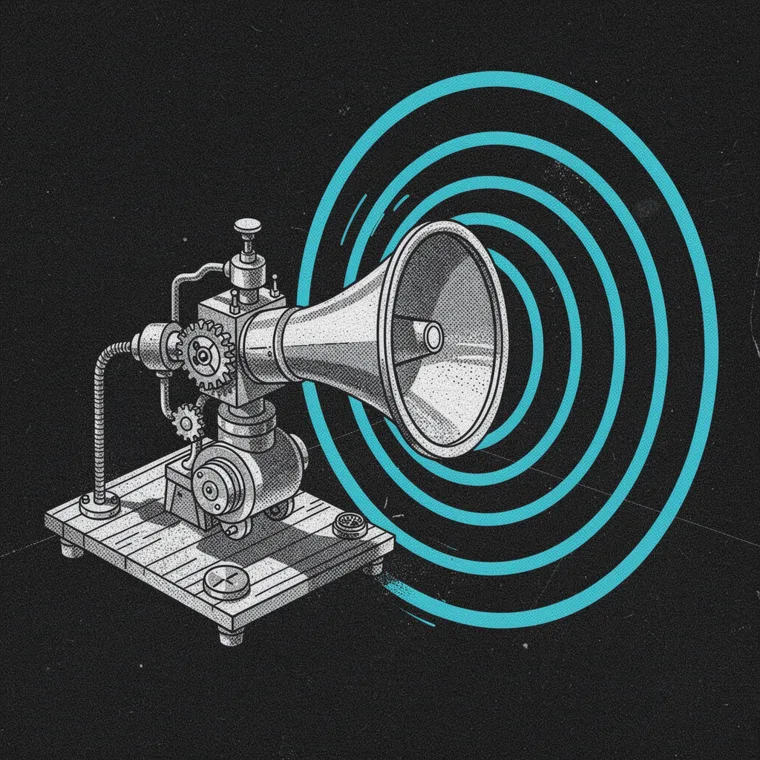
One brand shipped 299 net-new ad concepts in a single month. Not variants. Not resizes. New concepts.
Is that the bar now? Or is there more to the story? That's what we're exploring in this edition.
P.S. This is #2 of The Frontier (a new format we're tinkering with). Lots of happy messages from the first one! 💙 Let us know how we did today. And keep an eye out for a big design upgrade we're cooking up.
Brought to you by HubSpot
When your marketing starts scale, the cracks start to show. Reports take longer, workflows multiply, and adding AI can sometimes create extra work instead of helping.
HubSpot pulls your campaigns and CRM data into one place so your reporting and workflows stay in sync as you scale.
Join our live group demo on March 12 at 3 PM ET to see how high-growth teams structure their marketing operations, keep their data clean, and use AI without adding more manual work.
Save your seat: https://hubs.la/Q043J1K_0

Brought to you by Every — the back office platform startups use to manage cash, payroll, and finances after funding.
Just closed your seed round?
Great. Now the real work starts: stretching runway, avoiding silent cash leaks, and making sure burn stays intentional.
Every put together a practical blueprint for founders on how to manage cash post-raise, including:
- How to think about burn vs. runway early
- Common cash mistakes founders make after funding
- Systems that keep finances clean as the team scales
If you want to protect your runway and make smarter decisions from day one, this is worth the read.
Creative as a Supply Chain
Research from the Demand Curve team.
The Signal
What changed.
Meta’s GEM now orchestrates multi-ad sequences across a user’s entire experience. Bidding and targeting are increasingly automated, making creative one of the highest-leverage inputs left.
The Hypothesis
The emerging thesis we’re exploring.
A growing number of operators believe the top-performing advertisers over the next 12-18 months will be the ones that treat creative as a supply chain — an operational function with production cadences, QA gates, and feedback loops, not just a strategic or artistic one.
The Big Picture
The structural shifts behind the hypothesis.
Andrew Faris (former CTC head of strategy) nails it: Meta ads scaling has two stages. Stage 1 is finding creative that resonates (a strategic problem). Stage 2 is scaling it into diverse assets (an operational problem). Most brands fail to make the transition.
Why does this matter now? GEM optimizes across your entire creative library simultaneously. It needs volume, but only genuine diversity counts. When volume becomes the constraint, we're now looking at a supply chain problem.
- Creative is one of the last high-leverage inputs. Meta is removing manual controls. GEM optimizes across your entire creative library, but data strategy and conversion events still matter. One brand produced 299 net-new concepts in a single month.
- Lazy variants get punished. Same image, different text overlay = same creative, higher CPMs.
- Organic signals now feed ad delivery. Content that performs organically gets algorithmic priority in paid.
- The media buyer role is evolving into a creative strategist. The growth edge is understanding why certain creative resonates with certain audiences.
- Most organizations aren’t ready. Fewer than 30% have internal expertise to evaluate AI in creative production.
What’s Working
Where the thesis meets execution.
- Kynship’s creative flywheel — Develop/deploy/maintain framework. 150+ creatives per campaign launch. Stage 2 as an operating system.
- Foxwell’s GEM-era testing framework — How to structure tests when GEM optimizes across sequences, not individual ads.
- Perpetual Traffic GEM deep dive — 30+ fresh concepts/month minimum. 5-7 creators based on spend. Two hours of detail.
- Jess Bachman’s anti-“spray and pray” — Best ads possible, real spend, analyze WHY, iterate.
- Barry Hott’s ugly ads — 3x click rate, 3-5x conversions vs polished creative. $600M+ in spend. Intentionally lo-fi.
- HexClad’s organic-to-paid flywheel — Slack channel where organic wins get flagged for paid testing. Any team can do this Monday.
- The “Feeder Strategy” — CTR from 6.2% to 11.95%, CPC down 48%. Specific enough to implement this week.
Frontier Players
The operators at the center of this shift.
- Andrew Faris — Former CTC head of strategy. Two-stage framework for creative scaling.
- Jess Bachman — 7-figure agency in one year. Check out the agent he built on Motion.
- David Herrmann — “Have as many diverse ads as Meta will spend on.”
- Connor Rolain — Cleanest organic-to-paid loop in DTC.
- Savannah Sanchez — 200+ ads/week. 50+ clients. iPhone shoots, 5-day cycles.
- Kynship — Most operationalized creative flywheel in DTC.
- Cousin Labs — Creative velocity is the backbone of their methodology.
- Creative Milkshake — 2,000+ ads/month. 200+ brands. 6 languages.
- Motion — Expert Agents codifying top creative strategists into AI.
- Jarvis Su — Building the AI Creative Director playbook from scratch.
- Sarah Levinger — Behavioral science applied to creative strategy.
- Ashley Rutstein — Traditional ad craft meets performance marketing. Plus we just like her vibe.
The Stack
Tools for building the creative supply chain.
Creative Intelligence
- Motion Expert Agents — Dara Denney, Barry Hott, Jess Bachman methodologies as AI. Analyze your creative, get recs.
- Segwise — Tags every creative element, maps to performance. Cross-platform. Only tool analyzing playable ads.
- VidMob — 3 trillion creative tags. OCR, voice analysis, frame-by-frame cataloging.
- Neurons — Predicts ad response before launch. 20 years of eye-tracking data. 95%+ accuracy.
Creative Production
- Celtra — Modular creative automation. 18,000 creatives for one campaign in 3-5 days.
- Foreplay — 100K+ new ads daily. AI brief builder. Expert collections from top strategists.
- MakeUGC — AI-generated UGC videos. 100+ avatars, 29 languages. Full content ownership.
- ChatCut — Edit video by editing the transcript. AI-powered, 60-80% faster than traditional editing.
- Seedance 2.0 — ByteDance’s cinematic AI video generator. Native audio, physics simulation, character swapping. Rolling out on CapCut.
- Sora — OpenAI’s text-to-video. Beware: it's addicting.
- Kling — Video generation. Strong motion and physics. Popular with ad creators for product demos.
- Veo 3 — Google DeepMind’s text-to-video. High-quality generation from prompts.
- Pomelli — Google Labs. Analyzes your site, generates on-brand ad creative and copy.
- Nano Banana 2 — Google’s AI image generator. New version just dropped today.
Signal vs Noise
The counter-arguments, and whether they hold up.
💨 “Creative velocity is everything. Just ship more ads.”
🎯 Maybe. But the most interesting counter-evidence comes from inside the volume camp itself. Jess Bachman built a 7-figure agency doing the opposite: fewer ads, real spend, deep analysis of WHY each one worked. The 299-concepts brand is a compelling data point, but so is Bachman’s results. It’s possible the winners aren’t winning because of volume. They’re winning because volume forces diversity, and diversity is the actual variable.
💨 “More volume = more creative”
🎯 GEM treats lazy variants as the same creative and charges you more. Fifty versions of the same hook is one ad, not fifty. Volume without genuine diversity is just expensive noise.
💨 “AI will replace creative teams”
🎯 AI ads only win when they don’t look like AI. 500M impressions, 3M clicks: human-directed AI outperformed both pure-human and obviously-AI. AI belongs in the middle of the pipeline, not at the top.
💨 “Polished creative wins”
🎯 So do ugly ones.
💨 “You can’t systematize creativity”
🎯 Stage 1 is strategy. Stage 2 is logistics. The best teams separate them. You don’t systematize the inspiration. You systematize everything around it.
One more thing worth noting: Right now, this trend is most visible in DTC and consumer. B2B operates in a fundamentally different environment: smaller addressable audiences, longer sales cycles, fewer products. Whether the creative supply chain model translates to B2B is an open question.
Rabbit Hole
If you wanna go even deeper.
- Creative Strategist Rising — The definitive guide to the role at the center of all this.
- GEM Technical Paper — The source document. For readers who want to understand the algorithm itself.
- Taboola/Columbia/Harvard: AI Ads That Work — Most rigorous AI vs human creative study. 500M impressions.
- Creative Strategy Summit 2025 — Dara Denney, Savannah Sanchez, Sarah Levinger. Best single event on where this is heading.