
This newsletter curates growth insights from Demand Curve's community. It keeps you up-to-date on growth tactics.
This week we're covering zero-party data, SEO autocomplete, customer review inspiration, and 12 CRO fixes.
Build a system to collect zero-party data
Insight from Michael Taylor.
Apple is rolling out a privacy-focused iOS14. Google Chrome is weening off cookies.
The way startups use marketing data is changing—rapidly. Startups should consider building systems to collect "zero-party data."
- Zero-party data: Explicitly consented user data (e.g. survey responses)
- First-party data: Assumed consent (e.g. on-site analytics)
- Second-party data: From a partner (e.g. Facebook audiences)
- Third-party data: Traded or bought (e.g. conference attendee list)
New privacy policies will continue to tighten. It's predicted that third-party data will no longer be very usable and second-party data will become significantly less granular.
Here's one way you can collect the data you need:
First, set up a post-purchase survey a week after your customers buy. Ask 3 questions:
- How they found out about your product (attribution)
- How they'd feel if they could no longer use your product (net-promoter score)
- How likely they are to recommend on a scale of 0-10 (best customers)
This is data you can use to identify top-performing channels and ideal customers.
In exchange for their time, you could send them 3 x 20% discount vouchers (1 for them, 2 for sharing). Or swag. Or special access to future products.
Separately, identify your top 10% of existing customers by filtering them by recency, frequency (how many purchases), and lifetime value. Email this group to introduce yourself and to ask for a 15-minute phone call to provide feedback and learn:
- Where they spend their time online (websites, newsletters, communities, YouTube channels)
- What they'd Google to find your product
Uncover Pre, Mid, and Post SEO opportunities using autocomplete
Insight from Koray Tuğberk Gübür and Rafiqul Islam.
Autocomplete in Google Search can help you uncover real search queries from other users that are related to your target keyword.
Most SEO focuses on ending autocomplete options—the text that populates after you enter a keyword in Google.
But there are also middle and pre autocomplete options. You can check them with a simple "+" sign.
Let's use the keyword gold chain for example. To see more autocompleted queries, type this into the search bar: "+ gold + chain +"
- When you click on the far left "+" sign, autocomplete will show you queries that include keywords before "gold chain." For example, "how to clean gold chain."
- Clicking on the middle "+" will reveal keywords between "gold chain." For example, "gold rope chain."
- Clicking on the far right "+" will uncover queries such as "gold chain with pendant."
Try this:
- Make a list of newly discovered keywords after using this process.
- Pop your keywords into a keyword research tool like Surfer or Keywords Everywhere to see the monthly search volumes of each autocompleted query. Note any queries that have over 1000 monthly searches—that kind of keyword volume might be worth trying to capture.
- Use the top keywords as the focus of future SEO-optimized blog posts.
Mine customer reviews to improve your copywriting
Insight from Copy Hackers.
Sometimes the best marketing messages come straight from the customer.
When you uncover your customers' motivations and expectations—and the language they use to express those feelings—you can take what they say and mirror it back to them in your copy.
Mining reviews is a great way to source copywriting gold. Here’s how to do it:
Go where your prospects are leaving reviews online (Amazon, Google, even Reddit).
Parse through reviews for products or services that address the same core problems that yours does.
Pay attention to descriptive language. Look for patterns. Flag anything that resonates and add the best reviews and copy snippets to a spreadsheet with these three columns:
- Memorable phrases
- What people want
- What people are emotionally reacting to
Fill it up, then read through them again and you’ll notice the recurring frustrations, questions, statements, and experiences—what’s most important to your prospects.
Use these new insights to update and test:
- Headline copy on your homepage
- Product messaging
- Value propositions
Review mining lets you build a valuable swipe file to help spruce up your copy and messaging. You can take it a step further and use the insights to build better products.
12 fixes that will solve 80% of your website's conversion problems
Insight from Demand Curve's Twitter.
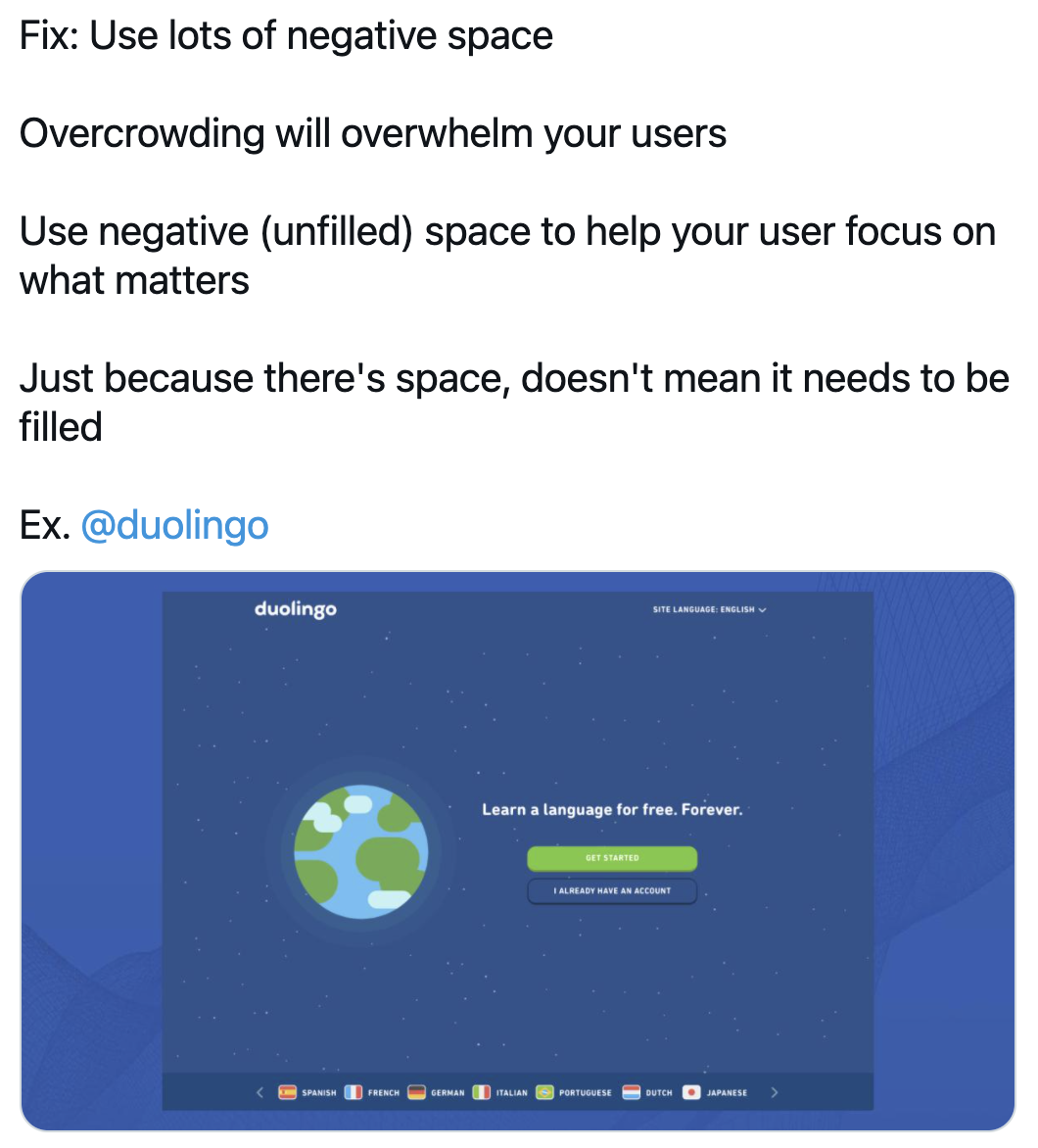
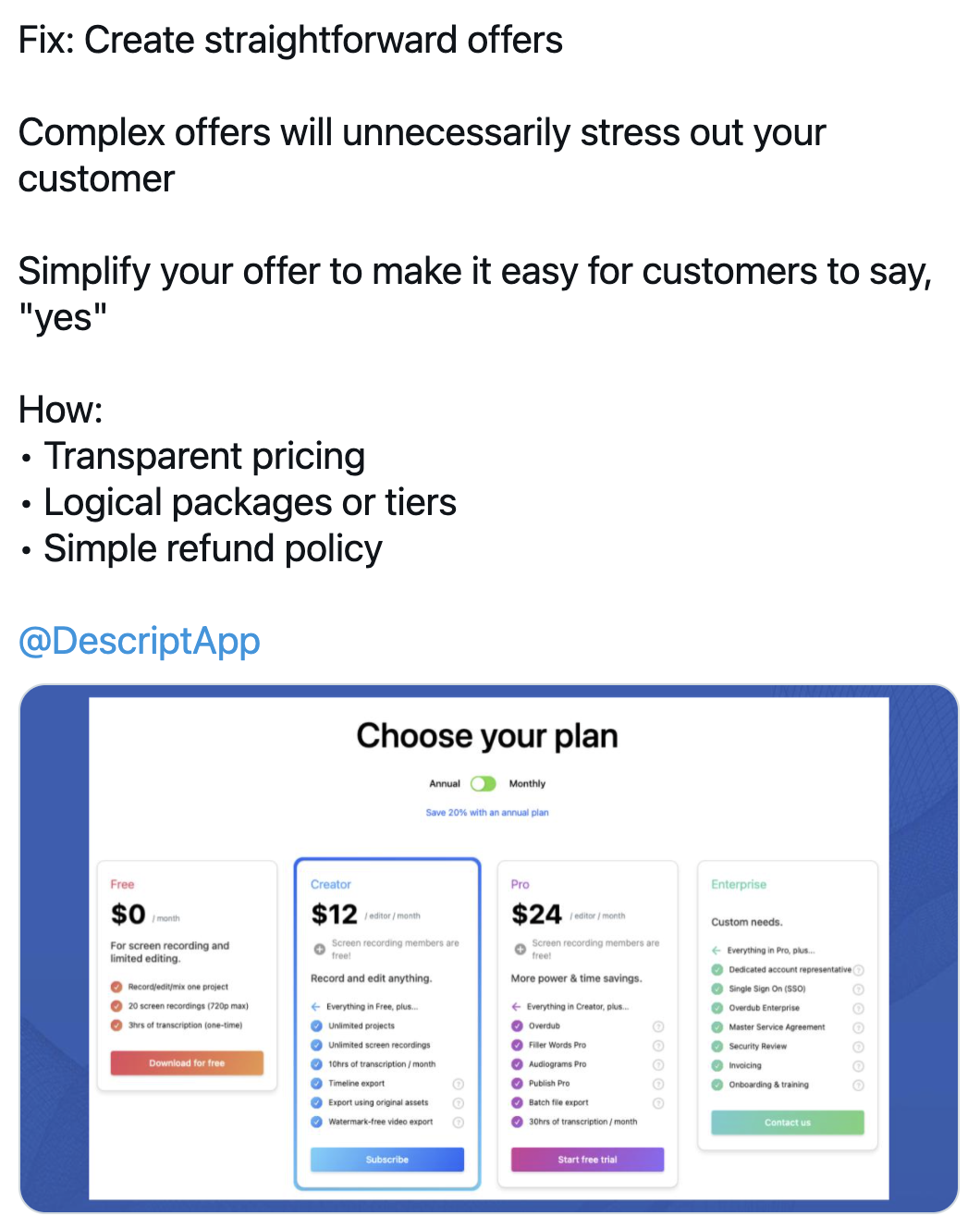
Check out the rest of the fixes on Twitter here. And if you haven't already, give us a follow @GrowthTactics for threads like this every week.
News and links
Startup accelerator (last chance): Village Global is backing founders through its accelerator. And it's worth checking out—their accelerator companies have raised rounds from a16z, Bessemer, Compound, Felicis Ventures, First Round Capital, and many of the most competitive VCs in the world. The application deadline is TODAY August 10th, so check out the details and apply here. (Mention Demand Curve as a referrer and they'll give you until the 13th to apply.)
Newsletter our team is loving: Trends.vc. Dru Riley condenses hours of research into tactical reports. We read every one. Many of our friends feel the same way:
- "So much insight and clarity. Every report is an explosion of opportunities." - Arvid Kahl, The Bootstrapped Founder
- "The amount of value Trends.vc creates for entrepreneurs is hard to put into words." - Andrew Gazdecki, MicroAcquire
Get the next report here.
Top read: If you're focusing on SEO, you should check out Eli Schwartz's book, Product-Led SEO. In it, he breaks down a refreshing, effective take on SEO. And it's helped us shape our own content strategy.
Community spotlight: If you’re considering selling your company, check out Acquire. It's where founders go to get their startups acquired. And where buyers go to find the best startups to buy.
Something fun