

Before we dive into this week's newsletter, heads up:
We have a big announcement coming your way tomorrow! Be sure to check your inbox for something special we’ve been working on. 👀
No spoilers, but I will say it’s a major product drop from the DC team.
And it’s time-sensitive, so don’t hit snooze.
K on to our regularly scheduled programming. Today we're covering newsletter cross-promotions, users' goals, and fake email clicks.
- Neal
Get micro-influencers to sell your products
2022 has been tough for DTC in general. And using influencers to promote your products is becoming increasingly important.
But huge influencers often don't put much effort into promoting their sponsors—and the results reflect that.
Brands like Imperfect Foods, Care/of, Harry’s, and Super Coffee all turn to minisocial’s network of micro-influencers when in need of top-notch UGC.
So why do brands love working with minisocial?
- Their micro-influencers post across Instagram or TikTok and consistently beat traditional influencer activations in terms of reach and engagement.
- All the content from their creators is fully licensed right out of the box.
- Campaigns are fully managed by the mini team and designed to take 10 minutes or less to spin up.
- minisocial is accessibly priced. As a DC reader, it starts at just $1.5k.
Get 25% off when you start before the end of December.
Grow through newsletter cross-promotion
Insight from Neal O'Grady.
The most likely person to subscribe to your newsletter is someone who just subscribed to another relevant newsletter. They've already jumped the hurdle and said "yes" to one, so saying "yes" to another becomes a "sure, why not!"
Want proof?
Lenny Rachitsky's newsletter goes out to over 270,000 product managers and growth people. 78% of new subscribers come from other Substack newsletters recommending his newsletter. 11% of them become paid subscribers.
Here's what happened to his growth after Substack launched the recommendation feature:
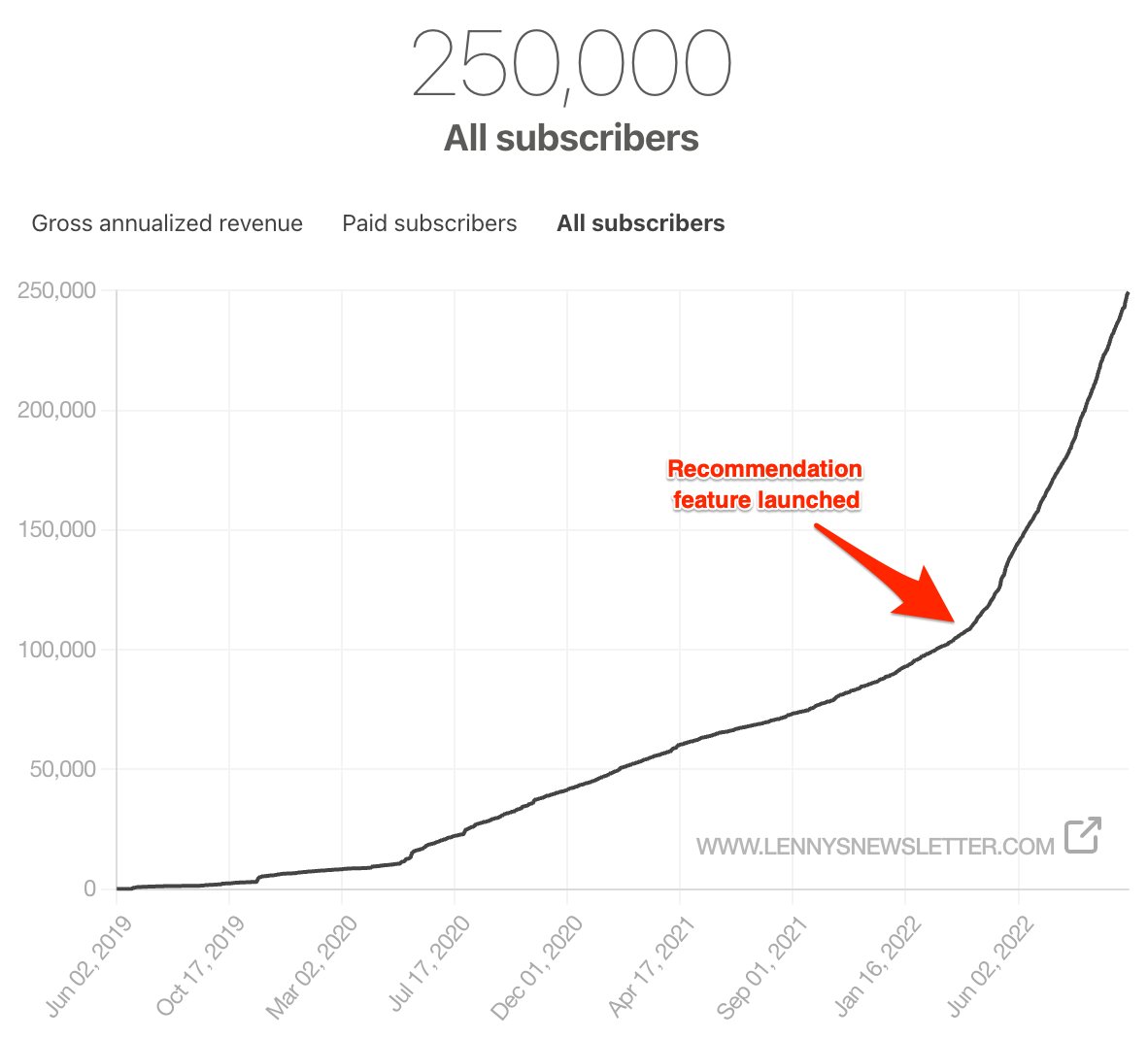
YOWZA. Parabolic.
How do you get this same trend? Well, first you need an amazing newsletter like Lenny's. A high-quality product is always Step 1.
From there, you have a few options:
- Write on Substack (not ideal for company newsletters).
- Get other newsletters to custom code a newsletter recommendation tool (unlikely).
- Use SparkLoop's new Upscribe feature. It's similar to Substack's, but it's cross-platform.
Basically, when you sign up for a newsletter using Upscribe, a modal will pop up that asks you to subscribe to other relevant newsletters. Here's what it looks like on our website:
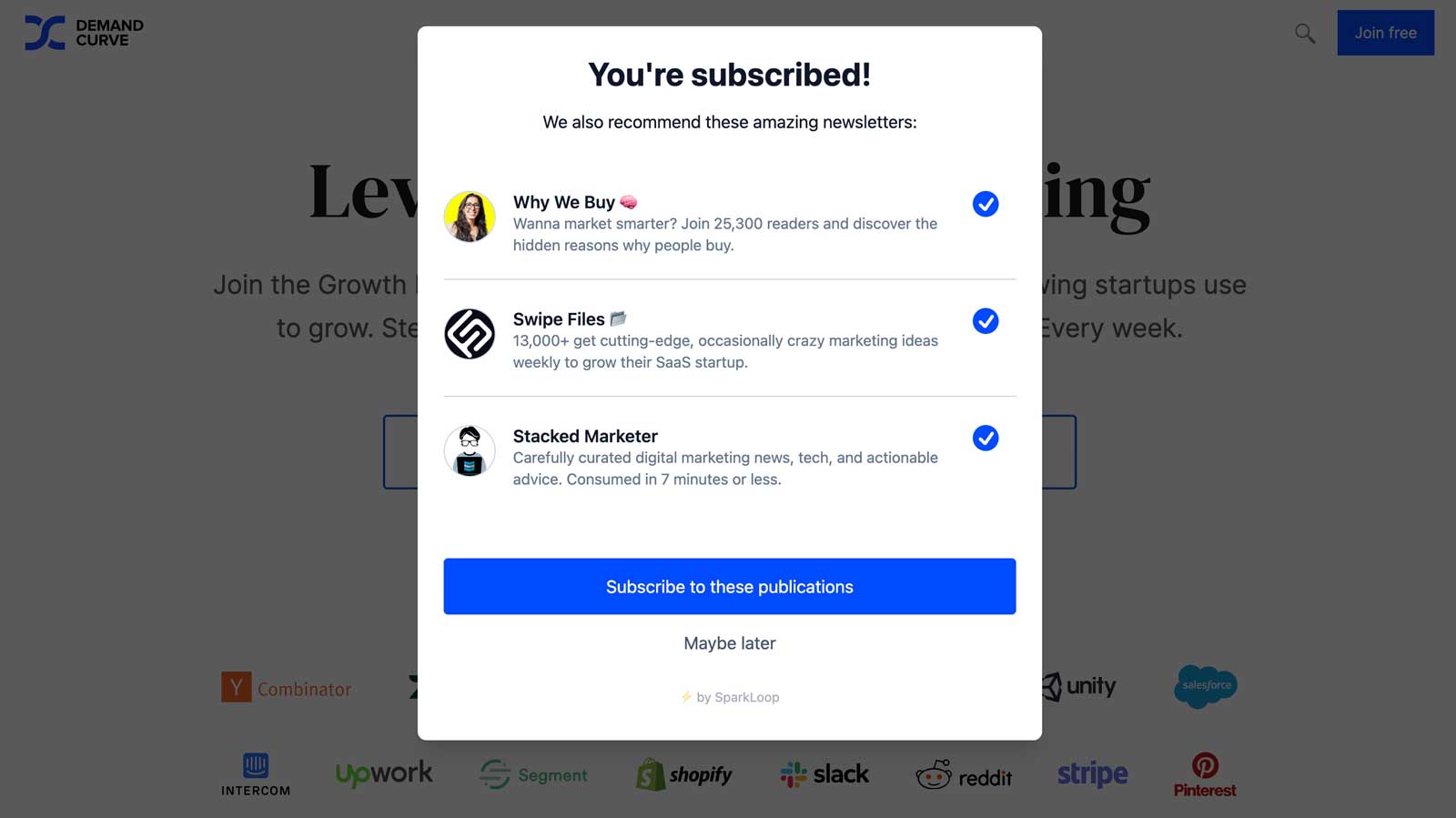
And on their websites, they recommend ours. We all get relevant subscribers for no additional effort.
You can organize free cross-promotions to help grow your newsletter, or you can insert paid partner-program links to monetize your subscribers.
(We were not paid, nor were we asked to promote Upscribe. We just think it’s an awesome tool for newsletter growth and monetization.)
Make users set goals
Insight from Ali Abouelatta.
Want to get users to stick around for longer? Try getting them to set a goal.
The kicker: You don’t actually need to do anything with that goal.
The language-learning app Duolingo discovered this while experimenting with “streak goals.” When a user first signs up for an account, they're prompted to select a learning streak goal of 3, 7, 14, or 30 days.
They can't dismiss this screen—they have to choose a goal. That means extra friction in the signup process—which normally worries us marketers.
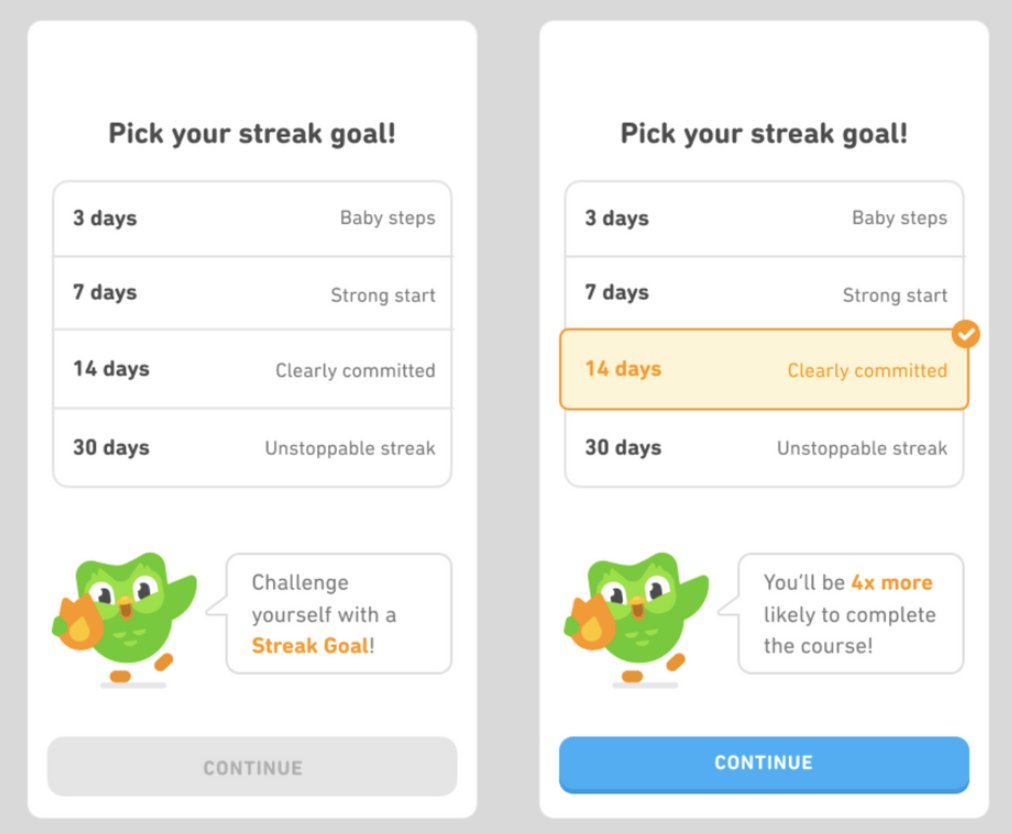
But it works.
Duolingo found that making users set streak goals improved retention, even though the app never references that goal again.
Specifically:
- Users set higher goals than when the app showed a preselected streak goal.
- Users were more likely to stay after viewing this goal-setting screen.
- The added friction of setting a goal didn’t affect drop-off rates.
Our take: Users who pick a goal have made an internal commitment to themselves. That's a strong motivator. They'll feel bad if they don't achieve it and great when they do.
What companies should try testing out this tactic? This could be a good fit for businesses selling products related to self-improvement, like education, health, and fitness.
Determine if robots are clicking your email links
Insight from DTC.
In last week’s newsletter, a link to Dennis' LinkedIn profile instantly received a lot more clicks than expected. We didn't link to Dennis’ profile anywhere besides the footer.
That signalled to us that these were robots clicking the link randomly.
In general, your click-through rate is a solid metric for gauging email engagement. It signals that someone actually read your email and is interested in what you're offering.
(Compare that with your open rate, which is mostly a vanity metric—particularly now that many email clients block the pixel that signals that an email has been opened.)
BUT privacy-focused email clients do fake clicks, which make the data pretty meaningless.
How can you determine how accurate your click data is? The folks at DTC have a tactic: Put invisible links in your emails.
No human will be able to find and click them. But, a robot that's just looking at HTML will.
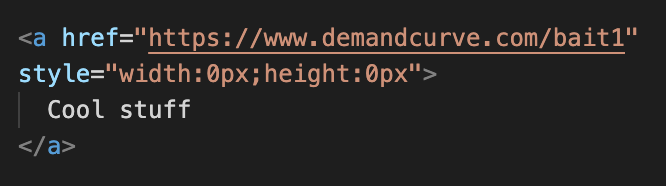
Put a couple in each email, and see how many times they get clicked.
This won't give you a completely accurate picture, but it'll give you an idea. Then you can adjust your read of your email metrics accordingly.
News and links
News you can use:
Remember when Tony Soprano said, “‘Remember when’ is the lowest form of conversation”?
That said, what better time to reflect on the past than at the end of the year? The platforms are all doing it.
Here are ’22 recaps from TikTok, Reddit, & Google, plus ’23 predictions from Instagram and Pinterest. Bonus: YouTube’s top-performing ads of the year (#10 is so charming).
Notable recent platform news:
- Amazon announced Inspire, a short-form video feed for product shopping and discovery. Yep, it does resemble a certain other video app.
- Speaking of, you can now tag locations on TikTok—a nice perk for local businesses.
- Google added topic filters to mobile, making it easier to refine your searches.
- Meta is adding storytelling enhancements to Facebook ad lead forms.
Best tool for product-led growth*: CommandBar
Users expect hyperfast consumer experiences.
Yet many web apps force them to wade through "menu hell." CommandBar takes users from intent to action faster. Add universal search, smart nudges, and timely help content to your product in minutes.
*Sponsored by CommandBar
Something fun
From r/funny