Happy 4th of July and Canada Day to all our fellow Americans and Canadians! Hope everyone had a great long weekend and is feeling refreshed and recharged.
This week we cover SEO in an AI world, product image tests, and giving voice to an unvoiced frustration or concern.
Let's dive in!
– Neal
Segment – Paved
Tool we recommend: Segment
Having the right data is key for marketing.
And keeping the team lean is critical for startups—particularly during a recession.
Those are a couple of the reasons we've been using Segment for 4 years. It:
- Lets us track every action our users take across our different sites, tools, and emails.
- As a result, we can accurately see the impact of each campaign—rather than blindly guessing.
- And we can create accurate retargeting and lookalike lists for paid advertising and email segmentation.
- And we're able to drastically cut down on coding work as Segment handles all the integration nonsense and reduces the amount of coding needed.
Best part, the Startup Program keeps Segment free for early-stage startups for up to 2 years.
Take a few minutes to apply here.
Brought to you by NoBoringDesign. Have you ever felt the pain of design as a bottleneck for your marketing initiatives? Check out the team that has solved this problem for companies like Loom, Dropbox, and Sendoso. They're offering the DemandCurve community a $500 account credit if you sign up by August 5th.
Storylane
Get Storylane– and build killer product demos in less than 10 minutes. Trusted by GTM teams at Gong, Clari, Twilio, Angellist, and 400 more who love to "Show" and not tell their prospects what their product can do for ‘em!
Shorten your sales cycles, increase prospect interactions, and convert website visitors faster using Storylane. Start Free Today.
Hook people by voicing their unvoiced concern
Insight from Un-ignorable Hooks.
To hook people, you need to tap into their emotions.
One of the best ways to do that is to eloquently put a voice to an unvoiced concern, frustration, or opinion.
You want people to say:
- "Finally, someone said what I've been thinking!"
- "That’s so damn true."
Finally, someone said it
Many of the comments on the following post were people saying: "Yes, finally somebody said this thing that I've been thinking."
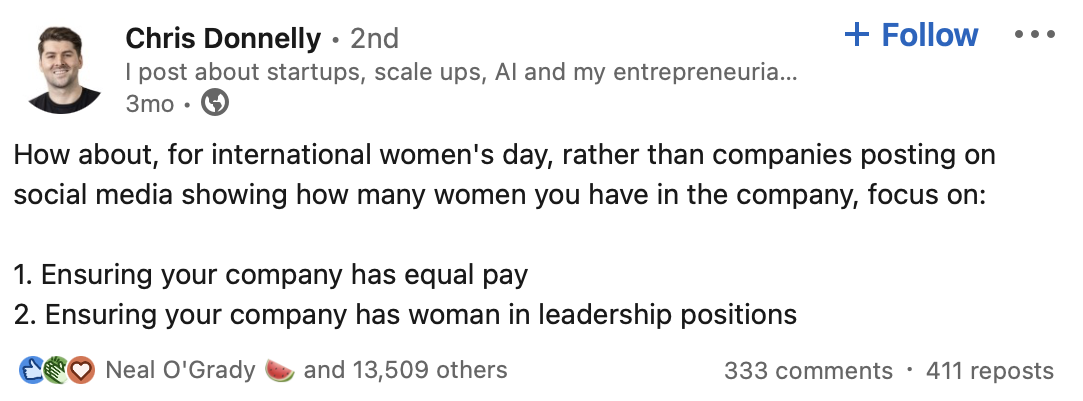
Chris clearly hit an emotional nerve. People are tired of companies simply virtue signaling, rather than fixing a fundamental problem.
Because this post resonated, it got thousands of responses.
That’s so damn true
Here, Andrew tapped into a feeling that every entrepreneur has had:
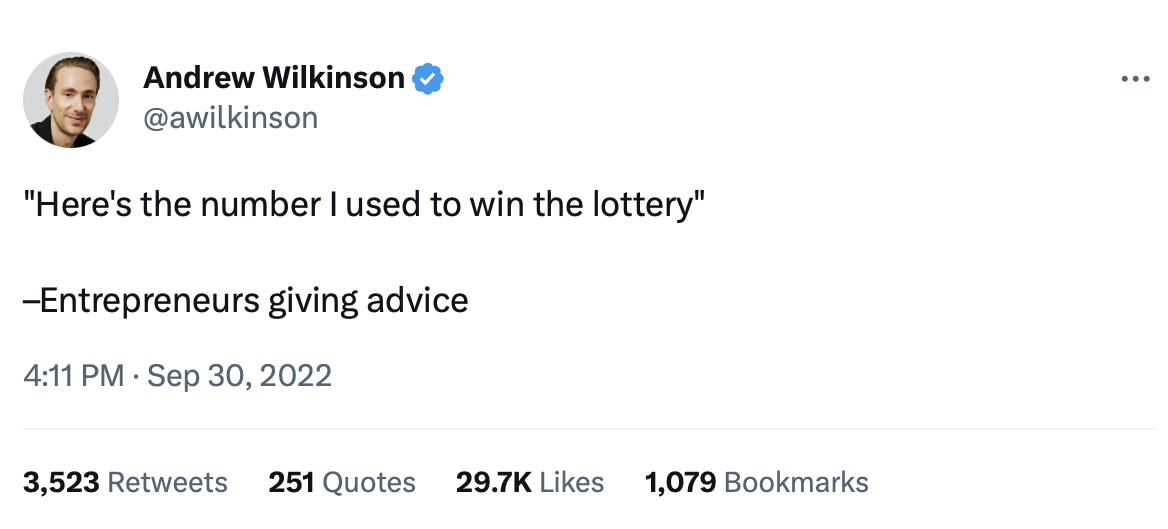
We all know that dumb luck and great timing play a huge part in success. We just don’t always say it.
So when someone else does, we go, "That’s so damn true."
For eloquent hooks, you need to be able to:
- Identify a concern that people haven't adequately voiced, which means keeping a pulse on trends like shared frustrations
- Give voice to that concern in a way that rings true
If you can nail it, it really works.
You could be quoted for years to come as various accounts share your post.
We recently launched a free email course on crafting un-ignorable hooks. Join 860 others learning how top creators hook our attention—with tons of examples. This was a sneak peek 👀
A/B test ideas for product images
Insight from Shopify.
Many ecomm founders think of product images as a one-and-done investment.
They schedule professional photo shoots, then use the pics from them for years.
But product photos have a major impact on purchasing decisions, so it's worth experimenting with them. Here are five ideas.
#1. Use something for size comparison (show your product in context).
Even if your product description includes dimensions, people will understand your product's size better if you show it near something familiar. For example, if you’re selling a picture frame, show it over a couch in the living room.
Don't make people think—uncertainty is a conversion killer.
#2. Test photos without smiling models.
Product images with smiling models are overdone. So test photos in a natural scenario. Consider how hotels show photos of rooms without anybody in them, making it easier for you to picture yourself in those rooms.
#3. Try different image sizes.
Size can influence our perception of value. In one study, a dress shirt seemed more valuable when shown in a small image, whereas a hard drive's perceived value increased with a bigger image. It’s worth testing different image sizes and the amount of white space in your photos.
#4. Include complementary products.
If you plan to capture your product in a natural scenario, why not include other relevant products to show how they benefit each other? This is a major upsell opportunity—just remember to link those other products shown.
#5. Have fun with it—it's just a test.
Use Midjourney, Photoshop, and other AI and design tools to throw your product into strange scenarios. Like a watch on Honest Abe's wrist.
For that matter, if you can't afford actual product photos for initial or test images, play around with AI. If something does really well, consider staging an actual photo.

How to approach SEO in an AI world
Insight from Eli Schwartz (author of Product-Led SEO).
Although ChatGPT can already answer a lot of search queries, most people still don't use AI as their default search tool.
That's soon to change.
Google is rolling out generative AI answers at the top of its regular search results, which could kill the need to click to a website for most queries.
Here are SEO expert Eli Schwartz's recommendations for a new strategic approach to SEO.
#1. Focus on mid- and bottom-funnel keywords
AI will adequately answer basic and broad questions.
Examples: "What is a demand curve?" "How long are Instagram stories?"
Searches like "hotels Vegas Strip" will spit out lists of hotels. On the other hand, "Usher Las Vegas" is further down the funnel—the person searching for that is either looking for reviews of the show or interested in booking it. They're more likely to click on a result, rather than read an AI response.
#2. Focus on revenue from SEO, not volume
Because a lot of "tire kicker" searches will be handled by AI, traffic and clicks will go down. So revenue is a better metric to track SEO success.
#3. Use "People also ask" for content ideas rather than keywords
"People also ask" is a window into the types of queries people are trying to get answers to, and they're generally longer-tail (and more specific). It'll be useful for spotting mid- and bottom-funnel queries that can help generate content ideas.
_01H4NX694KCZVVBXRMS4HA9D4F.png)
#4. Prioritize "domain authority" less and relevance and topical authority more
Backlinks from sites with high domain authority were once useful for the most competitive search terms. That might not be the case anymore, since those competitive broad terms will be addressed by AI.
So instead of fighting (or paying) for backlinks from Forbes and TechCrunch, focus on backlinks from less popular sites that are highly relevant and specific to your niche.
News and links
News you can use:
What a social week:
- Meta launched Threads, a Twitter competitor and separate app (but same login and handle as Instagram). It hit 30M users in 24 hours 🤯.
- LinkedIn changed their algorithm recently to focus more on "useful content from the people you follow." In the past couple of weeks, they also cleared out old followers and broke the algorithm for a whole day. Yeehaw.
- Twitter added limits to the number of tweets someone can see based on whether they're paying, free, or new. Supposedly temporary but unclear for now.
- TikTok Now, TikTok’s answer to BeReal, is getting discontinued. Copycatting doesn’t always work, and viral phenomena (like BeReal) don’t always stick.
- Bing announced the launch of Buying Guides, which offer AI-generated product suggestions and comparisons. Further proof of what our first tactic in this newsletter makes clear: SEO is gonna change, and fast.
Tool we love: Segment*
Having the right data is key for marketing.
And keeping the team lean is critical for startups—particularly during a recession.
Those are a couple of the reasons we've been using Segment for 4 years. It:
- Lets us track every action our users take across our different sites, tools, and emails.
- As a result, we can accurately see the impact of each campaign—rather than blindly guessing.
- And we can create accurate retargeting and lookalike lists for paid advertising and email segmentation.
- And we're able to drastically cut down on coding work as Segment handles all the integration nonsense and reduces the amount of coding needed.
Best part, the Startup Program keeps Segment free for early-stage startups for up to 2 years.
Take a few minutes to apply here.
*Sponsored by Segment
Something fun
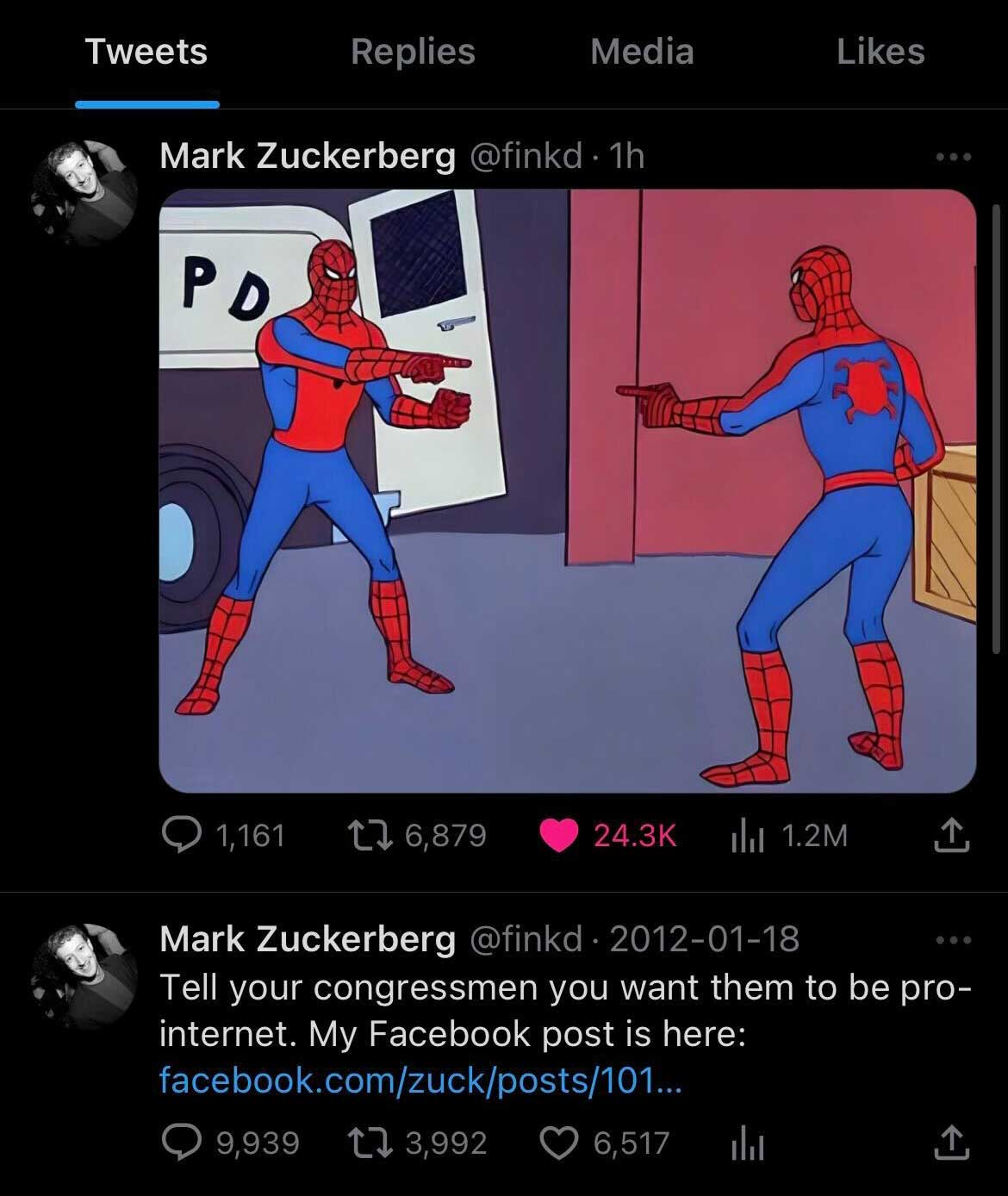
From Mark Zuckerberg. First tweet in 11 years as Threads was launched.