Often, people buy like this:
They see your ad → visit your page → enter an email funnel → convert.
Sometimes, it's days, weeks, months, or years later.
Let's dive into how to write marketing emails that convert.
– Neal
Brought to you by Passage by 1Password
Roughly 30% of online purchases are abandoned because customers can't remember their passwords.
Ready to fix that?
Join Passage by 1Password's webinar on June 25th to discover how passkeys work and why companies like Amazon and Best Buy use them to reduce shopping cart abandonment and increase revenue.
AgileBits Inc.
y
Copy as ...
Open secret: roughly 30% of online purchases are abandoned because customers can't remember their passwords. Ready to fix that? Join Passage by 1Password's webinar on June 25th to discover how passkeys work, and why companies like Amazon and Best Buy turn to them to help reduce shopping cart abandonment and increase revenue.
How to write marketing emails that convert
Insight from Demand Curve.
- Ads get attention and pique interest.
- Landing pages convert interest into intention.
- Emails convert people over time when they're ready.
Remember: It’s rare to see something for the first time and buy it immediately.
Use these steps to write email sequences that sell for you and make your acquisition efforts more profitable.
We need folks to open, engage, read, and take action. Let’s dive in:
1. Get people to open
Only three things dictate whether someone opens an email in their inbox:
- Your reputation (the “from”)
- The subject line
- The pre-header (shown in most email tools)
Here’s what those look like:

A reputation is earned slowly. The subject line and pre-header are more immediately controllable. They need to hook people to get them to open.
Three triggers that cause people to click:
- Self-interest: Offer email subscribers something that's going to help them.
- Example from Spotify: “Playlists made just for you”—save them time and effort.
- Emotional interest: Spark positive emotion.
- Example from Typeform: “You're invited to the premiere”—make them feel special.
- Relational interest: Get them to like you, trust you, and want to hear what you have to say.
- Example from Allbirds: “Leave a lighter footprint”—build connections to the brand and mission.
Write subjects and pre-headers that spark one of these three interests, and they’re more likely to open.
There are many more ways to hook. Subscribe to our free email course on Unignorable Hooks.
2. Get people to read it
Email copy needs to check these boxes:
- Aggressively concise. Don’t waste time with fluff.
- Not clickbait. Fulfill the expectations you set in your subject line.
- Keeps hooking them. Your subject line gets them to open, your opener gets them to keep reading. Continue to build interest and keep them engaged.
- Make the email valuable itself, but promise even more value that’s only delivered when subscribers click your CTA.
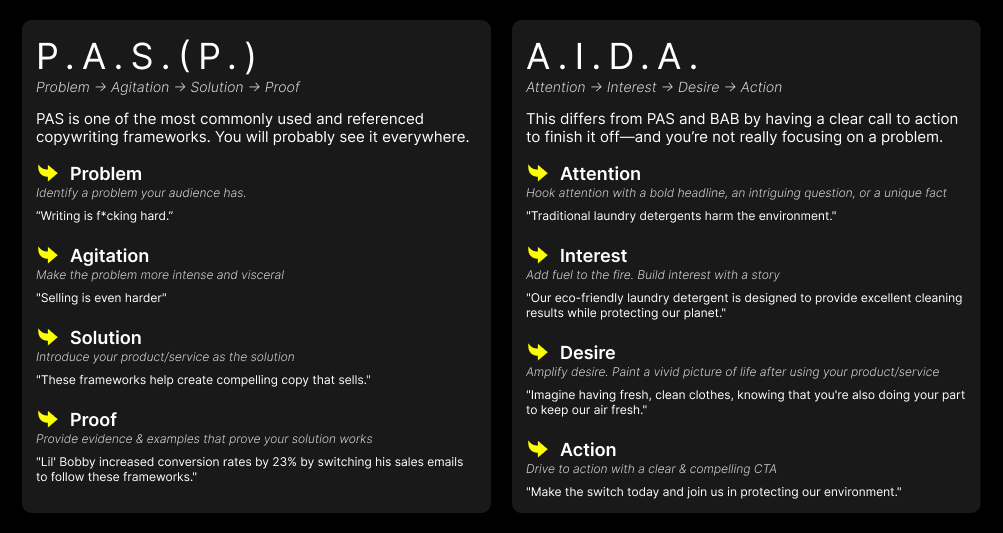
Help your readers. And do it succinctly. Frameworks like PAS and AIDA can help:
3. Design it for engagement
Words aren’t everything. Once people open your email, they reflexively decide if they’re going to read it, skim it, or bounce based on their first impression.
Here are a few tips for designing attractive, engaging emails:
- Make it easy to read and skim. Use a standard, large-ish font (12px to 16px).
- Design for mobile, then adapt that design to desktop. Most people will read your email on mobile.
- Hi-fi or lo-fi. If you’re going hi-fi, make it look great and on brand. If lo-fi, make it look like a regular old email sent by a person. Either can work well.
A job well done from Starbucks:
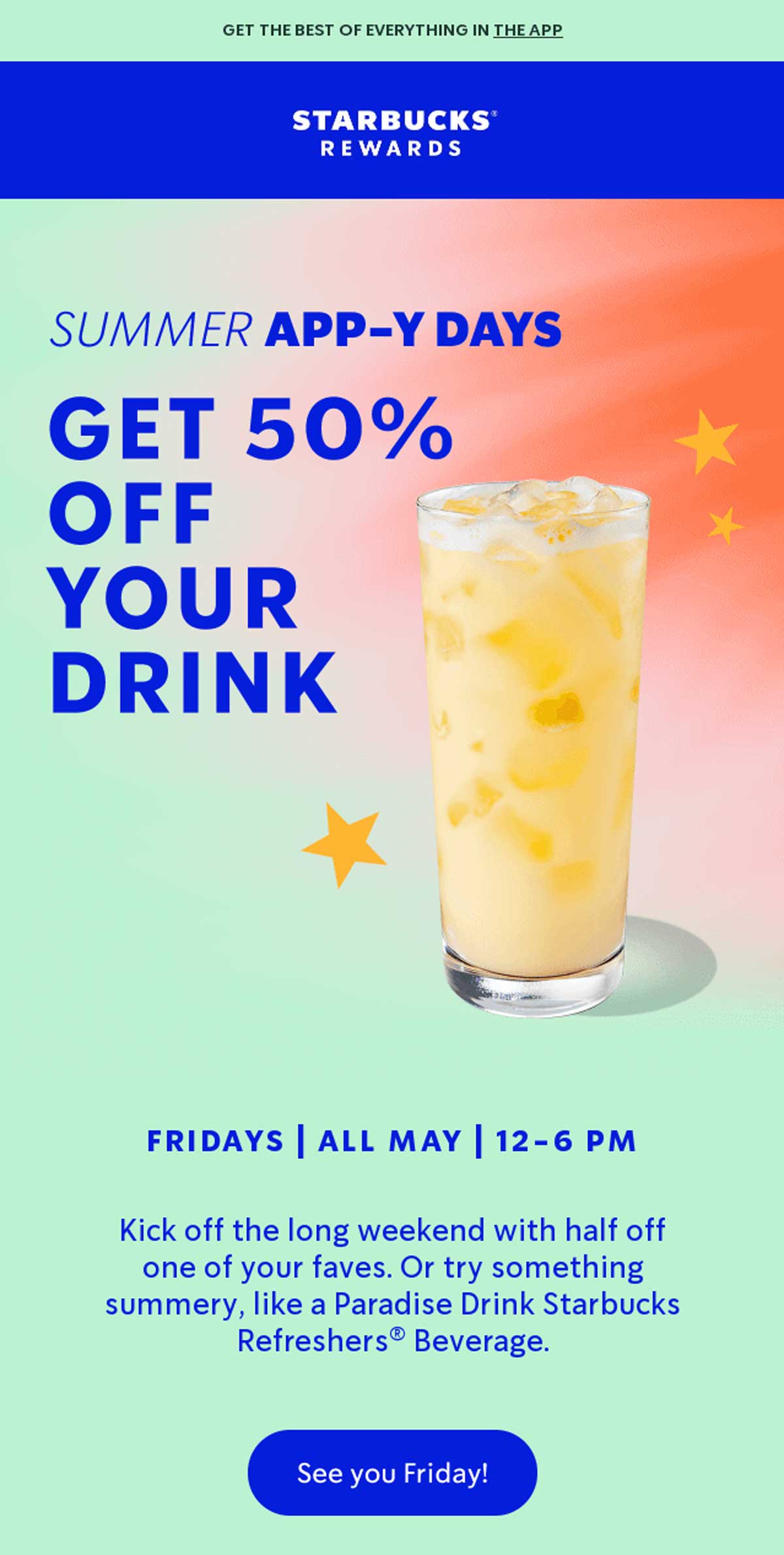
It’s simple, attractive, and easy to read on mobile.
4. Get people to take action
Why are you sending this email?
Optimize the email to achieve that goal. If your goal is:
- To increase webinar signups, a possible CTA would be “book your spot” (which we think is a bit more motivating than the standard “register now”).
- To get feedback, your CTA might be “take the 1-minute survey and get 20% off.” Adding a time frame clarifies the commitment level.
- To drive sales, your CTA might be “Get 20% off today only.”
These examples are specific and directly relevant to the page at the other end of the click. We call these calls to value. Instead of generic prompts, they provide clear value to the reader.
Here’s an example of steps 2, 3, and 4 done right:
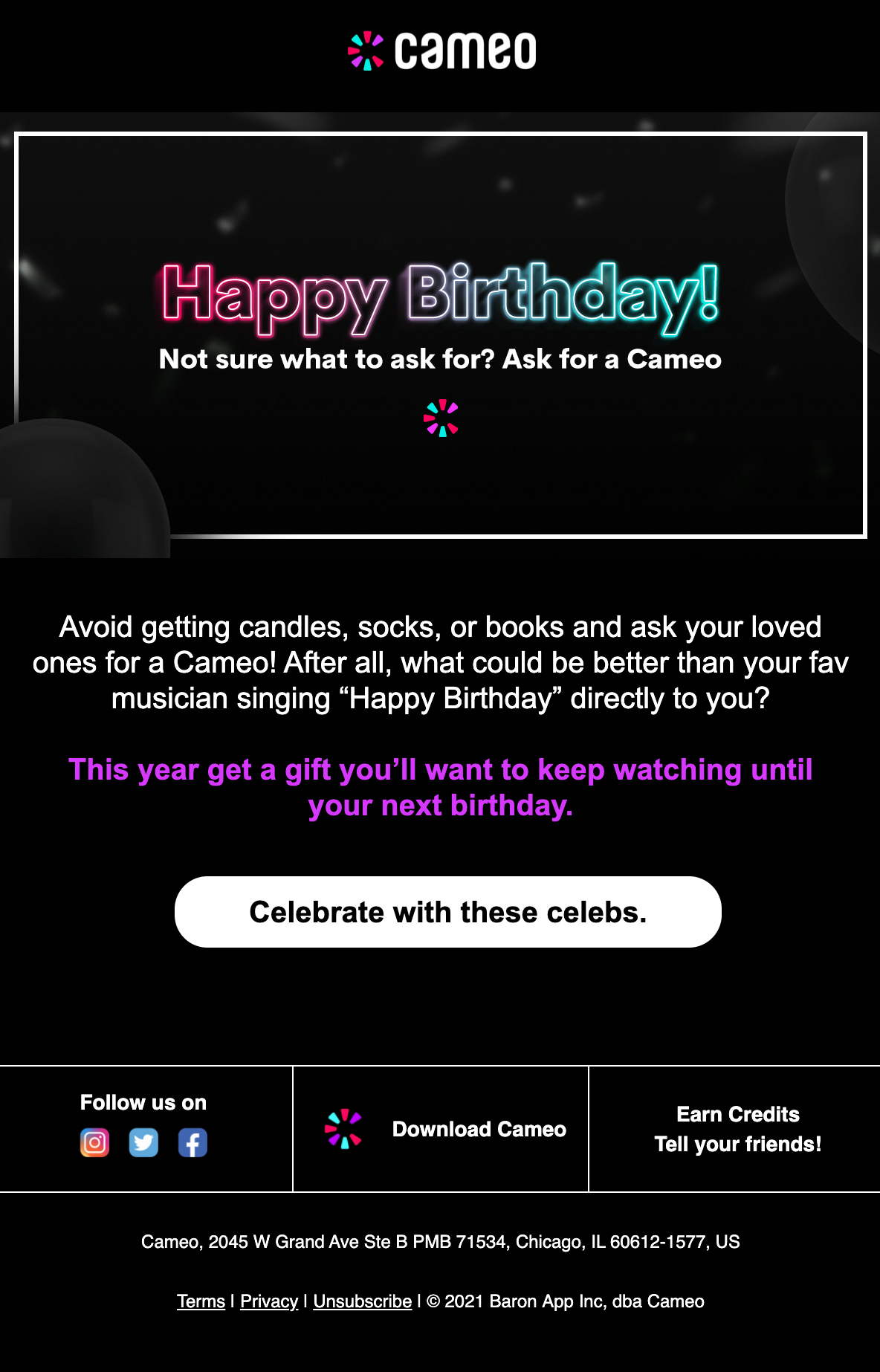
Why Cameo’s email works:
- It’s personal—timed just before the recipient’s birthday.
- The paragraphs are short and conversational. They use vivid language that paints a picture: You can have socks, or you can celebrate with a celebrity. That’s an appealing either/or.
- The CTA “Celebrate…” is a clear, specific next step to getting value that leaves you curiously wondering: “which celebs?”
5. Measure, then improve
Don’t just create once and call it done. Monitor performance, figure out what needs improvement, and keep experimenting.
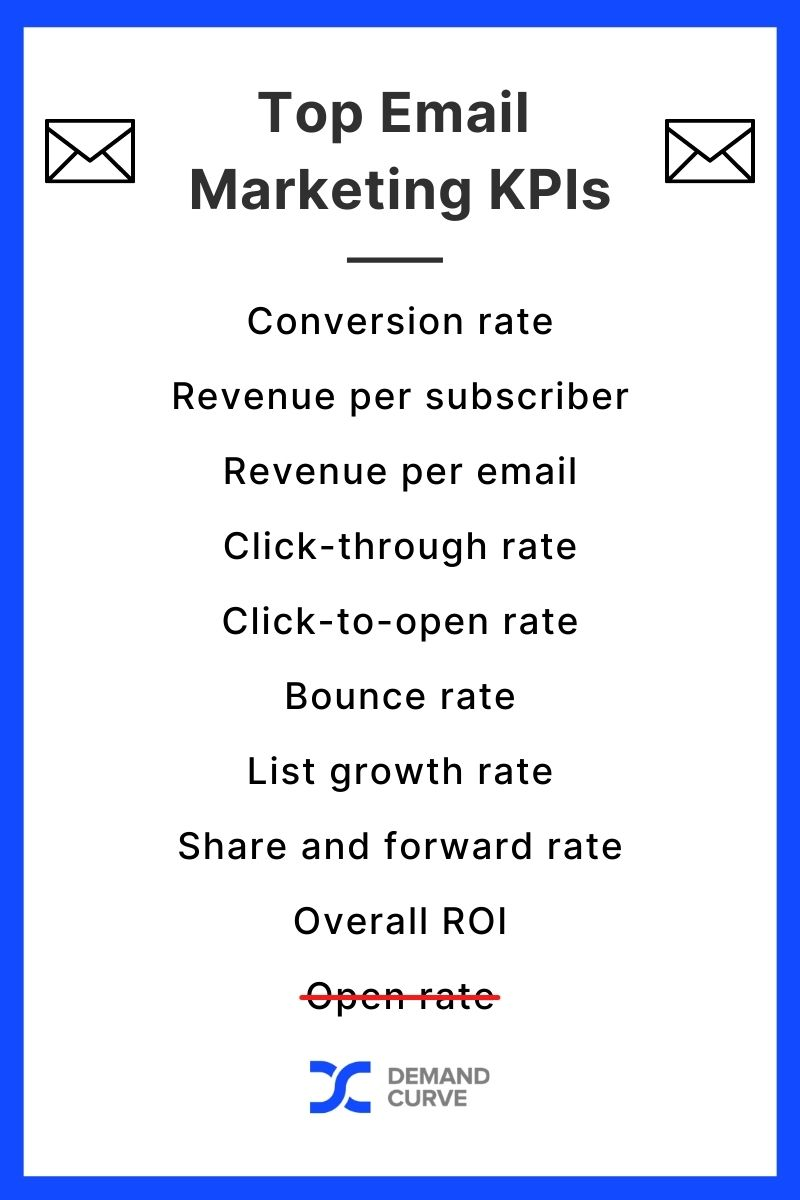
Pay close attention to click-through rate (what percentage of folks are clicking your CTAs) and, if your goal is a sale, revenue per email/subscriber.
We cover the most important email KPIs and how to use them in an article here.
There you have it!
Email funnels are the perfect supplement to a strong ad and organic strategy.
Use this process to write good emails and place them in your sequences to convert more of your traffic.
Something fun
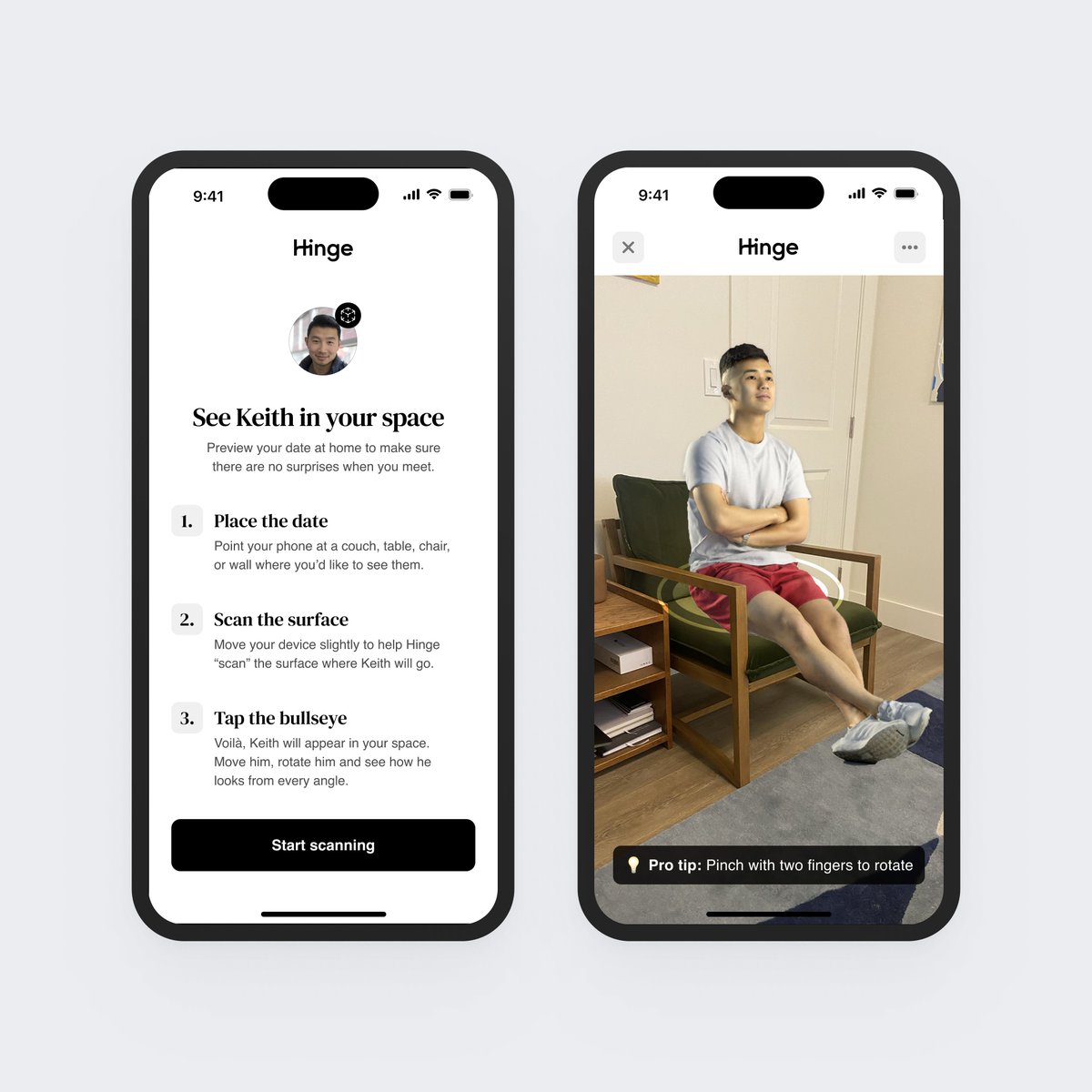
(Parody) Hinge feature to preview your date in AR, by @soren_iverson: