
Have you ever been at a networking event or happy hour and made the mistake of asking the wrong person what they do for work?
They launch into a scattered seven-minute soliloquy, and by the end of it, not only are you unclear on their role, but you’re ready to pull the ripcord on the conversation.
(The bathroom is an airtight excuse if you need one.)
When you asked this person about their job or company, they had a chance to pique your interest and make you lean in, but they blew it.
That’s what a bad elevator pitch does.
You only get one chance to make a first impression, whether at a conference, investor pitch, or an actual elevator ride. That’s why your pitch is key to conveying a memorable, cohesive brand narrative.
Your brand is what people say about you when you’re not in the room. So if your team’s pitch is forgettable or inconsistent, you’re essentially handing the pen over to outsiders, letting them write their version of your story.
In that spirit, let’s look into a few of the buttons you can press to elevate your elevator pitch.
— Gil
Brought to you by Delve — Keep your deal alive.
Big deals die slow, painful deaths. First, it’s the “quick security questionnaire.” Then, “We’ll need to see your SOC 2 report.” Suddenly, weeks turn into quarters, momentum fades, and your champion stops replying.
Delve flips the script. Our AI-powered platform gets you audit-ready in just 15 hours — no late nights, no armies of consultants, no derailed roadmaps.
🚀 It’s working for founders like:
- Lovable — zero to SOC 2 in days.
- Bland — $500K ARR unlocked in 7 days.
- 11x — $1.2M ARR closed faster, 143 hours saved.
Don’t let compliance be the deal-breaker. With Delve, it’s done before your deal starts to flatline.
Save Your Deal. Book your demo now and get $1k off with code DEMANDCURVE1KOFF.

Brought to you by GetCrux (YC) - the AI Creative OS that helps you launch winning ads
The top 5% of Meta ads earn 70% of the budget, so finding the winners can feel random and unpredictable, but it’s not. There’s a science behind it.
With GetCrux, AI watches every ad, finds the critical insights, and uses this to generate on-brand winning ads fast. Think of us like a 10x combination of Motion + Canva.
Fast-growing apps and YC companies like Rocket Money, Ethos, and Jerry use it to scale their spend profitably.
Cloaked scaled their AI ads to $1M+ monthly spend for 90% less than what they were paying their agency!
Right now, GetCrux is offering DemandCurve readers a free AI audit and a 14-day free trial.
Book a free 30-min call with the founders today →
Best Practices for Better Pitches
Insight from Gil Templeton — Staff Writer
If you asked each person on your team to give your company’s elevator pitch, how similar would their answers be? (Please try it and reply to this email with your results).
I’d bet you’d get a mash-up of different features, founder stories, and scattershot narratives. But everyone should really be reading from the same “sheet music” no matter what.
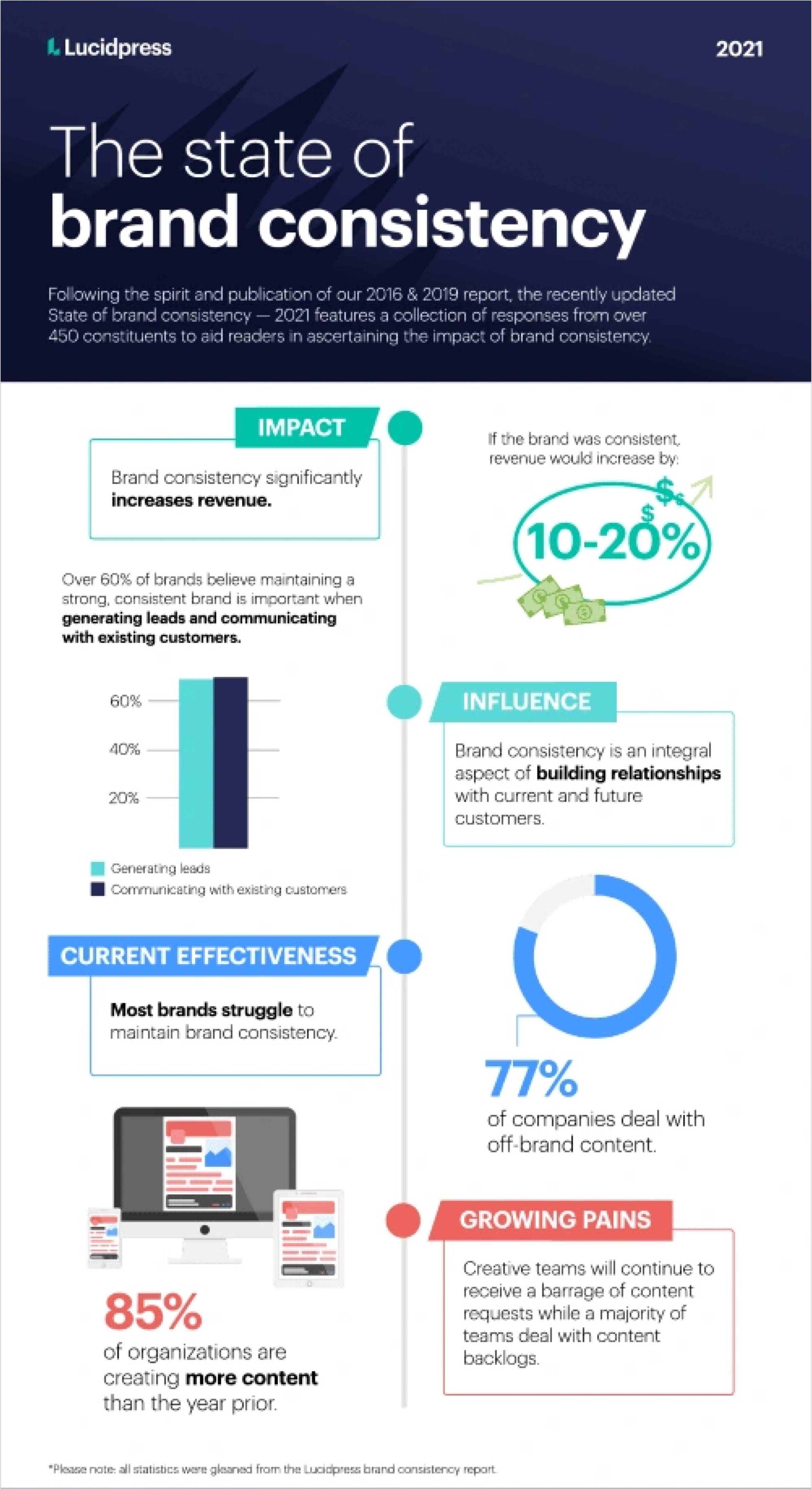
The more your team tells a similar story, the more you can create compounding momentum instead of pulling in different directions. A study showed that the average revenue increase attributed to high brand consistency is 10–20%, so the more consistently you can convey your narrative, the better.
Let’s look at a few evergreen tips that provide guidance on creating a consistent, compelling elevator pitch.
Tip 1: Aim for about 30 seconds and don’t go too far over that. That’s enough time to tell a story, but short enough to keep it laser-focused.
Tip 2: You (and your team) don’t need to memorize the pitch verbatim. It’s okay to put it in your own words, as long as the content and takeaways are the same.
Tip 3: Show, don’t tell. Use real numbers and irrefutable facts to make your points more credible and tangible.
Tip 4: Your pitch should answer three key questions, usually in this order:
- What is your company?
- What problem do you solve?
- What makes you different?
Now let’s expand on how to answer each of these three questions.
Pitch Part 1: What Is [Your Company]?
This is the simplest part, but because of its simplicity, it can be easy to fumble.
Your job at this juncture is to introduce the company in a matter-of-fact way. Set the table with literally one sentence about what your company is.
One way I like to think about this is: what would (or does) your Wikipedia page’s first sentence say?
Looking at Apple’s Wiki page, the first sentence reads, “Apple Inc. is an American multinational corporation and technology company headquartered in Cupertino, California.”
Just the facts, ma’am. Short, sweet, and straight.
Below are some examples, using made-up businesses across three industries that we’ll use throughout today’s newsletter.
- AI Marketing Startup Example: “We’re an AI platform that helps mid-sized e-commerce brands generate ads.”
- Workforce Training SaaS Tool Example: “We’re a B2B software company that improves the onboarding process.”
- CPG Drink Brand Example: “We’re a beverage company making clean energy drinks with mushrooms and adaptogens.”
That’s it. Check the box and move on.
Pitch Part 2: What Problem Do You Solve?
Now we move into your “why.” In this section, we explain the lock that your company holds the key to. This part is very similar to your problem statement.
It provides the context and stakes for what you do, and if you can define the problem clearly, it sets your solution up to look like the obvious choice.
Without this tension, there’s no story. So this is precisely where we introduce the “villain” your company helps people overcome.
This is important for founders and small startup teams who often get caught up in their own underwear, defaulting to features and nuances instead of telling the bigger story.
It’s easy to forget that no one wakes up thinking, “I want a new SaaS platform today.” What they think is: “Ughhhh, I can’t keep wasting all my time training these new hires.” So speak to that frustration or friction.
Clearly articulating the problem is an attention-grabbing “hook” that signals focus; it shows you aren’t trying to solve too many problems at once, and it means you have a good understanding of your target.
Let’s look at some examples, building on the fictional companies from part one.
Note: Including language like, “We exist to…” or “We solve this problem by…” can help you make the turn from illustrating the problem to showing your solution. Don’t get into claims or your UVP yet, though.
- AI Marketing Startup Example: “Creative teams are drowning in asset production all day, every day. We exist to help them automate iteration, so they can create assets faster and test more ideas without hiring up or burning out.”
- Workforce Training SaaS Tool Example: “Studies show most remote employees feel underwhelmed by the onboarding process. Our platform solves this problem by giving teams an interactive way to onboard without the faceless, boring modules and decks.”
- CPG Drink Brand Example: “Most energy drinks dump in synthetic caffeine, sucralose, and artificial ingredients that spike your system and make you crash. That’s why we built ours around lion’s mane mushrooms and adaptogens, providing a natural, gradual lift.”
Aim for 2 or 3 sentences here. Again, don’t overdo it, just explain that gap you fill.
Pitch Part 3: What Makes You Different?
Now it’s time to land this bad boy. If part two addressed your “why,” think of this section as your “how.”
This part should lean heavily into your unique value proposition (UVP) to show why you’re uniquely positioned to solve the problem better than anyone else.
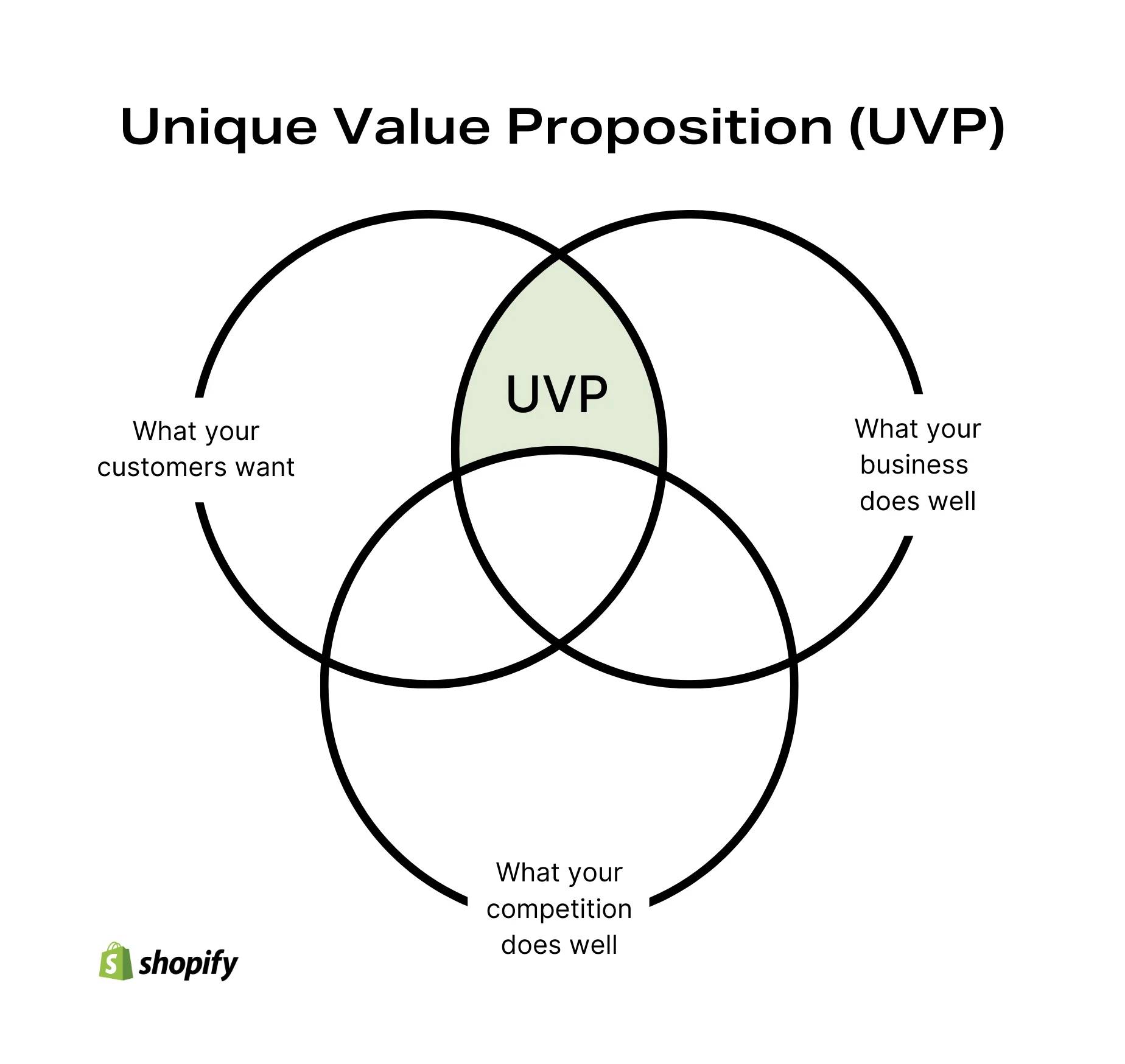
This is your moment to make a sharp, specific claim only you can make. To do that, point to exactly how you deliver a better outcome.
Some strong examples of common differentiators are:
- You deliver faster, cheaper, or more reliably.
- “We give you a bespoke AI brand strategy in 60 seconds.”
- You provide access to something others don’t or won’t.
- “Our tool gives you real-time access to competitors’ pricing, not just historical data.”
- You solve the problem in a fundamentally different way.
- “Our wearable tracks focus instead of fitness.”
- You’ve made a deliberate tradeoff your audience values.
- “We only serve Series A startups, so you’re not competing with enterprise clients for support.”
- You serve a specific niche better than anyone.
- “We design seamless, slipless socks exclusively for marathon runners.”
Don’t fall into the trap of using vague phrases like “our team works hard,” “our customer service is amazing,” or “we’re building community.” These aren’t defensible positions, especially to a skeptical prospect or investor.
Let’s finish out our examples using the same companies from earlier:
- AI Marketing Startup Example: “Unlike other AI marketing tools that generate generic ad outputs and require tons of manual cleanup, our platform integrates directly with your brand guidelines and ad account, so every asset created is on-brand and optimized to perform.”
- Workforce Training SaaS Tool Example: “Instead of dumping content on new hires and hoping it sticks, we tailor bespoke onboarding paths to each employee with real job KPIs in mind, helping new hires actually ramp up and hit targets 23% sooner, on average."
- CPG Drink Brand Example: “Most functional beverages that contain mushrooms require refrigeration and go bad after a few weeks. So we created a shelf-stable product that stays fresh for two months at room temperature, cutting refrigeration costs, opening new retail doors, and making the product travel-friendly.”
Part 3.5: Your Call To Action
At the very end of your pitch, make sure to include a call to action (CTA) instead of giving a blank stare and expecting your audience to know what you want them to do.
This should be an actionable request for a next step. It might be to schedule a meeting, exchange contact information, sign up for a free trial, ask if they’d like a demo, open the floor for further questions, or whatever step you’d like them to take next.
After you do that, pause and listen. The strength of an elevator pitch is not necessarily in “closing the deal” like it might seem on Shark Tank. It’s in opening the dialogue, getting your audience talking and asking questions, and ultimately deciding if you might be a good fit for each other.
The Takeaway: Your Pitch Is Your Growth Engine
Your elevator pitch is a conversion tool that scales with every interaction your team has with the outside world.
Your sales team is pitching prospects. Your marketing team is conveying value props creatively. Your recruiters are selling candidates on why they should join. Your CEO is pitching investors. Your engineers are explaining what you build to potential partners.
When everyone's telling the same focused story, you create a multiplier effect where every touchpoint reinforces your positioning.
But if your pitch is inconsistent, you're essentially running constant A/B tests (and C/D/E/etc. tests) across every conversation, diluting the message and confusing your audience.
Here's what a tight, aligned pitch can do:
- Faster sales cycles: Prospects quickly “get it” and immediately understand your value. No need for lengthy descriptions or follow-up calls to paint the big picture.
- Sales & marketing consistency: Your marketing team can hit the same notes as your sales team, creating congruency and momentum across the two.
- Rock-solid fundraising narrative: Investors will hear the same compelling story no matter if they’re talking to your CEO or intern.
- Better team alignment: New hires can confidently represent your company from day one, and tenured employees can stop inadvertently telling different versions of your story.
On the other hand, a weak (or inconsistent) pitch doesn’t only confuse your audience. It can tell investors that you might have trouble selling and recruiting in the future. In an article about elevator pitches from best-selling author and VC Sean Wise (who claims to have heard 20,000+ pitches), Sean makes a good point:
“How well you communicate [your pitch] to investors is a proxy for how well you’ll be able to sell to early adopters, and how likely you are to recruit top talent. Failing to deliver may signal to investors that you don’t have the business acumen to succeed.” — Sean Wise
Knowing how crucial this 30-second “script” is, it’s worth your time to ask three people on your team to explain what, why and how your company does what it does, in about 30 seconds. Time them and make note of the variations between responses.
Then use the exercise above to craft your Rosetta Stone of an elevator pitch, and turn every team member into a force multiplier.
Gil Templeton
Demand Curve Staff Writer
Something fun
Speaking of elevators, one of the most savage put-downs of all time, in an elevator. From Reddit.
.png)