

Marketers love to debate opt-ins. Some swear by double opt-in for list quality. Others prefer single opt-in for scale.
But the truth is more nuanced, and choosing the wrong one can cost you engaged subscribers or hurt your email performance.
Today, we’re breaking down the myth of “opt-in best practices” and showing how to pick the right method based on your team, your list, and your goals.
Let’s dive in.
— DC Team
Brought to you by Dreamdata.io — "Track Revenue Without a Data Team"
Most B2B marketing teams need engineers to answer "what's working?" Clean attribution requires data pipelines, custom dashboards, and constant maintenance.
Dreamdata eliminates the dependency. Connect your CRM, ads, and automation tools with one-click integrations—no SQL, no engineering tickets.
Get AI-powered insights delivered to Slack, sync conversion data to ad platforms, and finally prove ROI.
Single vs. Double Opt-In: What Actually Works
Insight from Drew Price — VP of Growth Marketing at BryteBridge
Last week, we brought Drew in to help provide clarity on a classic question within the world of email marketing: "who should our emails come from — a person or the company?"
We received a ton of positive feedback on that edition, and quite a few requests to hear what other knowledge bombs Drew has to drop. So, we're tapping Drew once more to tackle another email marketing conundrum: opt-in methods.
It’s a common belief that double opt-in is the best way to collect emails, but that deserves a closer look.
Before we get into it, here’s the difference between a single opt-in and double opt-in process.
- With single opt-in, anyone who signs up in your email capture form or popup is immediately added to your list.
- With double opt-in, people need to confirm that they do indeed want to sign up in a confirmation email before they can be added to your list.
Many marketers recommend using a double opt-in by default because it brings in more genuinely interested people.
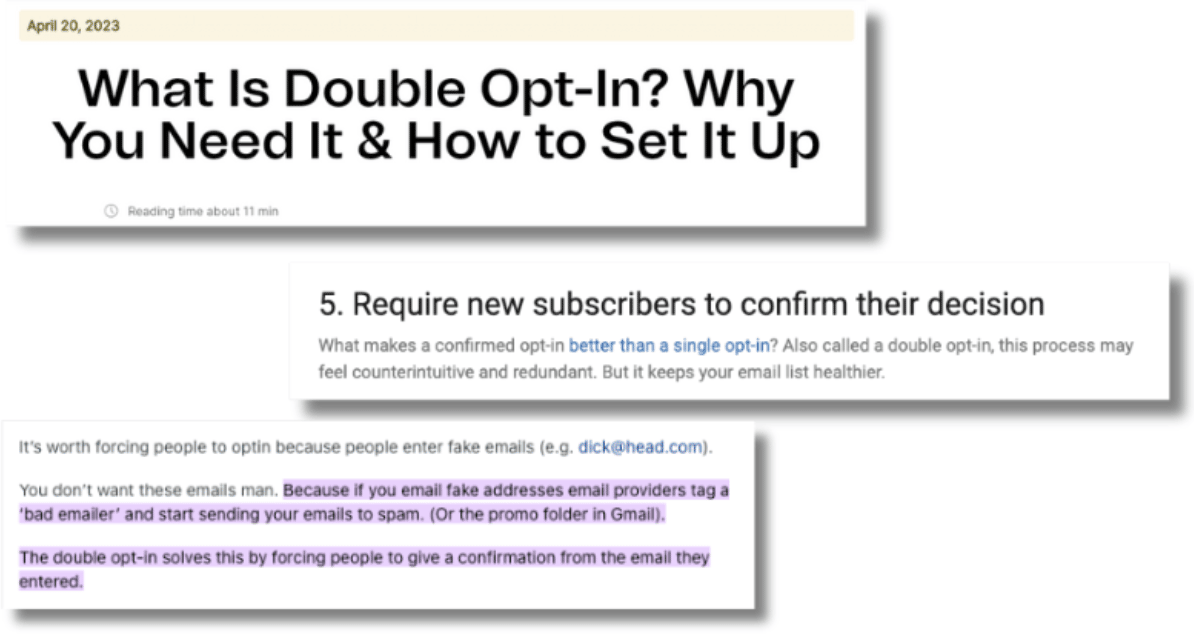
It’s a fair point: double opt-in processes do prevent fake email addresses and bots from getting added to your email list. But...
Double opt-in also comes with leakage.
That means:
- You’ll always have a percentage of people, even highly qualified leads, who miss your confirmation email. So you lose them for good. (Maybe they moved on with their day or are too busy using your amazing product to click on that confirmation email.)
- The confirmation creates a moment for an otherwise would-be subscriber to second-guess your intentions from a marketing perspective. So instead of confirming, they decide to ignore it.
Simply put, there will always be some good leads who ignore a double opt-in confirmation email.
Here’s a chart to help visualize that lost potential.
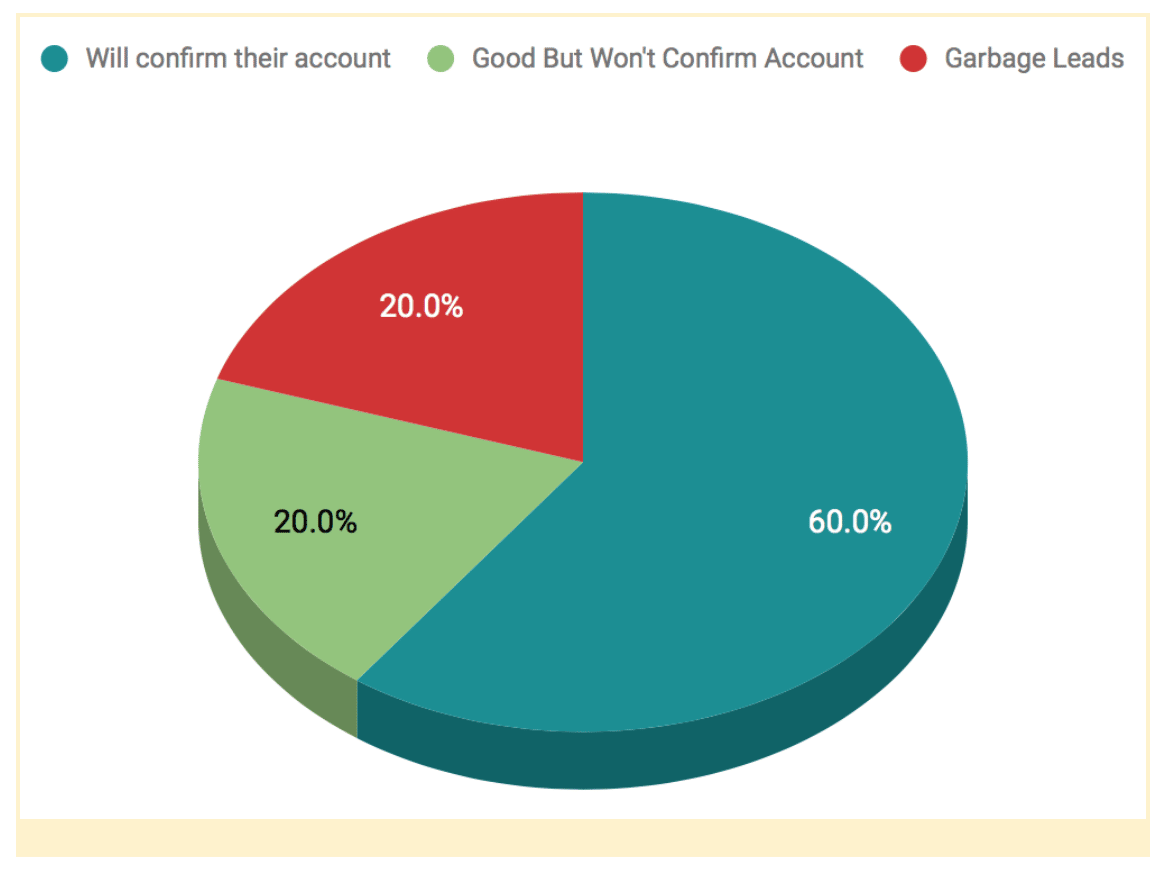
A single opt-in avoids this. One click and Voilà! That person is on your email list.
Yes, the single opt-in is inherently riskier because you’re inviting everyone to the party, even people who aren’t sure that your product is a good fit for them. But it comes with a higher ceiling of leads, a.k.a. greater potential for more revenue.
Deciding between the two feels like a case of "quality vs. quantity", but there’s actually a little more to it. If you’re not sure whether you’re better off using a single or double opt-in, consider these three variables:
- Your team bandwidth: Do you have a dedicated email marketer? Or is email juggled alongside other marketing priorities?
- Your email performance: How are your engagement metrics?
- Your reputation as a sender: Without diving too deeply into the technical topic of deliverability, have you ever noticed your emails didn’t make it to recipients? Like if someone told you they never received them or only saw them in their spam folder.
Who should use single opt-in?
You’re in a good position to use it if:
- You have a dedicated email marketer who’ll monitor your email performance. Someone who knows how to adjust your email targeting and suppression lists.
- You have a solid track record of strong email performance, like consistently high opens and engagement.
- And you haven’t faced deliverability issues in the past.
Who should stick with double opt-in?
Here are a few signals that you’re better off requiring that extra confirmation step in your signup process:
- No one on your team is focused solely on email. It’s low-priority, or something juggled between several other marketing priorities.
- You’ve seen a prolonged dip in your email engagement before, maybe in the last six months or so.
- You’ve been hit by an email penalty, like a blacklist, in the past. (If you don’t know this for sure, a prolonged dip in your email engagement could be a warning sign.)
Bottom Line
Implementing single opt-in is naturally riskier than using double opt-in. But the payoff is that if you do it well, you’ll actually have a higher amount of quality leads.
The point isn’t that every company must use single opt-in. But rather, we should simply stop romanticizing the double opt-in. Don’t think of it as the default in email collection. Choose based on your team bandwidth and email track record.
— Drew and the Demand Curve Team
Something fun
“When FedEx delivers so fast it answers ancient questions." 😂 From Pinterest.