
You've probably heard the saying: "First-time founders focus on product. Second-time founders focus on distribution."
If that's true, then we'd add: third-time founders realize they're the same thing.
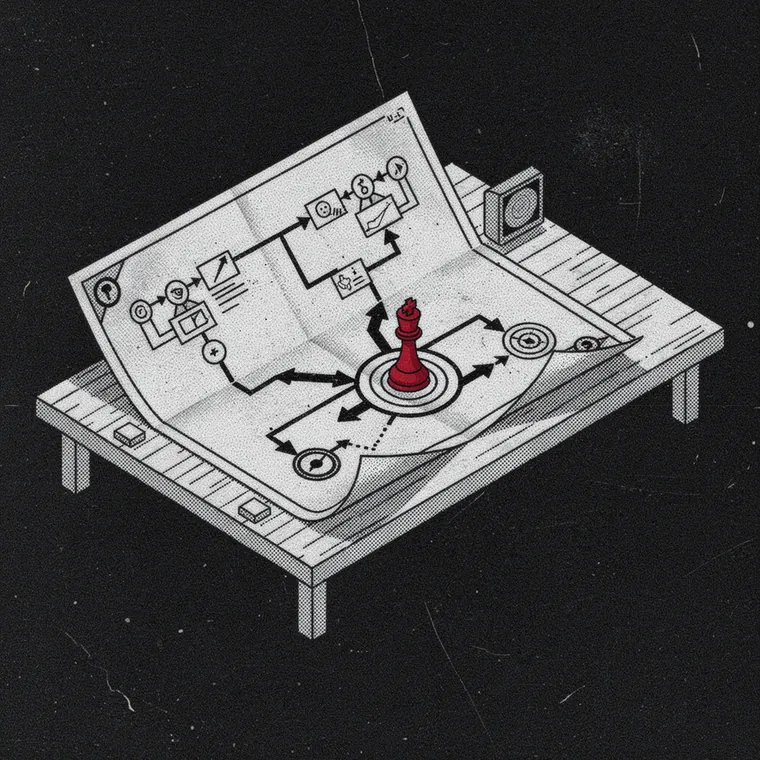
Seasoned operators take a very different approach to growth than most. They don't chase growth. They engineer it.
Today, we're giving you a look inside at one of the highest-leverage frameworks in our Growth Program that's helped thousands of operators make the shift.
Let's dive in.
— Justin
Insense
Brought to your by Insense - Save 40+ hours on influencer + UGC campaigns
Their in-house team handles everything from:
- Influencer sourcing + campaign management
- Post-production - Andromeda-approved creatives
- Ideation and creative concepts
Join major brands like DRMTLGY, Revolut, OKX, and Flo Health who trust Insense for all their UGC and influencer marketing needs.
Book a free strategy call by Dec 12 for up to 10% OFF managed services.
Brought to you by Dreamdata
113% ROAS.
That's the return LinkedIn ads are delivering across Dreamdata customers, outperforming Google and Meta, and driving 36% of all SQLs.
But for B2B teams to capitalize on that performance, they need to know which specific companies are fueling those results. You can't optimize what you can't see.
Dreamdata integrates with LinkedIn Company Intelligence to eliminate the guesswork, revealing the exact companies engaging with and seeing your LinkedIn page content (both paid ads and organic posts).
This is how you turn ad spend into predictable revenue.
A Familiar Growth Story
A founder spots an opportunity. They go heads-down building. They launch to see if they have product-market fit.
Most never pass go. They deem “no PMF” and move on.
(Whether that’s actually true is a topic for another day. Plenty of startups declare no PMF when they never got the right people into the product to begin with. Talk about a false negative.)
But let’s say you’re one of the lucky few who sees signs of traction. Users are sticking around. Retention looks promising. "Jackpot!" Time to scale this puppy.
So you jump into channel experimentation. That’s what we’re told to do, right?
You try Meta ads. Doesn’t work.
You try cold outreach. Doesn’t work either.
You start posting on social. No one’s paying attention.
You keep testing channels, waiting for something to click. This cycle continues until you run out of cash or, by some miracle, you do find at least some semblance of channel traction.
The Hidden Problem
Here’s what’s actually happening.
In the traction phase, your early users found you through your network, through niche communities, through word of mouth (WoM). They’re the savvy, risk-tolerant part of the market. They like the product despite its rough edges.
And critically: they’re telling your story for you.
That's the beauty of WoM. Your early users "get it." Their friends are people that get it, too.
And this masks your foundational weaknesses.
You can get away with a mediocre brand, an unclear story, and a clunky value prop because your early users are papering over it with their own credibility and context.
Then you enter “growth mode.”
You start running Meta ads to cold audiences. People who’ve never heard of you. Who have no reason to trust you. Who don’t know what you do.
And suddenly, nothing works.
The False-Negative Trap
When those first campaigns flop, founders almost always blame the channel.
“Meta ads don’t work for us.”
But Meta may not have been the problem. More likely, the problem was that your story, which your early users had been telling for you, now had to stand on its own.
"Our story isn't the problem."
Ok. Well, did you engineer your product specifically for Meta Ads? Meta is what we call a 'low-context channel.' Low-context channels must be paired with low-friction product experiences. Did you tailor the product to align with the mindset and context-state people are in when browsing Facebook or IG?
Did you reverse engineer your pricing strategy to account for the inherent costs baked into Meta Ads for your product category? Or did you just roll with the pricing you threw together a few days before launch day?
No matter how you slice it, these aren’t channel failures. They’re system failures that were hidden during traction and exposed during growth.
We see this constantly. Founders come to us after months—sometimes years—of running in place. Blind experimentation. Channel after channel declared dead.
And more often than not, when we do eventually unlock growth, it’s through a channel they already tested and dismissed.
The Five Foundations of Growth
Growth isn’t built on product. It’s not built on distribution. It’s built on a system of five foundations, and the alignment between them.
1. Market — Who you’re serving
2. Product — What you’re offering them
3. Model — How you monetize
4. Brand — Your story and message
5. Channel — How you reach your market
Product-market fit is the alignment between #1 and #2. That’s one pairing.
One pairing out of the ten pairings that make up a full growth system.
The traction phase pressure tests almost none of these. Growth mode exposes all of them at once.
Which is exactly why we developed our Foundational Five Framework to represent that full growth system and help founders and growth teams master theirs.
How to Apply This
Before you give up on a channel, ask:
- Is this a Product-Channel problem? Has my product been designed to match the context, intent, and culture of this channel?
- Is this a Model-Channel problem? Can my unit economics actually survive this channel’s CAC?
- Is this a Brand-Channel problem? Does this channel give me the room I need to convey our story?
- Is this a Market-Channel problem? Is my market even reachable via this channel?
Different diagnosis, different solution.
The channel you abandoned might be your best channel. You just haven’t aligned the foundations around it yet.
Your Growth Foundation Is Never "Done"
Markets shift. Products evolve. What aligned last quarter might misalign tomorrow.
This isn’t a one-time exercise. It’s a living system for diagnosing where the constraints and opportunities exist within your growth system.
And it's the missing link that separates those who take a reactive, trial-and-error approach to growth vs. those who engineer it.
Something fun
Choose your battles wisely. 😂 From Pinterest.