
Last week, we zoomed out and basically said: look, Meta's Andromeda killed the old game.
This newsletter is the next step. Less of the “what” and more: “Okay, what do I actually make next?”
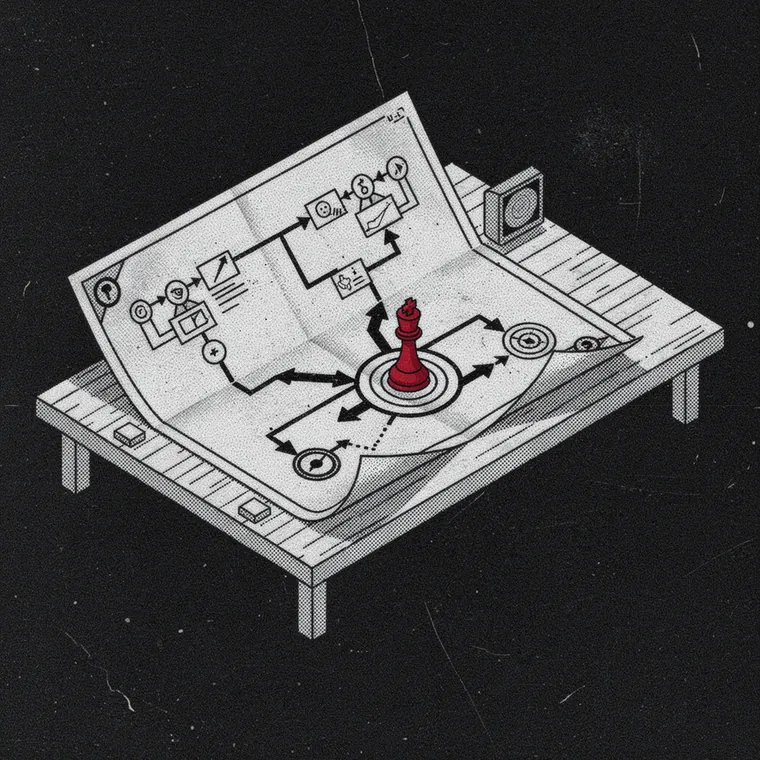
We’re going to build you a small operating system for your next batch of ads.
After running this framework across dozens of clients, it’s become the go-to tool for Demand Curve's creative strategists. Time to roll up your sleeves and implement it for yourself.
— Joey

Brought to you by BlueAlpha
Marketing teams move faster with BlueAlpha. Instead of sifting through dashboards, you get a clear, prioritized set of high-leverage actions: which campaigns to scale, where to reallocate spend for maximum ROI, which audiences are heating up, and which creatives are dragging performance down.
BlueAlpha turns messy cross-channel data into concrete steps your team can execute immediately to drive growth and eliminate wasted spend.
Book a demo before Dec 22 to get a free strategy audit call
Learn more about BlueAlpha
Keeper
Weak passwords put your company at risk of a massive data breach. Keeper Security is the most secure password and passkey manager for businesses and keeps your team's logins safe. Get 30% off Business plans through 12/31. [Protect your accounts →]
Creative Decision Matrix
Insight from Joey Noble — Demand Curve Creative Strategist
Part 1: Diagnose Your Problem First
Creative strategy is not just about making ads. It’s about solving business problems through creativity. Every ad should be designed to test a hypothesis that directly impacts your growth and generates learnings that fuel the next testing cycle.
Before creating any ad, we always diagnose the biggest bottleneck preventing growth. These fall into five categories that map to specific creative types.
Funnel Problems
You might have an awareness issue where not enough of the right people are seeing the brand. You might have an audience alignment issue where ads attract the wrong users, leading to high churn or low LTV.
Or you might have a conversion issue where people see ads but don't take action, which points to a messaging, offer, or UX problem (or another audience alignment problem).
Product Problems
Perhaps you have a retention issue where users sign up but don't stay, or an activation problem where users don't engage after signing up. You could also be facing a product-market fit issue, targeting the wrong market and seeing poor adoption as a result.
Unit Economics Problems
Your pricing might not align with perceived value or your market's willingness to pay. Your LTV and CAC might be misaligned, with the cost to acquire a customer too high relative to lifetime value. Or maybe margin is healthy, but cash velocity (how quickly you're recovering your marketing spend) is too slow, causing your paid engine to stall out.
Targeting Problems
You might have an unclear target market. You could be exploring new markets and testing untested audience segments. Or you might be stuck in the competitor-copying trap, just copying competitors without understanding the deeper reasons for their success. What we refer to in the Growth Program as "Growth DNA Profiles."
Messaging & Story Problems
You might have a messaging mismatch where ads communicate the wrong thing, like features instead of benefits. Or, and this is a common one, you could be suffering from the "too-cute problem." When creatives try to make the most clever ad of all time instead of the one that actually converts.
Now Map Your Problem to the Right Creative Job
Once you've identified your bottleneck, here's which type of creative you actually need:
If you have an awareness issue (not enough of the right people seeing you), your ads need to stop the scroll and grab cold attention. Jump to Part 2, Step 2A.
If you have a conversion issue (people see your ads but don't act), your ads need to overcome objections or build trust. Jump to Part 2, Step 2C or 2E depending on whether it's hesitation or paranoia.
If you have an audience alignment issue (attracting the wrong people), you need tighter persona targeting and clearer positioning. Use Persona Callout hooks from Part 2, Step 2A, or revisit your targeting entirely.
If you have a retention or activation problem, you probably don't have a creative problem—you have a product problem. Fix that first. Creative can't save a product people don't want to use. Same applies to PMF issues.
If you have a unit economics issue, creative won't solve it entirely, but it can help. Focus on ads that drive higher-intent users (Part 2, Step 2C) or test hooks that attract higher-LTV segments using Persona Callout.
If you have an unclear target market, use creative as a discovery tool. Build narrow Persona Callout tests across different segments and see what actually converts. Part 2, Step 2A will help.
If you're exploring new markets, same approach—test different persona angles and let the data tell you who responds.
If you have a messaging mismatch (communicating the wrong value), your ads need to educate and persuade. Jump to Part 2, Step 2B.
Now that you know what job your creative needs to do, let's get into how to build it.
Part 2: The "Choose the Right Hook" Decision Tree
This sits on top of your hook table that we covered last week. You should never pick a hook purely because someone else did it or it "sounds clever." You need to realize that each one is good at doing a specific job, and you should decide which job that is.
Step 1: Decide the main job of the ad
One ad, one job.
When you’ve decided the job of your ad, scroll to Step 2 (A-E).
- A. Stop the scroll / cold attention
- B. Educate or persuade people who already know you exist
- C. Overcome objections for high-intent buyers
- D. Retarget and push people to convert
- E. Build trust in a high-consideration category
Once that’s clear, the hook choice is mostly a branching exercise.
Step 2A: If the goal is to stop the scroll (TOF awareness)
Top of funnel isn’t about explaining everything. It’s about getting a thumb to pause.
If your category is crowded, consider using a Pattern Interrupt. Lo-fi, “wrong” looking visuals. Unusual framing, ugly on purpose, odd compositions. The bar here is basically: “Did this look out of place enough to steal a glance?”
If your product is novel or misunderstood, leverage the Curiosity Gap. “Nobody talks about this part of [X]…” or blur, censor, or partially hide the key detail. Show the “after” first, then rewind.
If your persona is narrow and very clear, use a Persona Callout. “If you’re a [specific identity], this is for you.” You lose broad reach and gain people who actually feel seen.
If your audience is driven by identity or emotion, use POV. “POV: you finally sleep through the night.” “POV: your team ships without you slacking them at 11pm.”
If you’re not sure where to start, cold traffic defaults that usually lift CTR are Pattern Interrupt and Curiosity Gap.
Step 2B: If the goal is to educate or persuade (MOF consideration)
Here you’re moving from “What is this?” to “Why this instead of something else?”
If you’re fighting a known alternative—existing tools, DIY solutions, the incumbent brand—use Us vs. Them. Side-by-side comparison, “Old way vs new way,” or “10 tools vs 1 platform.”
If your audience is stuck on the wrong mental model, use Contrarian. “Everyone tells you to do X. That’s why you’re stuck.” Then present the new method.
If your buyer needs structure to be convinced, use Listicle. “3 reasons your sleep is wrecked.” “5 things sabotaging your CAC.”
If they need to picture the future state, use POV. A short story of “life after this works” or a day-in-the-life format with the product baked in.
If you’re stuck, Listicle is a safe place to start.
Step 2C: If the goal is to overcome objections (High-Intent)
People here already care. They’re just hesitating.
“I don’t fully trust this brand” maps to Social Proof. Reviews, screenshots, before/afters, “10,000+ customers,” or case snippets with specific outcomes.
“I don’t think it actually works” maps to Authority. Credentials, data, experiments, or “We’ve done X 1,000 times” type framing.
“I’m not sure it’s worth the money” maps to Us vs. Them. Costs today vs costs with you, or hidden costs of the old method.
“This looks complicated or overwhelming” maps to Listicle. “3 reasons this is actually simpler than what you’re doing now.”
Step 2D: If the goal is to retarget and convert
Retargeting isn’t “show them the same ad but now with 10% off.” They’ve already met you. Now you’re closing gaps.
If they need proof they’re making the right call, use Social Proof. Customer stories or “People like you who already switched.”
If they need reassurance, use Authority. Experience, track record, expertise, or a clean, calm explainer from someone credible.
If they need to picture using it, use POV. “POV: your Monday standup is actually short.” “POV: you wake up rested.”
If they need a reason to act now, not later, use Problem-Agitate or Contrarian. Reframe the cost of doing nothing or show what staying in the status quo actually costs.
Step 2E: If the goal is to build trust (High-Consideration)
SaaS, health, money, coaching—any category where choosing wrong hurts. Your job is to reduce paranoia.
If the main hurdle is “Are you legit?” use Authority.
If the main hurdle is “Do people like me use this?” use Social Proof, specifically category-specific proof like “200+ clinics” or “500+ agencies.”
If the main hurdle is complexity, use Listicle to break the offer or product into 3–5 simple chunks.
If the main hurdle is “I can’t picture this in my life,” use POV. Day-in-the-life, real scenarios, outcomes.
Step 3: Jaded Market Rule (Market Sophistication Override)
If you're in a brutally over-advertised category (think skincare, weight loss, etc), assume they've seen the "save time and money" line a hundred times. They've seen generic testimonials. They're numb to basic value props.
In those markets, lean harder on Contrarian (new lens on the problem), Authority (but at a higher, data-driven level), Us vs. Them (specific differences, not vague "better"), Listicles with actual insight (not fluff), and POV that's weirdly specific, not stock-lifestyle.
You're not just selling a solution. You're selling "this is actually different from the things you already tried." You’re selling a new movement.
Step 4: Category Fit Shortcut
You can get most of the way there just by matching hook families to the type of business.
B2B SaaS: Problem-Agitate, Authority, Us vs Them
B2B buyers are skeptical and comparison-shop.
Problem-Agitate works because it articulates their pain better than they can (builds trust through understanding).
Authority works because they need to believe you actually know what you’re doing before they’ll book a demo.
Us vs. Them works because they’re literally comparing you to competitors or their current setup.
POV and Listicle are backups because they can work but aren’t as directly tied to the buying motion.
DTC/Ecom — Pattern Interrupt, POV, Social Proof
Ecom is impulse-driven and scroll-based.
Pattern Interrupt because you’re competing with entertainment, not just other products—you need to stop the thumb.
POV because people need to see themselves using it (the lifestyle integration moment).
Social Proof because consumer buying is heavily influenced by “other people like this.”
Curiosity Gap and Persona Callout are backups—they can work but aren’t as universally strong across ecom categories.
Health/Wellness/Supplements — Contrarian, Authority, Problem-Agitate
This category is absolutely saturated with identical claims. Everyone says they’ll help you sleep better or lose weight.
Contrarian cuts through because you need to reframe the problem entirely (“your melatonin is actually making it worse”).
Authority because health claims require credibility (doctors, studies, formulation).
Problem-Agitate because people in this category are usually in pain and need you to really understand it before they’ll trust a solution.
Education/Courses/Coaching — Contrarian, Authority, POV
People buying education are investing in transformation, not a product.
Contrarian works because they’ve probably already tried the “obvious” advice and failed—you need to show them why their current mental model is wrong.
Authority because they’re literally paying you to know more than them.
POV because they need to imagine the future version of themselves on the other side of the transformation.
Persona Callout and Social Proof are secondary—helpful but not the primary driver.
Step 5: Pick the Main Emotion
Don’t try to hit everything at once. One primary emotion per ad is more than enough.
Surprise maps to Pattern Interrupt and Contrarian. Curiosity maps to Curiosity Gap and Listicle. Identity (“That’s me”) maps to Persona Callout and POV. Trust maps to Authority and Social Proof. Urgency maps to Problem-Agitate and Contrarian.
If you’re mixing all five, you’re probably diluting all of them.
Part 3: Static vs. UGC vs Video
You're basically answering two questions: What's the cheapest way to find out if this angle is good? And once something works, which format will make it land harder?
Format Step 1: Can someone understand the offer in one frame?
If you can show what it is, who it’s for, and why it matters in a single image with a clear line of copy, statics are usually the starting point. They’re fast to produce, cheap to test, and ruthless about messaging clarity. If the idea dies in static form, a fancy edit won’t fix the underlying angle.
If the product needs sequence to make sense—workflows, interfaces, step-by-step transformation—then you bias toward video or UGC earlier. Screen recordings, walk-through demos, or a creator explaining “here’s how this actually works.”
Format Step 2: Is the real issue clarity or belief?
This split does most of the work. If people don’t understand what you do, start with statics. They force you to make the value prop sharp. If people understand it but don’t believe it, bring UGC or video in earlier. Faces, tone, and narrative do a lot of that heavy lifting.
SaaS and B2B often start as clarity problems. Health, supplements, and coaching are usually belief problems.
Format Step 3: Be honest about production reality
If you don’t have a reliable editor, don’t have people comfortable on camera, or can’t shoot and iterate video weekly, then don’t build a plan that depends on video doing all the work. Use statics to cycle through hooks and angles, see what actually resonates, then upgrade winners into UGC or video.
If you do have video capability, run a hybrid. Statics as fast probes, UGC or video as the “deeper” version of what already works.
Format Step 4: Match the format to the channel
You’ll naturally lean different ways depending on where you’re buying attention.
TikTok, Reels, and Shorts treat motion and faces as the default language. UGC, POV, short stories. Statics can work as slides, but you’re swimming upstream.
Meta Feed and Stories let statics work when the angle is good. UGC and video are a strong layer on top, especially for trust.
LinkedIn responds to clean statics and carousels with clear copy, plus simple talking-head video. Over-edited TikTok-style clips usually feel out of place.
YouTube In-Stream is obviously video, and with higher expectations. If you can’t script tightly, maybe don’t start here.
Quick Format Guide by Business Type
If you’re still not sure where to start after all that, here’s the shortcut:
B2B and SaaS typically start with statics because you’re solving a clarity problem. Your buyers need to understand what you do before they believe it works. Start with clean value prop statics, then layer in UGC expert explainers once the angle is proven.
Ecom and consumer brands can lean into UGC and video earlier because you’re usually solving a belief problem. People get what a pillow or a supplement is; they just don’t believe yours is different. Before/afters, statistics, and day-in-the-life content do the heavy lifting here.
Subscriptions, apps, and info products sit in the middle. Start with statics to nail the value prop, then upgrade winners to UGC storytelling that shows the transformation.
Part 4: Combining Hook + Format So You Know What to Build
Putting it all together so this becomes practical.
First, pick the job of the ad: attention, education, objections, retarget, or trust. Second, use the decision tree to pick one or two hook types. Third, decide the starting format by asking if it can be understood in one frame, whether the main issue is clarity or belief, and whether you actually have video capacity. Fourth, build meaningfully different combos.
Here's what that looks like for a simple B2B SaaS:
- For cold traffic, you might run a static with Pattern Interrupt and Problem-Agitate, plus a static with Us vs Them.
- For warm traffic, try a static Listicle like "3 reasons your reporting is lying to you" and a UGC Authority piece where the founder or an expert explains the shift.
- For hot traffic, test a static Social Proof ad with case-study tiles and a UGC POV like "POV: your weekly metrics meeting takes 10 minutes now."
For a sleep supplement:
- Cold traffic might be UGC Contrarian: "Why your nightly melatonin is keeping you up."
- Warm traffic gets a static Social Proof piece with reviews, before/after, and "10,000+ sleepers," plus a UGC Problem-Agitate like "Still waking up at 3am? Here's why."
- Hot traffic could be a static Authority ad saying "Formulated with sleep doctors, used by X patients" and a UGC testimonial POV.
Each of those is a conscious choice, not "we made some random stuff and hope Meta likes it."
The Point of All This
Most founders treat creative like a lottery. Make a bunch of stuff, throw it at Meta, see what sticks. The ones who win treat it like an engineering problem.
This isn't about making "better" ads in some vague aesthetic sense. It's about making ads that do a specific job for a specific person at a specific stage. When you open Figma next time, you shouldn't be guessing. You should know exactly which problem you're solving, which hook solves it, and which format proves it fastest.
So go forth, build your operating system and stop staring at the evil blank screen.
Joey Noble
Demand Curve Creative Strategist
Something fun
The rare ad that makes your audience itchy and impressed. Thanks Buzzfeed.